Introduction
Aglianico is widely regarded as one of Italy’s greatest red wine grapes. Bold, structured and capable of ageing beautifully, it produces wines that rival Barolo and Brunello in depth and complexity. Yet, despite its quality, Aglianico remains underappreciated by many UK wine drinkers.
This guide focuses on a superb example available from Donzella Wines:
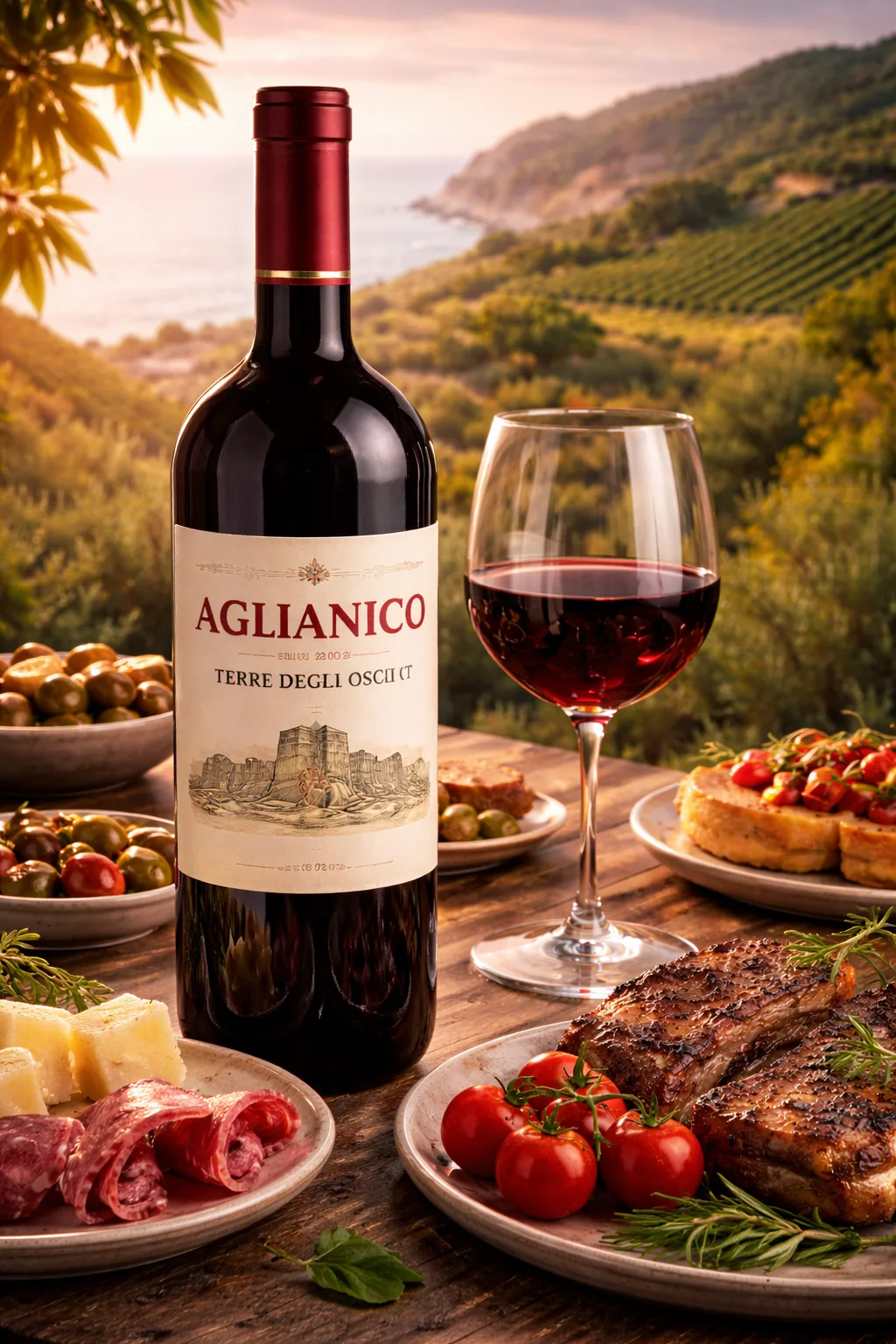
Aglianico Terre degli Osci IGT – Bold Southern Italian Red Wine
In this in-depth article you will discover:
- What Aglianico is and why it matters
- The history behind the grape
- The Terre degli Osci region
- Climate and terroir influence
- Winemaking style
- Detailed tasting notes
- How Aglianico compares to other reds
- Food pairings for UK cuisine
- Serving and storage tips
- Ageing potential
- FAQs
This article is designed to strengthen topical authority around Aglianico and help you rank higher for this keyword.
What Is Aglianico?
Aglianico is a noble red grape variety grown primarily in southern Italy. It is most famously associated with regions such as Campania and Basilicata, where it produces some of the country’s most age-worthy wines.
Wine experts often compare Aglianico to Nebbiolo because both grapes:
- Have high natural acidity
- Produce firm tannins
- Develop complexity with age
- Reflect terroir strongly
However, Aglianico expresses a more Mediterranean character, showing darker fruit, earthy spice and warmth from southern Italian sunshine.
The Ancient History of Aglianico
Aglianico’s origins date back over 2,500 years. Historians believe Greek settlers introduced the grape to southern Italy during ancient colonisation. Over centuries, it adapted to volcanic soils and mountainous terrain, developing thick skins and powerful structure.
During Roman times, Aglianico wines were prized by nobility. Records describe wines from southern Italy being transported across the empire.
Unlike many modern international grapes, Aglianico evolved naturally in Italy, making it a true indigenous variety.
Where Is Aglianico Grown?
Campania
Home to Taurasi DOCG, one of Italy’s most prestigious red wines. Volcanic soils give wines minerality and longevity.
Basilicata
Aglianico del Vulture DOC comes from high-altitude vineyards on volcanic slopes. These wines are intense and structured.
Terre degli Osci
The Terre degli Osci IGT covers vineyards across southern Italy, offering flexibility in winemaking while maintaining regional identity.
Terre degli Osci – Understanding the Region
The term "Terre degli Osci" translates to "Land of the Oscans", an ancient Italic people. This designation allows winemakers to showcase regional expression without restrictive DOC rules.
Vineyards here benefit from:
- Hot daytime temperatures
- Cool nights
- Sea breezes
- Clay, limestone and volcanic soils
This combination promotes full ripening while preserving acidity – crucial for balancing Aglianico’s power.
Climate & Terroir Influence
Aglianico ripens late in the season, often harvested in November. This long hang time allows flavours to fully develop.
Key climate features:
- High sunlight hours
- Dry conditions reducing disease pressure
- Cool nights preserving freshness
As a result, wines show:
- Deep colour
- High tannin
- Fresh acidity
- Dark fruit and savoury spice
Winemaking Style
This Aglianico is crafted using modern techniques that respect tradition.
Key steps:
- Hand-harvesting
- Cold maceration to extract colour
- Controlled fermentation
- Gentle pressing
- Limited oak influence
The goal is balance – preserving fruit while softening tannins.
Tasting Notes
Open a bottle of
Aglianico Terre degli Osci IGT
Appearance
Deep garnet with purple highlights.
Nose
- Black cherry
- Plum
- Dark chocolate
- Leather
- Smoked herbs
Palate
- Medium to full body
- Blackcurrant and damson
- Firm tannins
- Bright acidity
- Savoury spice
Finish
Long, warming and complex.
How This Wine Evolves
At first pour, fruit dominates. After 20–30 minutes:
- Earthy notes emerge
- Tannins soften
- Spice becomes more pronounced
Decanting improves complexity significantly.
Aglianico vs Other Italian Reds
Vs Sangiovese
Sangiovese is lighter and brighter. Aglianico is darker and more structured.
Vs Nebbiolo
Both are tannic, but Nebbiolo shows floral notes while Aglianico is earthier.
Vs Nero d’Avola
Nero d’Avola is softer and fruitier. Aglianico has more grip.
Vs Primitivo
Primitivo is jammy. Aglianico is savoury.
Food Pairings (UK Focus)
Meat Dishes
- Roast beef
- Lamb shanks
- Steak
- Venison
Italian Classics
- Lasagne
- Beef ragu
- Pasta alla norma
British Comfort Food
- Steak & ale pie
- Shepherd’s pie
- Slow-cooked casserole
Cheese
- Pecorino
- Parmigiano
- Aged cheddar
Serving Advice
- Temperature: 16–18°C
- Decant: 30–60 minutes
- Glass: Large red wine glass
Storage & Ageing
Aglianico ages exceptionally well.
- Drink now or cellar 3–10 years
- Store in a cool dark place
- Lay bottles flat
Who Is Aglianico For?
- Fans of bold reds
- Wine collectors
- Italian wine lovers
- People bored of supermarket wine
Common Myths
- "Too heavy" – false, food balances it
- "Only for experts" – approachable when young
- "Same as Cabernet" – completely different
FAQs
Is Aglianico dry?
Yes, completely dry.
Does it need ageing?
Not required, but improves with time.
Is it good value?
Extremely, compared to Barolo.
Can beginners drink it?
Yes, if they enjoy bold wines.
Where to Buy
Buy Aglianico Terre degli Osci IGT online
Why Buy from Donzella Wines?
- UK stock
- Fast delivery
- Italian specialists
- Independent merchant
Final Thoughts
Aglianico Terre degli Osci IGT is one of the best-value powerful Italian reds available in the UK.
If you love structured, food-friendly wines with history and personality, Aglianico should be at the top of your list.