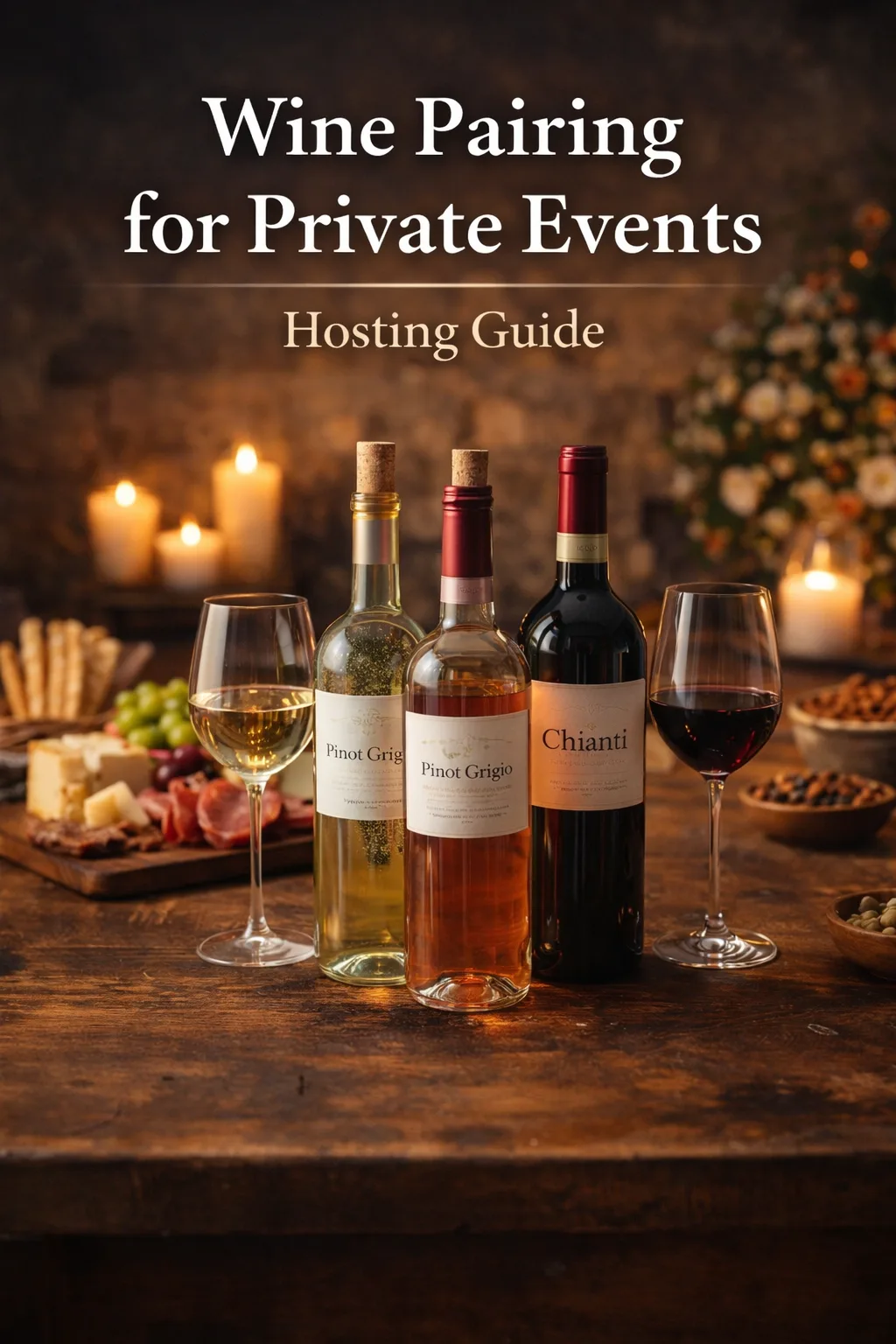
Planning a private event is exciting, take a look at our wine pairing for private events, choosing the wine can feel like the hardest part. Fortunately, wine pairing does not need to be complicated. With a few simple rules, you can match bottles to your menu, your guests, and the mood you want to create.
Instead of chasing perfection, aim for balance and comfort. As a result, guests will relax, food will taste better, and the whole evening will feel more polished. Whether you are hosting a birthday dinner, an engagement party, a corporate gathering, or a tasting night with friends, this guide will help you pair wine confidently.
For broader celebration inspiration, you can also explore our Events & Celebrations hub.
What “Good Pairing” Really Means at a Private Event
Great pairing is not about memorising rules. Instead, it is about choosing wines that support the food and suit the room. In other words, the best pairing is the one that keeps guests happy and the table flowing.
Generally speaking, successful event wine does three jobs. First, it flatters the food. Second, it refreshes the palate. Finally, it keeps the mood light and sociable.
Because private events include different tastes, the smartest strategy is variety. Therefore, you will usually want at least one crowd-pleasing white and one easy red. After that, you can add a rosé or sparkling option depending on the occasion.
Start Here: Your Event Style Sets the Wine Style
Before selecting bottles, define what you are hosting. Once the event type is clear, the wine list becomes far easier.
Dinner party wine pairing
For a sit-down dinner, structure helps. Typically, you need one wine for the early courses and one for the main course. However, if you serve dessert, a small sweet option can be a memorable finish.
Because dinner parties move course by course, pace matters. Consequently, lower-alcohol whites and medium reds often feel best.
Buffet, grazing table, or “mix and mingle” night
For grazing events, flexibility matters more than precision. Therefore, choose wines that handle lots of flavours without clashing.
As a helpful rule, pick crisp whites, dry rosé, and soft reds. In contrast, very oaky wines can feel heavy alongside salty snacks and varied bites.
Private wine tasting at home
For tastings, comparison is the point. So, contrast is your friend. If you want a step-by-step tasting format, follow how to host a wine tasting at home.
Alternatively, if you prefer a hosted experience, you can explore our Italian wine tastings, which work brilliantly for private groups.
Corporate or professional private events
For business settings, keep choices approachable. In addition, prioritise clean labels and reliable styles so nobody feels “put on the spot.”
As a result, Prosecco, Pinot Grigio, and medium-bodied reds tend to perform well.
How Much Wine to Buy (Without Guessing)
Quantities are where hosts often feel anxious. Fortunately, a simple formula works for most private events.
For a standard evening, plan roughly half a bottle per guest. However, for longer events, increase that to three quarters of a bottle per guest. Meanwhile, for tastings, pours are smaller, so you will use fewer bottles than you expect.
- Welcome drink: 1 glass per guest
- Dinner or general drinking: 0.5 bottle per guest (or 0.75 for long events)
- Sparkling: 1 bottle per 5 guests for toasts or aperitivo
- Tastings: 50ml pours, 4–6 wines, 1 bottle often covers 10–12 tasters
Importantly, add a small buffer. As a result, you avoid the awkward “last glass” moment. In practice, an extra 10% is enough.
Use Season to Make Pairing Feel Effortless
Seasonality is the easiest shortcut to better choices. Because people crave freshness in warm weather and comfort in cold weather, your wine should follow suit.
For a full breakdown, reference our seasonal wine guide UK. Meanwhile, the quick version is below.
Spring private events
In spring, lighter food appears on the table. Therefore, crisp whites and fresh rosé usually shine.
- Prosecco for a bright welcome
- Pinot Grigio for salads, seafood, and starters
- Verdicchio for lemony, herb-driven dishes
- Dry Italian rosé for flexible sipping
Summer private events
In summer, heat changes everything. Consequently, chilled styles feel more enjoyable, and heavy reds feel tiring.
- Chilled rosé for BBQs and sharing food
- Crisp whites for fish, chicken, and veg
- Frizzante or sparkling for daytime celebrations
- Light reds served cool for burgers and grilled meat
Autumn private events
As the evenings cool, richer flavours return. Therefore, medium reds become the safest “everyone’s happy” option.
- Chianti for tomato-based dishes and roast chicken
- Montepulciano for charcuterie and hearty mains
- Barbera for mushrooms, pork, and autumn veg
Winter private events
In winter, guests often want warmth. As a result, bolder reds and celebratory sparkling feel right.
- Primitivo for comforting, rich meals
- Amarone for luxurious evenings and slow dinners
- Brunello for impressive, premium hosting
- Prosecco or Franciacorta-style sparkle for toasts
The Only Pairing Rules You Actually Need
Complex pairing charts look impressive, but simple principles work better at real events. So, use these rules as your foundation.
Rule 1: Match intensity, not ingredients
Heavy food needs wine with weight. Light food needs wine with freshness. Therefore, grilled chicken can handle more structure than a delicate salad.
Rule 2: Acid is your best friend
Acidity refreshes the palate. Moreover, it cuts through fat, salt, and creamy sauces. As a result, many Italian wines are naturally excellent with food.
Rule 3: Tannin fights spice and salt
Tannins can feel harsh with spicy food. Therefore, choose fruit-forward reds or rosé when heat is involved. Similarly, avoid big, oaky reds with very salty snacks.
Rule 4: Sweetness must beat sweetness
If dessert is sweet, dessert wine must be sweeter. Otherwise, the wine tastes sour.
Pairing Wine to Popular Private Event Menus
Most private events repeat the same menu patterns. So, you can pair confidently once you recognise the category.
Seafood starters, canapés, and sharing plates
For seafood, freshness matters most. Therefore, choose crisp whites and bright sparkling options.
- Pinot Grigio for prawns, oysters, and light seafood
- Verdicchio for grilled fish and lemony sauces
- Gavi for elegant starters and delicate flavours
- Prosecco for canapés and salty bites
Chicken, turkey, and lighter meats
Poultry is flexible. Consequently, you can go white, rosé, or light red depending on the seasoning.
- Soave for herb-roasted chicken
- Gavi for creamy sauces and lighter mains
- Light Sangiovese for tomato, grilled veg, and charred flavours
Beef, lamb, and rich mains
Richer meat needs structure. However, you do not always need the biggest red in the room.
- Chianti for steak, ragù, and roast beef
- Montepulciano for lamb, sausages, and hearty platters
- Nero d’Avola for spice, smoke, and char
Vegetarian and plant-based menus
Vegetarian food varies widely. Therefore, focus on the main flavour: herb, mushroom, tomato, or spice.
- Soave for veg starters and lighter plates
- Dry rosé for sharing boards and mixed bites
- Light reds for mushroom dishes and roasted veg
Spicy dishes and bold marinades
Spice changes wine perception. As a result, fruit and freshness help most.
- Primitivo for BBQ heat and sticky marinades
- Fruit-forward rosé for chilli and grilled chicken
- Fiano-style whites for spice with balance
Build a “No-Stress” Wine List for Mixed Guests
At private events, preferences vary. So, plan for the room, not for one person.
As a simple framework, pick three styles. Then, add one “occasion” bottle if you want extra sparkle.
- One crisp white for refreshment
- One dry rosé for flexibility
- One medium red for food and comfort
- Optional sparkling for welcomes and toasts
Importantly, keep labels approachable. That way, guests feel confident pouring themselves a glass.
How to Run Wine Pairing Like a Pro (Without Acting Like One)
Hosting feels smoother when the flow is planned. Therefore, think in stages: welcome, eat, linger, finish.
Stage 1: Welcome wine
Start with something refreshing. For example, Prosecco is brilliant because it is social, light, and easy.
Stage 2: Food wine
As food appears, swap to the bottle that matches the dominant flavours. Meanwhile, keep the welcome option available for guests who prefer it.
Stage 3: The “linger” bottle
After dinner, guests often slow down. Consequently, a softer red or a richer glass can feel perfect.
Stage 4: Dessert or finish
If dessert is served, consider a sweet wine. Otherwise, keep coffee, water, and a final sparkling toast as the closer.
Private Wine Tasting Flights for Events
Wine flights add structure and entertainment. Furthermore, they give guests something to talk about beyond small talk.
Flight idea: “North to South Italy”
Contrast is built in. Therefore, guests learn quickly.
- Start with a crisp northern white
- Move into a central Italian red
- Finish with a southern, fruit-forward red
Flight idea: “White, Rosé, Red” for beginners
This format feels friendly. In addition, it suits mixed groups.
- Pinot Grigio or Soave
- Dry Italian rosé
- Montepulciano or Chianti
Flight idea: “Budget vs Premium”
Guests love this. Moreover, it makes the evening interactive.
- Two whites at different price points
- Two reds at different price points
- Optional sparkling comparison
If you want a full hosting framework, follow host a wine tasting at home. Alternatively, for a guided group experience, explore our Italian wine tastings.
Serving Temperatures That Actually Work
Serving temperature changes flavour dramatically. Therefore, it is one of the easiest ways to improve wine instantly.
- Whites: chilled, but not icy
- Rosé: properly cold for freshness
- Reds: slightly cool, not warm
- Sparkling: well chilled for lift
Because rooms get warm, keep a simple ice bucket available. As a result, bottles stay consistent all evening.
Food That Helps Wine Shine
Food for private events should support the wine, not fight it. So, keep flavours clean and textures varied.
- Cheese boards with mixed textures
- Charcuterie for salt and richness
- Olives and nuts for bite-sized pairing
- Bread and crackers to reset the palate
- Simple dips for easy grazing
However, avoid overwhelming flavours during tastings. For example, heavy garlic and very spicy snacks can distort aromas.
Common Mistakes Hosts Make (and Easy Fixes)
Most pairing mistakes are simple. Fortunately, the fixes are simple too.
- Too many wines: reduce options, increase confidence
- Heavy reds in heat: chill a lighter red or switch to rosé
- No water available: add jugs everywhere
- Strong food flavours: simplify snacks for tastings
- All bottles opened at once: open progressively for freshness
Responsible Hosting Without Killing the Vibe
Good hosting includes safety. Therefore, plan water and food from the start.
In addition, keep pours small for tastings. As a result, guests can participate without overdoing it.
- Offer water and soft drinks throughout
- Serve enough food early
- Encourage taxis or lifts home
- Provide alcohol-free options
Private Event Themes That Pair Naturally with Wine
Themes make events feel intentional. Moreover, they help you choose wine faster.
Italian night
Regional pairing is easy. Therefore, you can build a simple “tour of Italy” with food and wine.
Blind tasting night
Wrap the bottles. Then, let guests guess. Consequently, everyone joins in.
Seasonal pairing night
Match food and wine to the time of year. For ideas, use the seasonal wine guide UK.
Frequently Asked Questions
How many wines should I serve at a private event?
For most events, two to four wines is plenty. However, for tastings, four to six wines works well with small pours.
Do I need different glasses for different wines?
Not necessarily. Standard wine glasses work fine. Still, if you have a few extra glasses, the flow feels smoother.
What is the safest wine choice for mixed guests?
Generally, Pinot Grigio for white and a medium-bodied Italian red for red will keep most people happy. In addition, a dry rosé is a great bridge option.
Final Thoughts: Pairing Wine for Private Events Without Stress
Great private events feel effortless. Behind the scenes, though, good planning makes that possible. Therefore, choose wine with a simple framework: match intensity, use seasonality, and offer variety.
Most importantly, keep the evening enjoyable. After all, wine is there to support the moment, not to dominate it.
For more inspiration, explore our Events & Celebrations hub.