Italian wine has always been made with food in mind, yet in the UK it’s often sold and discussed as something to drink on its own. This disconnect is one of the main reasons many UK drinkers struggle to enjoy Italian wine fully. When you understand how Italian wine is meant to work with food — and how that logic applies to everyday UK meals — Italian wine suddenly becomes easier to choose, more satisfying to drink, and far more versatile than many people expect.
Unlike many international styles, Italian wine is rarely designed to impress on the first sip. It is designed to complement food, refresh the palate, and stay balanced from the first bite to the last. This guide explains how to pair Italian wine with real, everyday UK meals, using simple principles rather than rigid rules, so you can choose confidently without needing expert knowledge.
Why Italian Wine Pairing Works Differently
Italian wine pairing is less about matching flavours exactly and more about balancing structure. Italian wines often have higher acidity, firmer tannins, and more savoury character than wines commonly favoured in the UK. These elements are not flaws — they are tools that allow the wine to interact with food rather than compete with it.
Acidity cuts through fat and richness, making creamy or tomato-based dishes feel lighter. Tannins soften when paired with protein, which is why many Italian reds taste far better alongside food than they do on their own. Savoury and slightly bitter notes help wines feel more digestible across a meal. When you understand these basics, pairing Italian wine with UK meals becomes surprisingly straightforward.
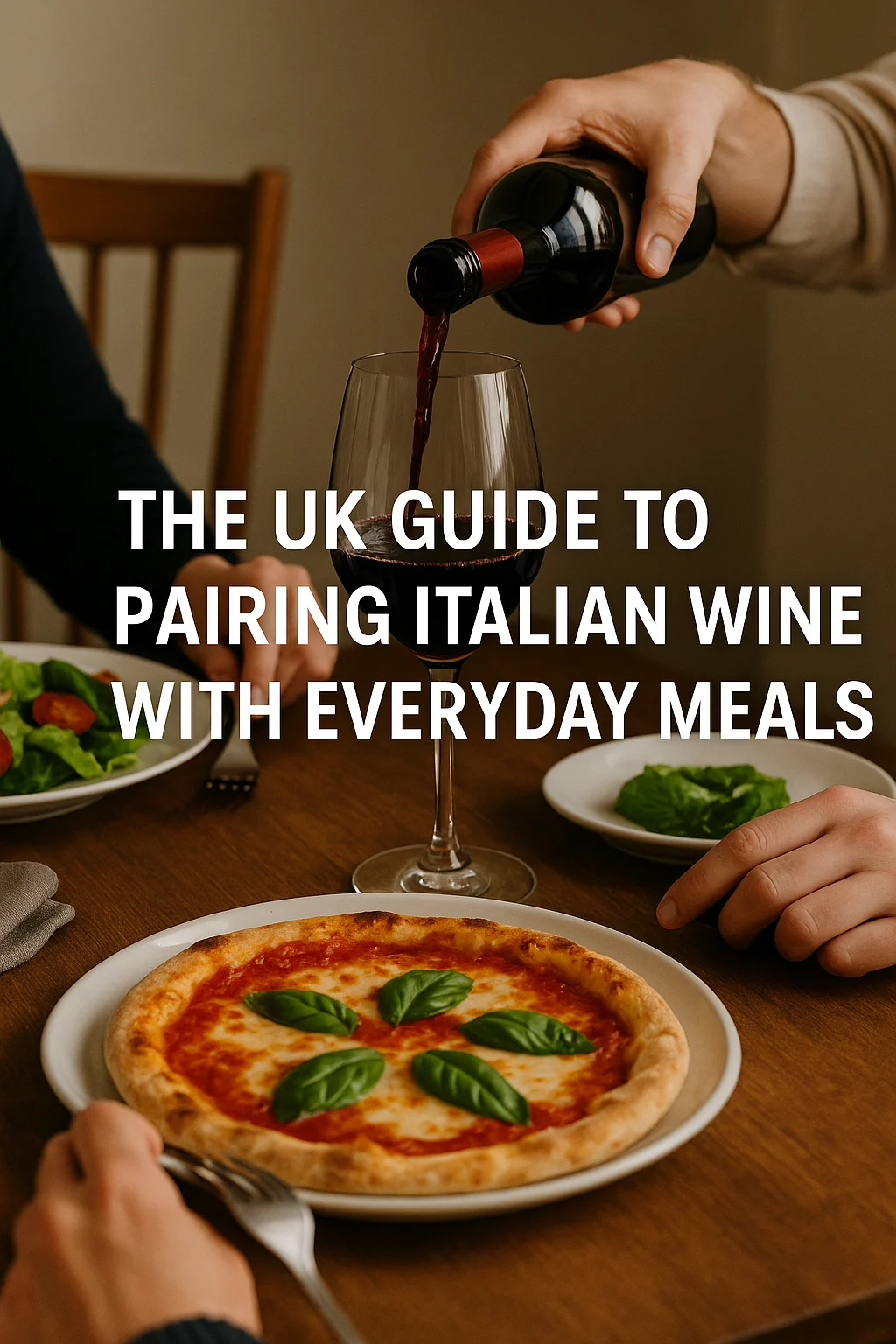
Italian Wine With Pizza and Tomato-Based Dishes
Pizza is one of the easiest places to start with Italian wine pairing, yet it’s often overcomplicated. Tomato sauce brings acidity, cheese brings fat, and toppings add salt and richness. The key is choosing a wine with enough acidity to match the tomatoes and enough structure to handle the cheese without overwhelming the dish.
Sangiovese-based wines are classic here because their natural acidity mirrors tomato flavours while their moderate tannins work well with melted cheese and cured meats. Chianti, Montepulciano d’Abruzzo, and other central Italian reds perform brilliantly. For lighter pizzas or vegetarian toppings, a fresh Italian white with good acidity can also work well, particularly if you prefer something more refreshing.
Pairing Italian Wine With Pasta and Bolognese
Pasta dishes are a staple in UK households, yet many people default to heavy, overly ripe reds that quickly overpower the meal. Italian wine pairing takes a more measured approach. For rich meat sauces like Bolognese, you want a wine with enough body to stand up to the dish, but with acidity to keep everything balanced.
Medium-bodied Italian reds are ideal here. Wines with firm but not aggressive tannins allow the flavours of the sauce to shine while still offering structure. Avoid overly oaked or high-alcohol styles, which can make the dish feel heavy. For creamy pasta sauces, crisp Italian whites with good acidity help cut through richness and refresh the palate between bites.
Italian Wine With Sunday Roast Dinners
Sunday roast is one of the most searched-for pairing occasions in the UK, yet Italian wine is often overlooked in favour of traditional French options. In reality, Italian wines work exceptionally well with roast dinners because of their balance and food-first structure.
Roast chicken pairs beautifully with lighter Italian reds or fuller-bodied whites, depending on seasoning and sides. Roast beef benefits from wines with firmer tannins and acidity to cut through richness, while lamb works well with slightly more robust Italian reds that have savoury depth rather than overt sweetness. The key is matching the weight of the wine to the weight of the dish rather than focusing solely on meat type.
Italian Wine With Curry and Spiced Dishes
Curry night is a challenge for many wine drinkers, and Italian wine is rarely suggested despite working surprisingly well with certain styles. The trick is to avoid heavy tannins and high alcohol, both of which can clash with spice.
Italian whites with aromatic character and good acidity can complement spiced dishes without overwhelming them. Lighter reds served slightly chilled can also work, particularly with tomato-based or gently spiced curries. The goal is freshness and balance rather than power. Italian wine pairing here is about contrast, not dominance.
Italian Wine With Fish and Seafood
Italian wine truly excels with fish and seafood, especially when acidity and freshness are prioritised. For fried dishes such as fish and chips, crisp Italian whites help cut through oil and refresh the palate. For grilled fish or seafood pasta, slightly more textured whites or lighter reds can work beautifully.
Italian coastal regions have produced food-friendly wines for centuries, and this heritage shows in how naturally these wines interact with seafood. Avoid heavily oaked whites, which can overwhelm delicate flavours, and focus instead on clean, mineral-driven styles.
Italian Wine for Barbecues and Casual Outdoor Meals
Barbecues are often associated with bold, high-alcohol reds, but Italian wine offers more flexible options that suit the varied nature of outdoor cooking. Lighter reds with good acidity can be served slightly chilled and work well with grilled meats, vegetables, and marinades.
Italian rosé wines are also excellent choices for barbecues, offering freshness and versatility without sacrificing flavour. These wines handle smoky notes and seasoning far better than many people expect and keep things feeling relaxed and balanced.
Cheese Boards and Italian Wine
Cheese boards are another area where Italian wine pairing is often misunderstood in the UK. Rather than trying to find one wine for all cheeses, Italian logic focuses on balance and progression. Fresh cheeses pair well with crisp whites, while harder, aged cheeses benefit from structured reds with acidity rather than sweetness.
Italian wines with savoury notes often complement nutty or salty cheeses particularly well. Avoid overly sweet or heavily oaked wines, which can clash with cheese and make the pairing feel disjointed.
Simple Italian Wine Pairing Rules for UK Drinkers
If there is one takeaway from Italian wine pairing, it’s that simplicity works best. Match acidity to richness, tannin to protein, and weight to weight. Don’t overthink flavours, and don’t expect every wine to shine on its own. Italian wines are designed to work as part of a meal, not as a performance.
By focusing on how the wine feels with food rather than how it tastes in isolation, Italian wine becomes easier to understand and far more rewarding to drink. This approach opens up a wider range of styles and helps UK drinkers discover wines they might otherwise overlook.
Why Italian Wine Makes Sense for Everyday UK Meals
Italian wine pairing is not about special occasions or perfect matches. It’s about everyday enjoyment, balance, and making meals feel complete. When paired properly, Italian wines feel natural, digestible, and satisfying without being heavy or tiring.
For UK households looking for wines that work across meals rather than just on weekends, Italian wine offers exceptional value and versatility. Once you start pairing Italian wine the way it’s meant to be paired — with food, context, and simplicity — it becomes clear why these styles have endured for generations.