Once a bottle of white wine has been opened, its flavours and aromas begin to change. Exposure to oxygen sets off a process that can alter the character of the wine, often flattening its fruitiness and diminishing freshness. How long white wine lasts after opening depends on several factors, including the type of wine, how it is stored, and how much time has passed since it was uncorked.
This guide explains how long white wine lasts after opening, how to tell when it’s past its best, and what you can do to enjoy it for as long as possible.
The Short Answer
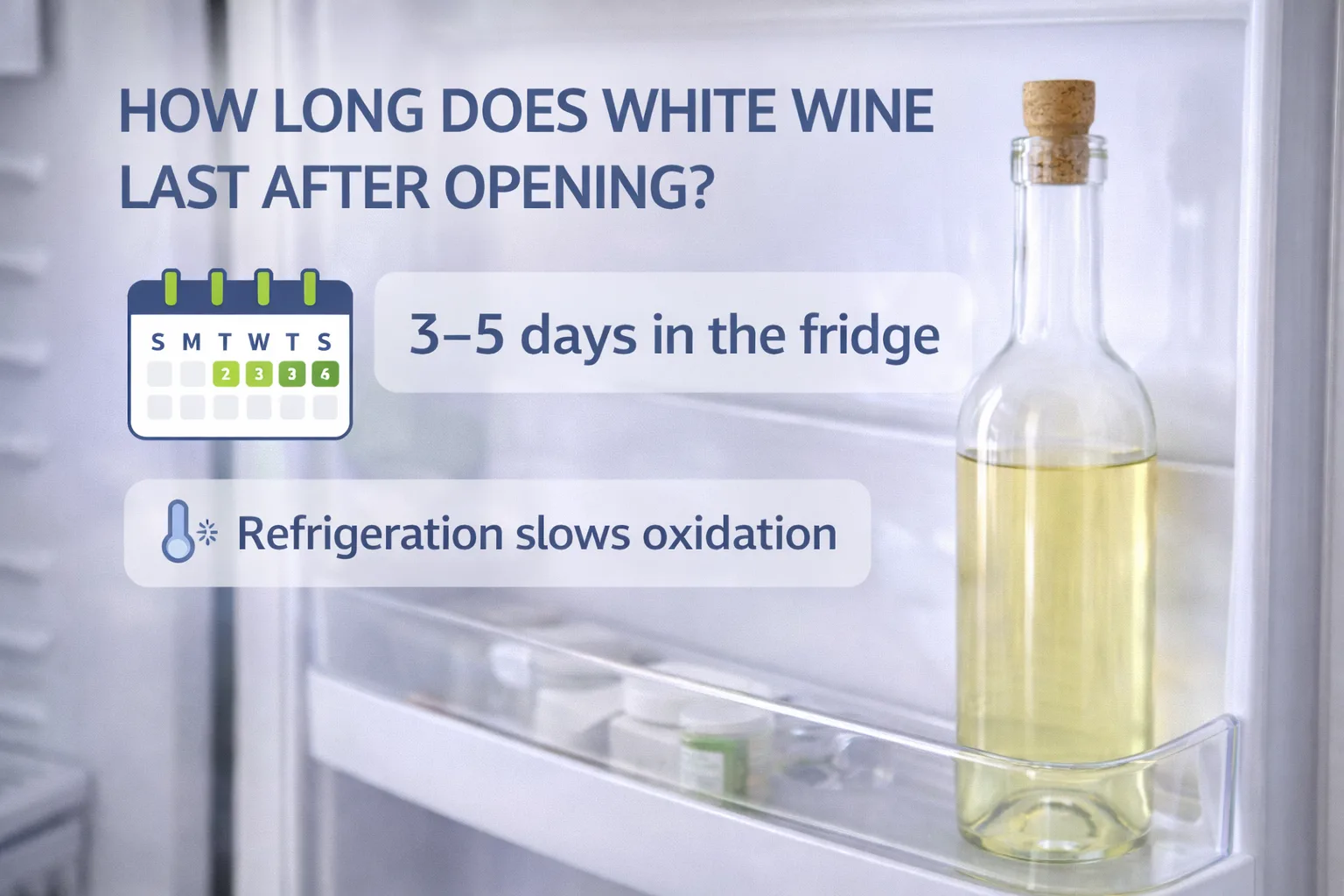
Most opened white wines remain drinkable for about 3 to 5 days when stored correctly in the fridge. Some lighter, aromatic white wines may start to lose freshness sooner, while fuller-bodied whites can sometimes hold up slightly longer.
If left out at room temperature after opening, white wine will deteriorate much more quickly — often within a day or two.
Why White Wine Changes After Opening
When a bottle of white wine is opened, oxygen begins to interact with the wine. This process is known as oxidation. Initially, a small amount of oxygen can help release aromas and soften the wine, but over time, oxidation dulls flavours, reduces freshness, and can eventually make the wine taste flat, sour or stale.
The rate at which these changes occur depends on:
- How much air is in the bottle
- Storage temperature
- The wine’s structure (acidity, body, flavour profile)
- Whether the wine was decanted or poured directly
How Storage Affects Wine Lifespan
Storage conditions play a major role in how long opened white wine lasts.
Refrigeration Slows Oxidation
Keeping opened white wine in the fridge dramatically slows oxidation. Cool temperatures reduce the chemical reactions that cause wine to deteriorate, helping preserve aroma and flavour.
Resealing Matters
Resealing the bottle — whether with the original cork, a wine stopper, or a vacuum system — also helps limit the wine’s contact with oxygen, which extends its drinkable life.
Glass Surface Exposure
Less surface area exposed to air helps preserve the wine. A nearly full bottle with minimal air space will often last longer than a bottle that is half full.
How Long Different Types of White Wine Last
Light, Aromatic Whites
Examples: Sauvignon Blanc, Pinot Grigio, Albariño
Typical lifespan after opening: 2–4 days
These wines are often lower in body and higher in acidity. They are delightful when fresh but can lose their crisp character fairly quickly.
Medium-Bodied Whites
Examples: Soave, Verdicchio, Vinho Verde
Typical lifespan after opening: 3–5 days
Their balance of acidity and texture allows them to retain quality a little longer than the lightest styles.
Full-Bodied Whites
Examples: Chardonnay, Viognier
Typical lifespan after opening: 3–6 days
Fuller whites with more body and complexity can hold up a bit longer, especially when stored correctly in the fridge.
Sweet White Wines
Examples: late-harvest wines, some Riesling styles
Typical lifespan after opening: up to 5–7 days
Sweet wines often have more sugar and sometimes higher acidity, which can sometimes help preserve them slightly longer. Storage method still matters.
Sparkling Whites
Examples: Brut, Extra Dry, Prosecco
Typical lifespan after opening: 1–3 days
Sparkling wines lose effervescence quickly. While refrigeration helps, bubbles will fade fast, and drinkability declines more rapidly.
What Happens If Wine Is Left at Room Temperature?
Leaving opened white wine at room temperature accelerates its decline. Within hours, oxidation begins to dull fruit and freshness. After a day or two, the wine may taste flat or sour.
Even if the bottle is resealed, sitting out will shorten its lifespan compared with chilled storage.
How to Tell If Opened White Wine Has Gone Bad
Here are signs that white wine is past its best:
- Loss of fruit character
- Dull or flat taste
- Sharp or sour smell
- Unpleasant bitterness
- Strange or unpleasant aftertaste
If the wine smells or tastes significantly different from when it was first opened, it’s a good indication that oxidation has taken over.
Tips to Extend Drinkability
To make opened white wine last as long as possible:
- Reseal the bottle tightly
- Store in the fridge
- Keep upright (reduces oxygen contact)
- Use smaller bottles if you decant only part of a bottle
- Drink within 3–5 days for optimal flavour
If you know you won’t finish the bottle soon, consider transferring it to a smaller container and filling to the top before sealing. This reduces the amount of air in contact with the wine.
Can Vacuum Stoppers Help?
Certain vacuum stoppers can help extend the life of opened wine by removing some air from the bottle. These can be useful, but refrigeration remains more important. Vacuum systems slow oxidation, but they don’t stop it entirely.
Does Decanting Affect Lifespan?
Yes. Decanting introduces more oxygen to the wine, which speeds up changes. Wines that have been decanted before serving are best consumed within the same day.
Summary: How Long Does White Wine Last After Opening?
In summary:
- 3–5 days in the fridge is a reliable guideline for most white wines.
- Lighter styles may fade sooner.
- Sweet wines sometimes last a bit longer.
- Sparkling wines decline fastest.
- Proper storage (resealing + refrigeration) extends drinkability.
Understanding these timelines helps you enjoy every glass without waste.