Storing wine correctly helps preserve its flavour, aroma and structure. While fine wine storage can involve specialist cellars and temperature control, most people simply want to know how to store wine at home so it stays enjoyable and doesn’t spoil prematurely.
The good news is that proper wine storage doesn’t have to be complicated. By understanding a few basic principles — temperature, light, position and time — you can store wine safely whether it’s for a few days or several years.
This guide explains how to store wine properly, covering unopened bottles, opened bottles, short-term storage and common mistakes to avoid.
Why Proper Wine Storage Matters
Wine is a living product that continues to change after bottling. Poor storage conditions can cause wine to age too quickly, lose freshness or develop unpleasant flavours.
Heat, light and oxygen are the main factors that damage wine. Storing bottles incorrectly can result in wine that tastes flat, sour or oxidised, even if the bottle itself was high quality.
Correct storage slows this process and helps wine remain balanced and enjoyable.
The Ideal Temperature for Storing Wine
Temperature is the most important factor when storing wine.
The ideal storage temperature for most wines is between 10°C and 13°C. This allows wine to age slowly and evenly. Temperatures that are too warm can cause wine to age prematurely, while temperatures that fluctuate can damage the wine over time.
For everyday home storage, consistency matters more than perfection. A steady cool temperature is far better than frequent changes.
Can You Store Wine at Room Temperature?
Wine can be stored at room temperature for short periods, but it is not ideal for long-term storage.
Modern homes are often warmer than traditional wine cellars, especially in summer. Prolonged exposure to temperatures above 20°C can negatively affect wine, particularly lighter styles and sparkling wines.
If you plan to drink a bottle within a few weeks, room temperature storage is usually fine. For anything longer, a cooler location is better.
How to Store Unopened Wine Bottles
Unopened wine bottles should be stored in a cool, dark place away from heat sources such as radiators, ovens or direct sunlight.
Bottles sealed with natural cork should be stored on their side. This keeps the cork moist and prevents air from entering the bottle. Wines sealed with screw caps can be stored upright without issue.
Avoid places with vibration, such as near washing machines or refrigerators, as constant movement can disturb the wine over time.
How to Store Opened Wine
Once a bottle of wine is opened, oxygen begins to affect it immediately. Proper storage can slow this process.
Opened wine should be:
- Resealed with the cork or a stopper
- Stored in the fridge, regardless of colour
- Kept upright to minimise surface area
Most opened wines remain enjoyable for:
- 1–2 days for sparkling wine
- 2–3 days for lighter white and rosé wines
- 3–5 days for most red wines
Does Wine Need to Be Refrigerated After Opening?
Yes. Refrigeration slows oxidation and helps wine last longer after opening.
Even red wine benefits from being stored in the fridge once opened. You can always let it warm slightly before drinking. This is far better than leaving an opened bottle at room temperature.
How Long Can Wine Be Stored?
How long wine can be stored depends on the style.
Most everyday wines are made to be enjoyed within a few years of release. These wines benefit from simple, stable storage rather than long-term ageing.
Some wines, particularly structured reds and certain whites, can improve with age if stored correctly. However, ageing wine requires more controlled conditions than most homes provide.
Where to Store Wine at Home
Common home storage options include:
- A cupboard away from heat and light
- A basement or cellar
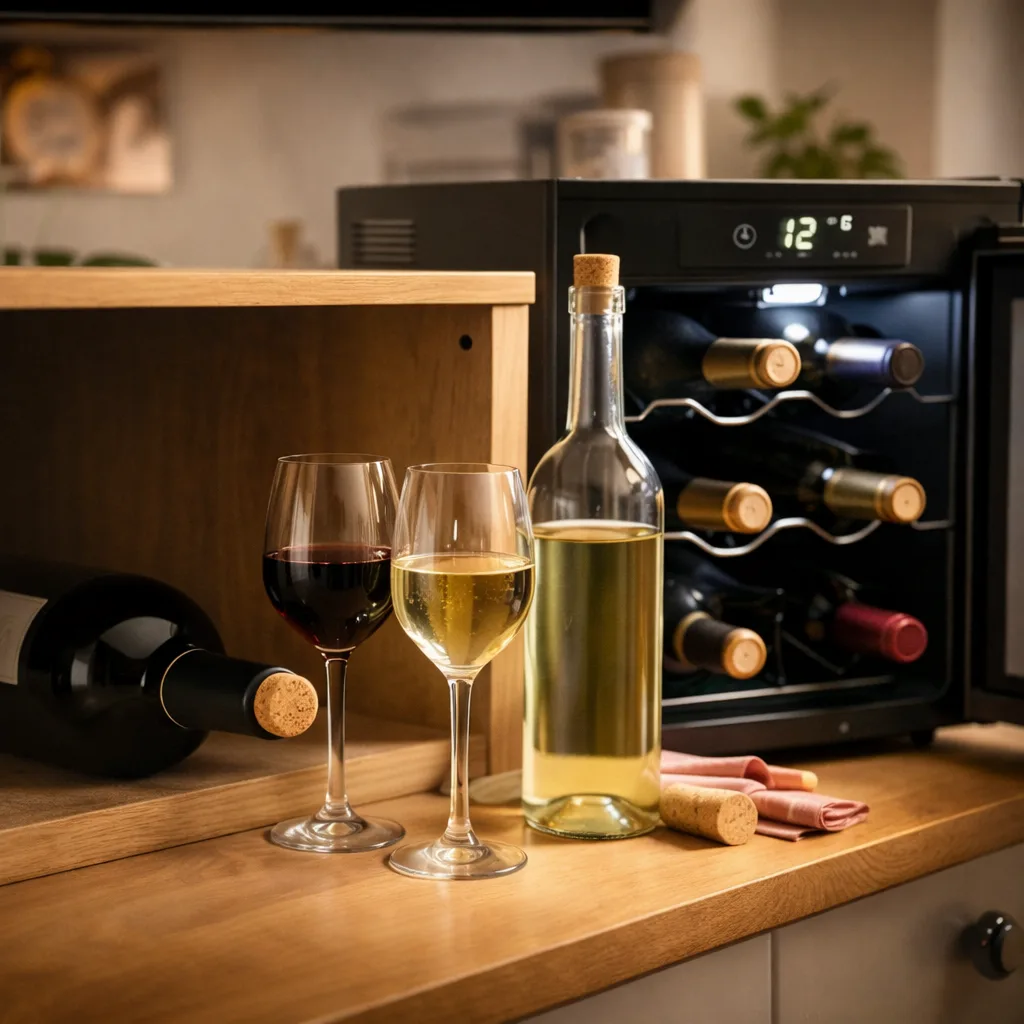
- A dedicated wine fridge
A wine fridge is the most reliable option for people who regularly store wine, as it maintains consistent temperature and humidity.
If using a cupboard, choose one on an interior wall and avoid locations near kitchens or heating systems.
Should Wine Be Stored Upright or on Its Side?
Wine sealed with cork should be stored on its side to keep the cork from drying out. Screw-cap wines can be stored upright without issue.
For short-term storage, position matters less, but for anything longer than a few months, correct orientation helps preserve the seal.
Does Light Affect Wine?
Yes. Light, especially sunlight and strong artificial light, can damage wine over time.
Ultraviolet light can cause chemical reactions in wine that lead to unpleasant aromas and flavours. This is why wine bottles are often dark coloured.
Always store wine away from direct light where possible.
Common Wine Storage Mistakes
Some of the most common mistakes include:
- Storing wine in a warm kitchen
- Leaving bottles in direct sunlight
- Standing cork-sealed bottles upright for long periods
- Allowing temperature to fluctuate frequently
Avoiding these mistakes can significantly extend the life of your wine.
Is a Wine Cellar Necessary?
A wine cellar is not necessary for most people. While cellars offer ideal conditions, many wines are designed for early drinking and do not require long-term ageing.
Good home storage focuses on stability rather than perfection.
Summary: How to Store Wine Properly
Storing wine properly is about controlling temperature, light and exposure to air. Keep wine cool, store corked bottles on their side, refrigerate opened bottles and avoid heat and sunlight.
With a few simple habits, you can store wine safely at home and enjoy it at its best, whether you plan to drink it soon or keep it for a little longer.