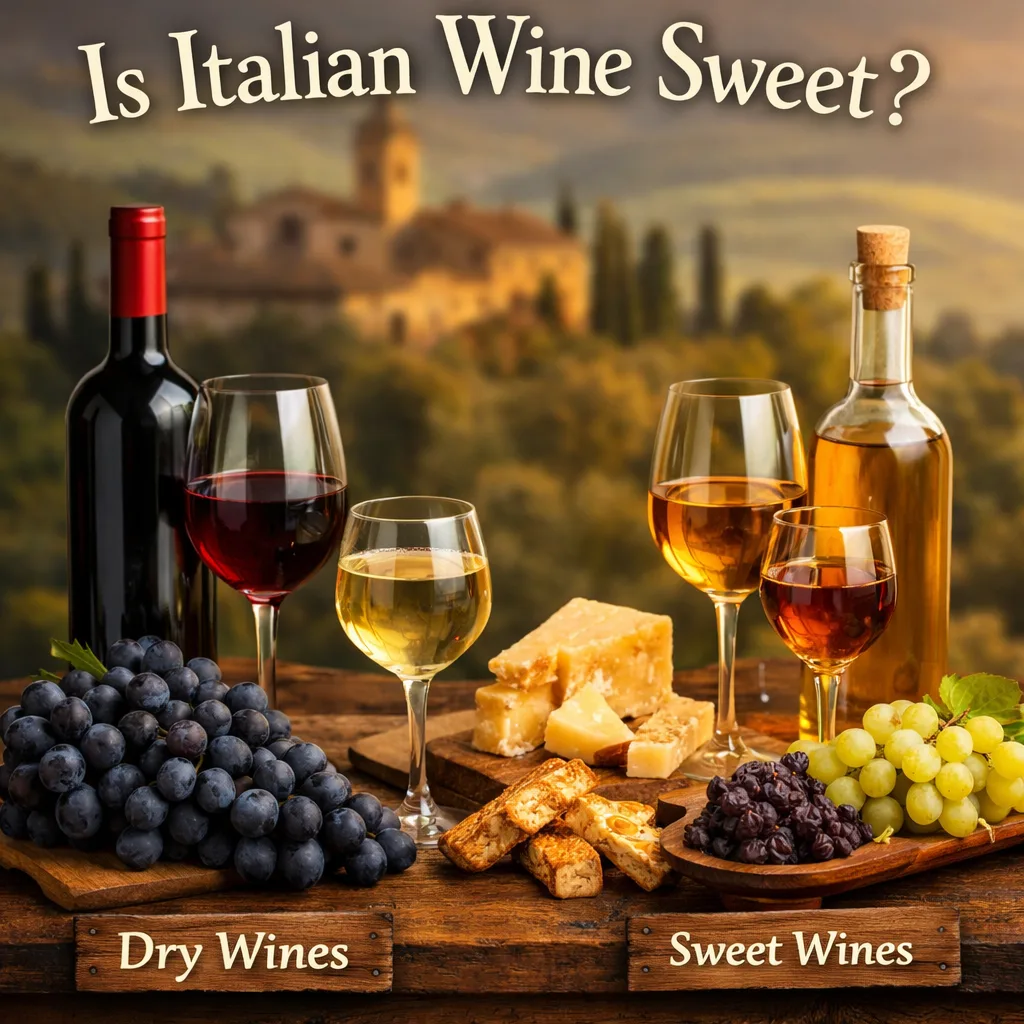
Many people assume Italian wine is sweet. Others believe it is always dry. The truth sits somewhere in between. Italian wine covers an enormous range of styles, regions and grape varieties, and sweetness depends far more on the type of wine than the country it comes from.
In short, most Italian wines are dry, but Italy also produces some of the world’s most famous sweet wines. Understanding the difference comes down to knowing how sweetness works in wine and which Italian styles are naturally dry or sweet.
This guide explains whether Italian wine is sweet, why some styles taste sweeter than others, and how to choose the right Italian wine if you prefer dry or sweet flavours.
What Does “Sweet” Mean in Wine?
In wine, sweetness refers to residual sugar. Residual sugar is the natural grape sugar that remains after fermentation. When fermentation converts almost all the sugar into alcohol, the wine is considered dry. When fermentation is stopped early or grapes are naturally very ripe, sugar remains and the wine tastes sweet.
As a rough guide:
- Dry wines usually contain very little residual sugar
- Off-dry wines contain a small amount and may taste slightly sweet
- Sweet wines contain noticeable sugar and taste clearly sweet
However, sweetness is not always obvious. Acidity can mask sweetness, meaning a wine with some sugar may still taste fresh or crisp rather than sugary.
Is Italian Wine Usually Sweet or Dry?
The majority of Italian wine is dry.
Italy’s traditional winemaking culture focuses on food-friendly wines with high acidity and balance. These wines are designed to be drunk with meals rather than as dessert wines, which is why dryness is the dominant style across most regions.
Italian reds such as Chianti, Barolo, Barbera and Montepulciano are almost always dry. Many Italian white wines, including Pinot Grigio, Verdicchio and Soave, are also fermented fully dry.
That said, Italy also produces important sweet wines, often made for specific occasions or desserts.
Why Some Italian Wines Taste Sweet Even When They Are Dry
Some Italian wines are technically dry but may taste sweet due to fruit ripeness, alcohol level or oak ageing.
For example:
- Wines made from very ripe grapes can taste fruity and soft
- Higher alcohol can give a sense of sweetness
- Oak ageing can add vanilla or caramel notes
These characteristics can create a sweeter impression even when there is little or no residual sugar. This is why two dry Italian wines can taste very different depending on style and region.
Common Italian Wines That Are Dry
If you are trying to avoid sweetness, these Italian wines are generally safe choices:
Italian Dry White Wines
- Pinot Grigio
- Verdicchio
- Soave Classico
- Fiano di Avellino
- Etna Bianco
These wines are known for high acidity, clean finishes and minimal sweetness.
Italian Dry Red Wines
- Chianti and Chianti Classico
- Barbera
- Nebbiolo (Barolo and Barbaresco)
- Montepulciano d’Abruzzo
- Nero d’Avola
Although these reds can be rich or fruity, they are almost always dry.
Italian Wines That Are Sweet or Semi-Sweet
Italy also produces some famous sweet wines, often made using traditional or historic methods.
Moscato d’Asti
Moscato d’Asti is lightly sparkling, low in alcohol and clearly sweet. It is one of the most recognisable sweet Italian wines and is often served as a dessert wine.
Vin Santo
Vin Santo is a traditional Italian dessert wine made from dried grapes. It is sweet, rich and often served with biscuits or desserts.
Recioto
Recioto wines are made using partially dried grapes and are naturally sweet. Both white and red versions exist, with Recioto della Valpolicella being one of the most famous.
Sweet Prosecco Styles
Although many Prosecco wines are dry, some styles contain more residual sugar. Labels such as “Extra Dry” can be misleading, as Extra Dry Prosecco is actually sweeter than Brut.
Is Prosecco Sweet?
Prosecco causes a lot of confusion when discussing Italian wine sweetness.
Prosecco is labelled according to sugar level:
- Extra Brut: very dry
- Brut: dry
- Extra Dry: slightly sweet
- Dry: noticeably sweet
Despite the name, Extra Dry Prosecco is sweeter than Brut. If you prefer dry wine, look for Brut or Extra Brut on the label.
How to Tell If an Italian Wine Is Sweet Before Buying
If you want to avoid sweet Italian wines, there are a few practical tips:
- Look for the word secco on the label, which means dry
- Choose classic, food-focused regions rather than dessert wine regions
- Avoid wines described as dolce or amabile
- Check the alcohol level — very low alcohol often indicates sweetness
- Research the grape variety and style
Italian wine labels can be complex, but understanding a few key terms makes a big difference.
Are Italian Dessert Wines Common?
Italian dessert wines are important culturally but not common for everyday drinking. Most Italian households drink dry wine with meals and reserve sweet wines for celebrations or desserts.
This is why the international reputation of Italian wine is largely based on dry styles, even though famous sweet wines exist.
So, Is Italian Wine Sweet?
Italian wine is mostly dry, but Italy also produces some excellent sweet wines. Whether an Italian wine tastes sweet depends on:
- The grape variety
- The region
- The winemaking method
- The intended style
If you prefer dry wine, Italian wine offers more choice than almost any other country. If you enjoy sweet wine, Italy has historic and high-quality options designed specifically for that purpose.
Understanding the difference allows you to choose confidently and avoid surprises.