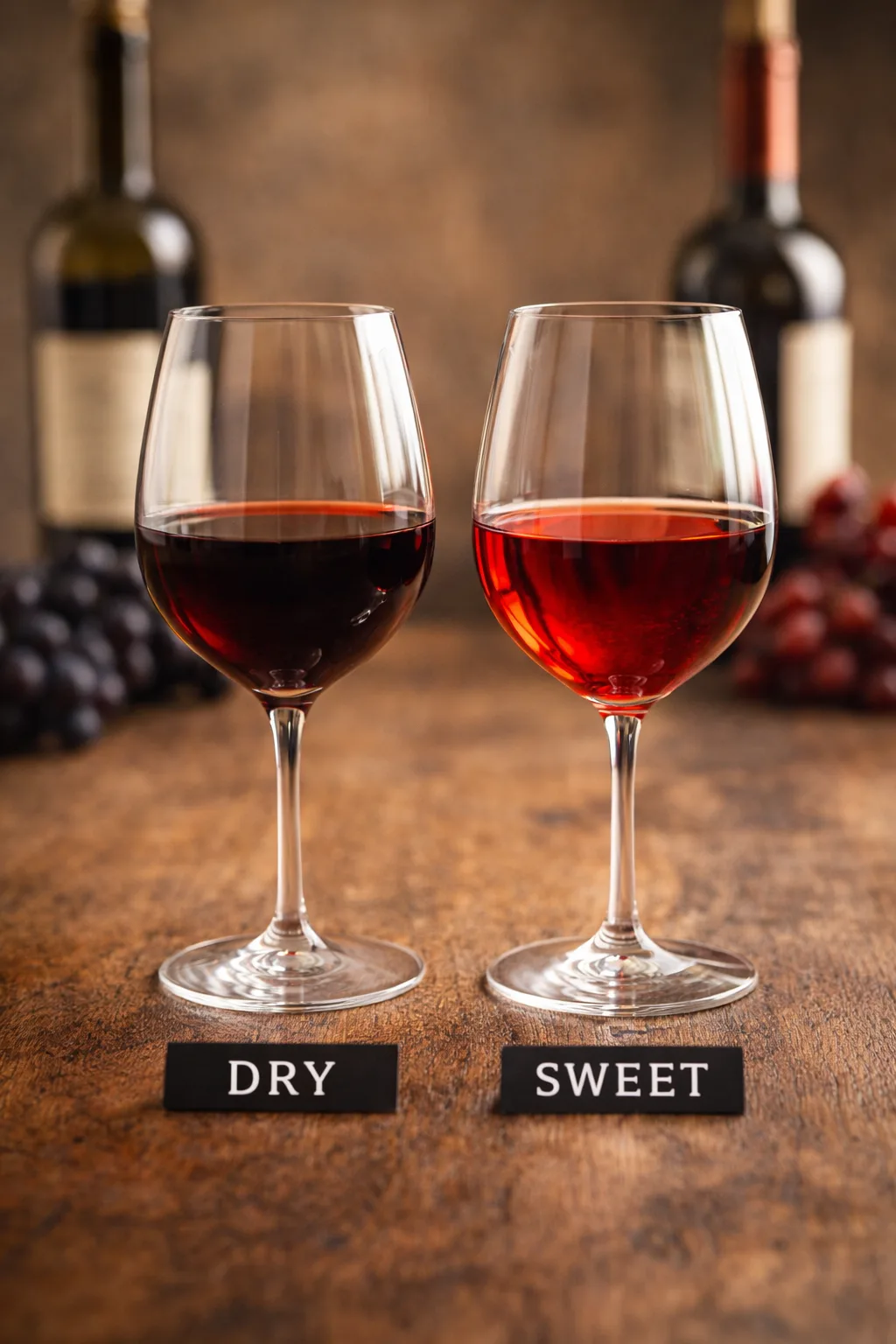
Many people assume that all red wine is dry, but this assumption doesn’t always match what they taste in a glass. Some red wines are unmistakably dry, while others can feel fruitier or even slightly sweet. The key to understanding this lies in how wine is made and how our taste buds perceive flavour.
In simple terms, most red wine is dry, meaning it contains little to no residual sugar. However, style, grape type, region and winemaking choices all influence how dry a wine feels on the palate. This guide explains what “dry” means in red wine, which styles are typically dry, how sweetness can be perceived even in dry wines, and how to choose the right red wine for your taste.
What Does “Dry” Mean in Wine?
In wine terminology, “dry” refers to the amount of residual sugar — the natural grape sugar that remains after fermentation. A wine is considered dry when almost all of that sugar has been converted into alcohol by yeast during fermentation.
This is a technical definition, but how we perceive dryness also depends on other elements, especially acidity and tannin. High acidity and firm tannins can mask or counterbalance any slight sweetness, making a wine taste even drier.
Why Most Red Wine Is Dry
The vast majority of red wines — especially those intended for food and aging — are fermented fully dry. This is because sweetness in red wine can clash with the structure and flavours that winemakers want to highlight.
Many classic red wine regions and grapes are judged by balance, complexity and food pairing quality, not by sweetness. For example:
- Bordeaux and Burgundy reds
- Chianti and Barolo
- Rioja and Rhone
These wines are almost always dry, even if they vary widely in body and intensity.
How Sweetness Is Perceived in Red Wine
It is possible for a dry red wine to taste slightly sweet, but this usually comes from fruitiness or ripeness rather than residual sugar. Riper grapes produce more fruit flavours — cherry, plum, berry — which can give the impression of sweetness even when the wine is technically dry.
Other factors that affect perceived sweetness include:
- Alcohol level — higher alcohol can make wines feel rounder
- Body and texture — fuller body can seem softer
- Tannin structure — softer tannins can make a wine feel smoother
So when people say a red tastes sweet, they are often responding to fruitiness or texture, not actual sugar.
Common Dry Red Wine Styles
These red wines are typically dry:
Cabernet Sauvignon
Known for high tannins and bold structure, Cabernet is almost always dry and pairs well with rich foods like grilled meats or hearty stews.
Merlot
Softer tannins than Cabernet, but still dry. Merlot is often described as smooth and approachable.
Pinot Noir
Lighter bodied and aromatic, Pinot Noir is dry and often displays sour cherry and earthy notes.
Sangiovese
The backbone of many Italian reds, Sangiovese is dry with vibrant acidity — ideal for pairing with tomato-based dishes.
Syrah / Shiraz
Full-bodied and spicy, these wines are dry and powerful, often with pepper and dark fruit characters.
Nebbiolo
Known for high tannin and acidity, Nebbiolo (used in Barolo and Barbaresco) is classically dry and age-worthy.
Red Wines That May Taste Sweeter (But Aren’t)
Some reds feel sweeter even though they are technically dry. This is usually due to fruit concentration or specific winemaking styles.
Examples include:
- Zinfandel / Primitivo (very ripe fruit)
- Malbec with jammy character
- Gamay (Beaujolais) with bright fruit appeal
In most cases, these wines do not contain significant residual sugar, but the impression of sweetness comes from ripe fruit and lower tannin.
Sweet Red Wines Do Exist
While uncommon, there are red wines made with noticeable residual sugar. These are usually:
- Late harvest wines
- Fortified wines
- Dessert styles
Examples include:
- Brachetto d’Acqui — lightly sparkling and sweet
- Recioto della Valpolicella — rich and sweet
- Late harvest Shiraz/Merlot blends
These are distinct styles and are labelled accordingly — not typical table wines.
How Red Wine Sweetness Is Indicated on Labels
Unlike white wines where terms like secco or amabile may hint at sweetness, red wine labels rarely use sweetness indicators. Instead, look at:
- Alcohol level — higher might feel softer
- Tasting notes — producers often mention fruit character
- Style description — terms like “dessert wine” imply sweetness
If a wine is intended to be sweet, the description or producer notes almost always make that clear.
Pairing Dry Red Wine with Food
Dry red wines are traditionally designed to complement food. Their acidity and tannin help balance rich, fatty and umami-rich dishes.
Good pairings include:
- Grilled or roasted red meats
- Hearty pasta with tomato sauces
- Stews and braises
- Mature cheeses
Matching wine dryness with food intensity helps create balance at the table.
Common Misconceptions
There are a few myths about red wine and dryness:
Myth: All red wine is sweet
In reality, almost all standard red wines are fermented dry.
Myth: Sweet red wine is the norm in warm climates
Warm climate wines may taste fruitier, but this is not the same as sweetness from sugar.
Myth: Sweeter red wine is bad
It’s not — it’s just a different style. Dessert reds and off-dry reds have their place, but they are distinct from everyday dry reds.
How to Tell if a Red Wine Is Dry
If you’re unsure about a wine before buying:
- Check tasting notes for dry or structured references
- Look for acidity and tannin descriptions
- Ask for guidance from staff (especially helpful in restaurants)
Over time, your palate will recognise dryness by balance rather than by assumption.
Summary: Is Red Wine Dry?
Most red wine is dry, not sweet. Perceived sweetness often comes from ripe fruit character or texture rather than residual sugar. Understanding how sweetness is defined versus how it is perceived helps you choose wine that matches your preference.
Whether you prefer light, medium or full-bodied red wines, the default assumption for most everyday red wines is that they are dry — and this is what makes them so versatile with food.