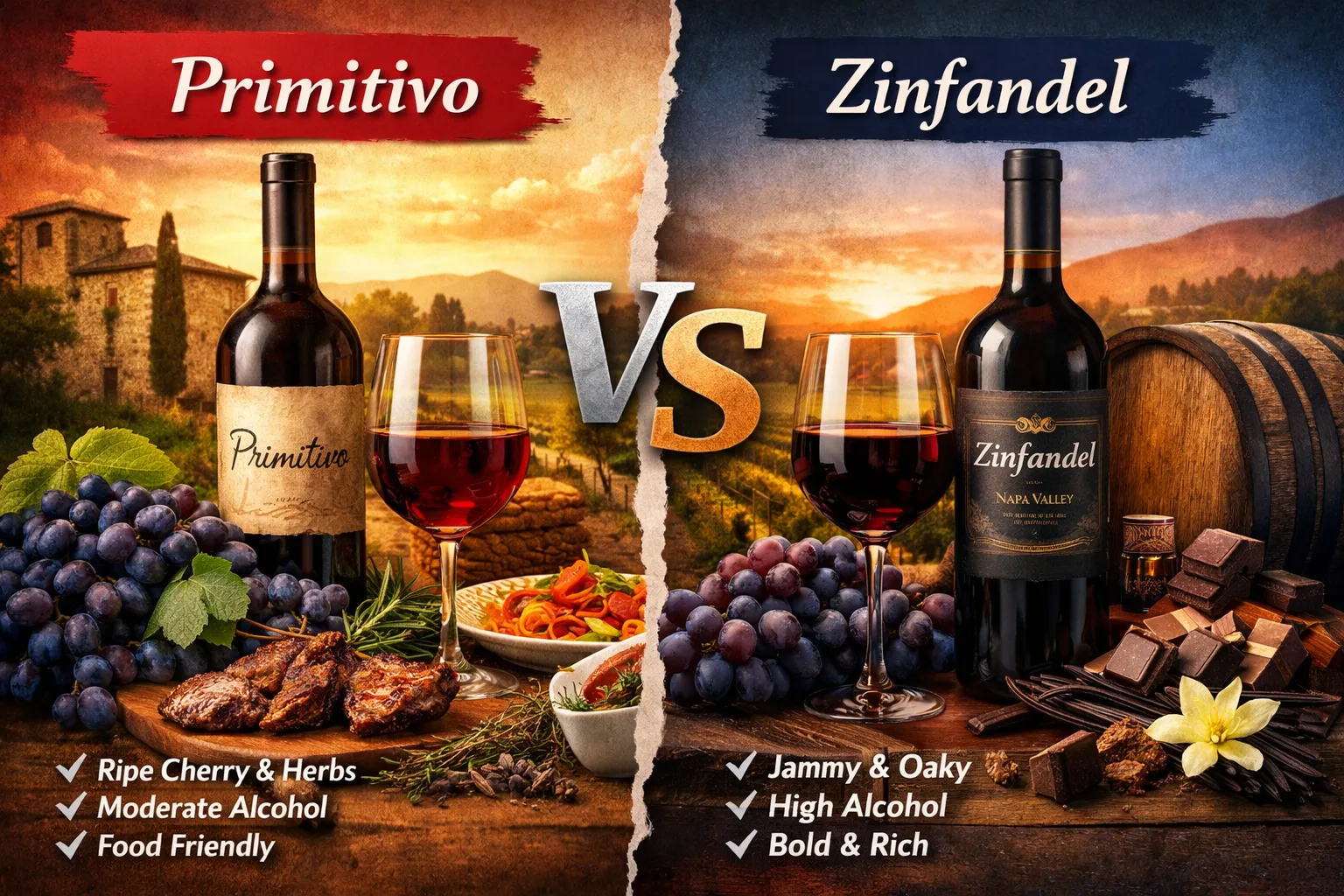
Many wine drinkers hear that Primitivo and Zinfandel are the same grape. However, once they taste both, confusion sets in. Although DNA testing confirms they are genetically identical, the wines feel completely different in the glass. As a result, most people assume they must come from separate varieties.
In reality, the grape is the same. Instead, the winemaking approach changes everything.
Where the grape originates
Originally, this grape comes from Croatia. From there, it travelled to southern Italy, where producers named it Primitivo. Eventually, it crossed the Atlantic and became famous in the United States as Zinfandel.
So yes, the DNA matches. However, vineyard choices and cellar decisions create two separate identities.
What Italian Primitivo is about
In Puglia, southern Italy, Primitivo thrives in warm conditions. The name comes from primo, meaning early, because the grape ripens sooner than most.
Rather than chasing power, Italian producers focus on balance. Because of this, Primitivo typically shows:
- Ripe cherry and dark berry flavours
- Spice and dried herb notes
- Moderate alcohol
- Soft tannins
- Excellent food pairing ability
Most importantly, Primitivo belongs on the table. For example, it works well with pasta, grilled meat and slow-cooked dishes. Therefore, it never overwhelms food.
If you want to experience this style properly, you can view the wines we stock here:
Primitivo wines at Donzella Wines.
How American Zinfandel differs
Across the Atlantic, Zinfandel developed a bolder personality. In many cases, producers push ripeness as far as possible. Consequently, the wines become much bigger.
Typically, American Zinfandel shows:
- Jammy black fruit
- Very high alcohol
- Heavy oak influence
- Vanilla and chocolate notes
- A thick mouthfeel
This style appeals to some drinkers. Unfortunately, it often hides the grape’s natural character.
The real difference: winemaking philosophy
The grape is identical. However, the approach is not.
Italian Primitivo
- Picked earlier to keep balance
- Lower alcohol levels
- Minimal oak use
- Terroir-driven style
- Made for food
American Zinfandel
- Picked very ripe
- Higher sugar equals higher alcohol
- Heavy oak ageing
- Power over subtlety
- Style over origin
Because of these choices, the wines drink very differently.
Why Primitivo is the better option
Primitivo respects the grape. However, you still taste fruit. At the same time, you also get freshness, spice and structure.
Zinfandel, on the other hand, often feels forced. For instance, everything is dialled up. More alcohol. More oak. More sweetness.
At first sip, it can impress. Afterwards, it becomes tiring.
Meanwhile, Primitivo lets you finish the bottle comfortably.
Food pairing shows the clear winner
This is where Italian wine culture stands out.
Primitivo pairs well with:
- BBQ meats
- Tomato-based pasta
- Pizza
- Roast lamb
- Slow-cooked beef
Zinfandel struggles because:
- Alcohol dominates flavours
- Sweet oak clashes with food
- It overpowers lighter dishes
Therefore, Italian wine suits meals. By contrast, American wine often suits solo drinking.
Climate plays a major role
Southern Italy offers warm days and cooler nights. Because of this, acidity stays in the grapes.
California, however, has longer sunshine hours. As a result, sugar levels rise and alcohol increases.
Same grape. Different climate. Consequently, the result changes.
Alcohol levels compared
- Primitivo: usually 13.5%–14.5%
- Zinfandel: often 15%–17%
Because of this difference, the impact becomes noticeable after two glasses.
Value for money
Here, Italy clearly wins.
You can buy a serious Primitivo without overspending. Meanwhile, Zinfandel often costs more for similar quality.
Therefore, Italian wine focuses on drinkability. In contrast, American wine focuses on branding.
Which should you choose?
Choose Primitivo if you:
- Drink wine with food
- Prefer balance
- Avoid high alcohol
- Enjoy savoury flavours
Alternatively, choose Zinfandel if you:
- Love bold wines
- Drink wine alone
- Enjoy sweet oak
- Want impact over nuance
Final verdict
Yes, the DNA matches. However, the styles differ.
Zinfandel shouts. Primitivo speaks.
Therefore, we know which one belongs at the table.
If you want the authentic experience, explore our Italian selection here:
Shop Primitivo wines.