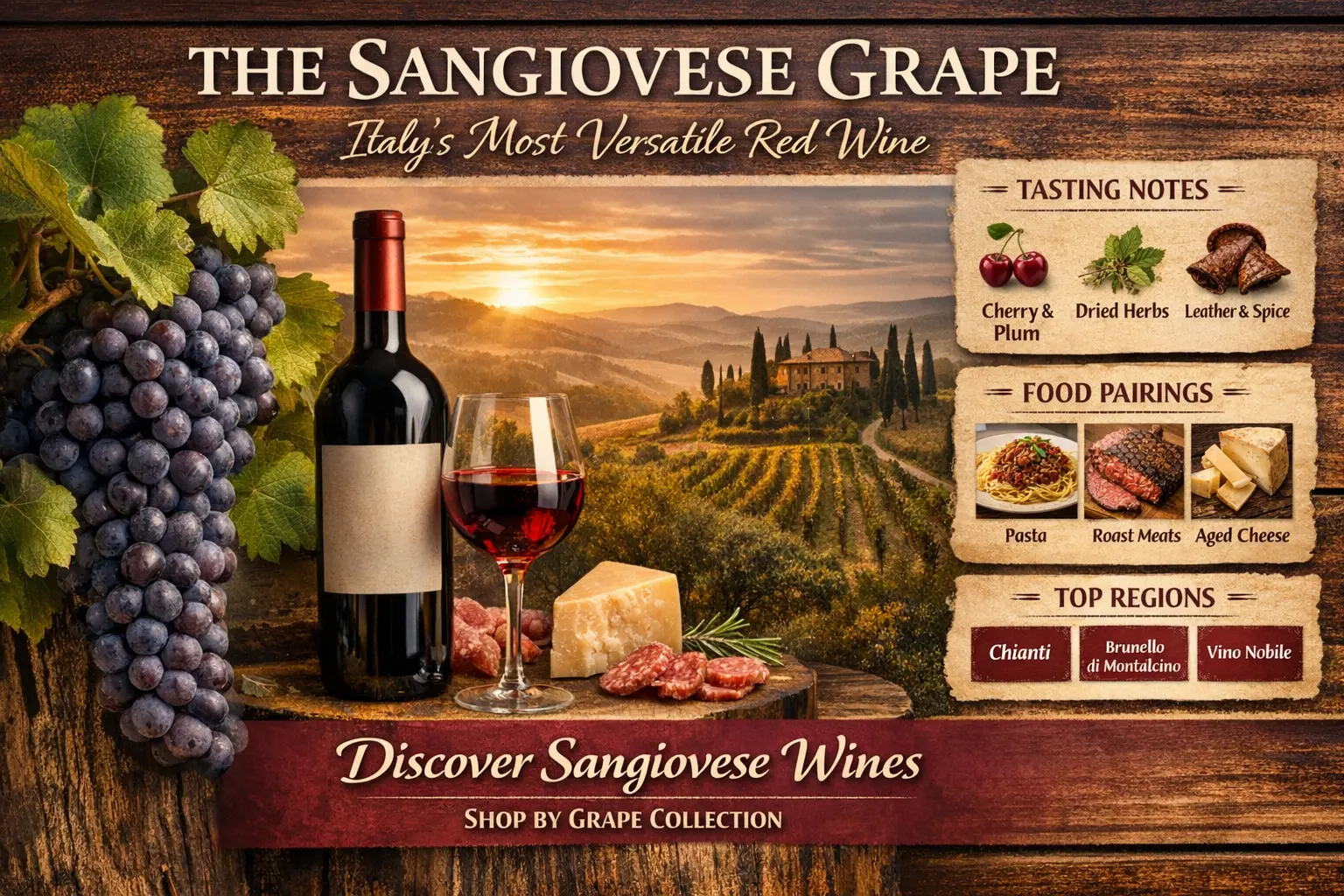
Sangiovese is the most widely planted red grape variety in Italy and the backbone of some of the country’s most famous wines. From the rolling hills of Tuscany to premium bottles that age for decades, this grape defines what many people think of as classic Italian red wine.
If you enjoy wines like Chianti, Brunello di Montalcino or Vino Nobile di Montepulciano, then you are already a Sangiovese drinker – whether you realised it or not.
This in-depth guide explores everything you need to know about the Sangiovese grape, including its history, taste profile, food pairings and how to buy the best bottles in the UK. You will also find direct links to our grape collections, including our main Shop by Grape hub, where you can browse all available Sangiovese wines.
What Is Sangiovese?
Sangiovese is a red grape variety native to Italy. It accounts for roughly 10% of all vineyard plantings in the country, making it the most important grape in Italian wine production.
The name “Sangiovese” is believed to come from sanguis Jovis – meaning “the blood of Jupiter” – highlighting how long this grape has been cultivated in Italy.
It is best known as the primary grape in:
- Chianti
- Chianti Classico
- Brunello di Montalcino
- Vino Nobile di Montepulciano
- Morellino di Scansano
However, Sangiovese is far more diverse than many people realise. Depending on where it is grown and how it is made, it can produce:
- Light, fresh everyday reds
- Medium-bodied food wines
- Powerful, age-worthy collector bottles
This versatility is what makes Sangiovese such a cornerstone of Italian wine culture.
A Brief History of the Sangiovese Grape
Sangiovese has been grown in central Italy for centuries. Written records date back to the 1500s, although viticulturists believe it is far older.
It became dominant in Tuscany because:
- It thrives in warm Mediterranean climates
- It retains high acidity even in hot years
- It reflects terroir exceptionally well
- It pairs perfectly with Italian cuisine
As Italian wine laws developed, Sangiovese became written into DOC and DOCG regulations, cementing its status in classic regions.
Modern DNA research shows that Sangiovese has many clones and mutations, which helps explain why it performs so differently across Italy.
Where Is Sangiovese Grown?
Tuscany – The Spiritual Home
Tuscany is where Sangiovese truly shines.
Chianti & Chianti Classico
- Fresh cherry fruit
- High acidity
- Herbal notes
- Ideal everyday drinking style
Brunello di Montalcino
- 100% Sangiovese (locally called Brunello)
- Rich, powerful, long ageing potential
- Premium pricing
Vino Nobile di Montepulciano
- Elegant and structured
- Softer than Brunello
- Excellent food wines
Morellino di Scansano
- Coastal influence
- Juicy and approachable
- Great value
Outside Tuscany
Sangiovese is also grown in:
- Umbria
- Emilia-Romagna
- Marche
- Lazio
These wines are often:
- Fruit-driven
- Softer in tannin
- Easy drinking
- Excellent value for money
You can explore all available bottles via our Shop by Grape directory, where Sangiovese wines are clearly categorised.
How Does Sangiovese Taste?
Sangiovese is known for its bright acidity and red fruit profile.
Typical flavours include:
- Cherry
- Sour cherry
- Red plum
- Tomato leaf
- Dried herbs
- Leather
- Earth
- Tobacco
Depending on the winemaking style, you may also find:
- Vanilla (from oak ageing)
- Spice
- Smoke
- Dark chocolate
Body & Structure
- Medium body
- High acidity
- Medium to high tannins
- Dry style
This structure makes Sangiovese extremely food-friendly.
Why Sangiovese Is So Food Friendly
Sangiovese’s natural acidity cuts through fat, while its savoury character complements herbs and tomato-based dishes.
That is why it works so well with:
- Pasta
- Pizza
- Roast chicken
- Beef
- Pork
- Tomato sauces
- Grilled vegetables
Food Pairing Guide: What to Eat with Sangiovese
Italian Classics
- Spaghetti Bolognese
- Lasagne
- Margherita pizza
- Risotto
- Osso buco
- Veal dishes
British Favourites
- Sunday roast
- Sausage and mash
- Shepherd’s pie
- Roast chicken
- Mushroom dishes
Cheese Pairings
- Pecorino
- Parmesan
- Mature cheddar
- Comté
Different Styles of Sangiovese
Everyday Drinking Styles
These are usually:
- Unoaked or lightly oaked
- Bright and juicy
- Affordable
Perfect for:
- Midweek dinners
- Pizza nights
- Casual gatherings
Premium Styles
Often:
- Oak aged
- Higher tannin
- Long ageing potential
Ideal for:
- Special occasions
- Gifting
- Cellaring
How to Choose Sangiovese in the UK
When buying Sangiovese in the UK, consider:
- Your budget
- Food pairing needs
- Occasion
- Ageing potential
Entry-level bottles from Tuscany and central Italy offer fantastic value. Premium bottles such as Brunello di Montalcino are ideal for collectors.
You can browse all current options via our Shop by Grape hub, which filters wines by grape variety.
Price Guide
- £10–£15: Everyday drinking
- £15–£30: Quality mid-range
- £30+: Premium bottles
Best Occasions for Sangiovese
- Dinner parties
- Italian themed nights
- Birthdays
- Anniversaries
- Wine tastings
How to Serve Sangiovese
- Temperature: 16–18°C
- Glass: Medium to large red wine glass
- Decanting: Recommended for premium bottles
Ageing Potential
Premium Sangiovese can age for:
- 5–10 years (Chianti Classico Riserva)
- 10–25 years (Brunello di Montalcino)
Frequently Asked Questions
Is Sangiovese dry?
Yes, Sangiovese wines are almost always dry.
Is Sangiovese high in tannin?
Medium to high tannins depending on style.
Is Sangiovese similar to Pinot Noir?
They share bright acidity but Sangiovese is more savoury.
Is Chianti always Sangiovese?
Yes, Chianti must contain Sangiovese by law.
Explore Sangiovese Wines
Ready to try Sangiovese? Browse our full collection via the Shop by Grape hub to discover bottles available for UK delivery.
Whether you are looking for a budget-friendly everyday red or a premium bottle for a special occasion, you will find a Sangiovese wine to suit your taste.