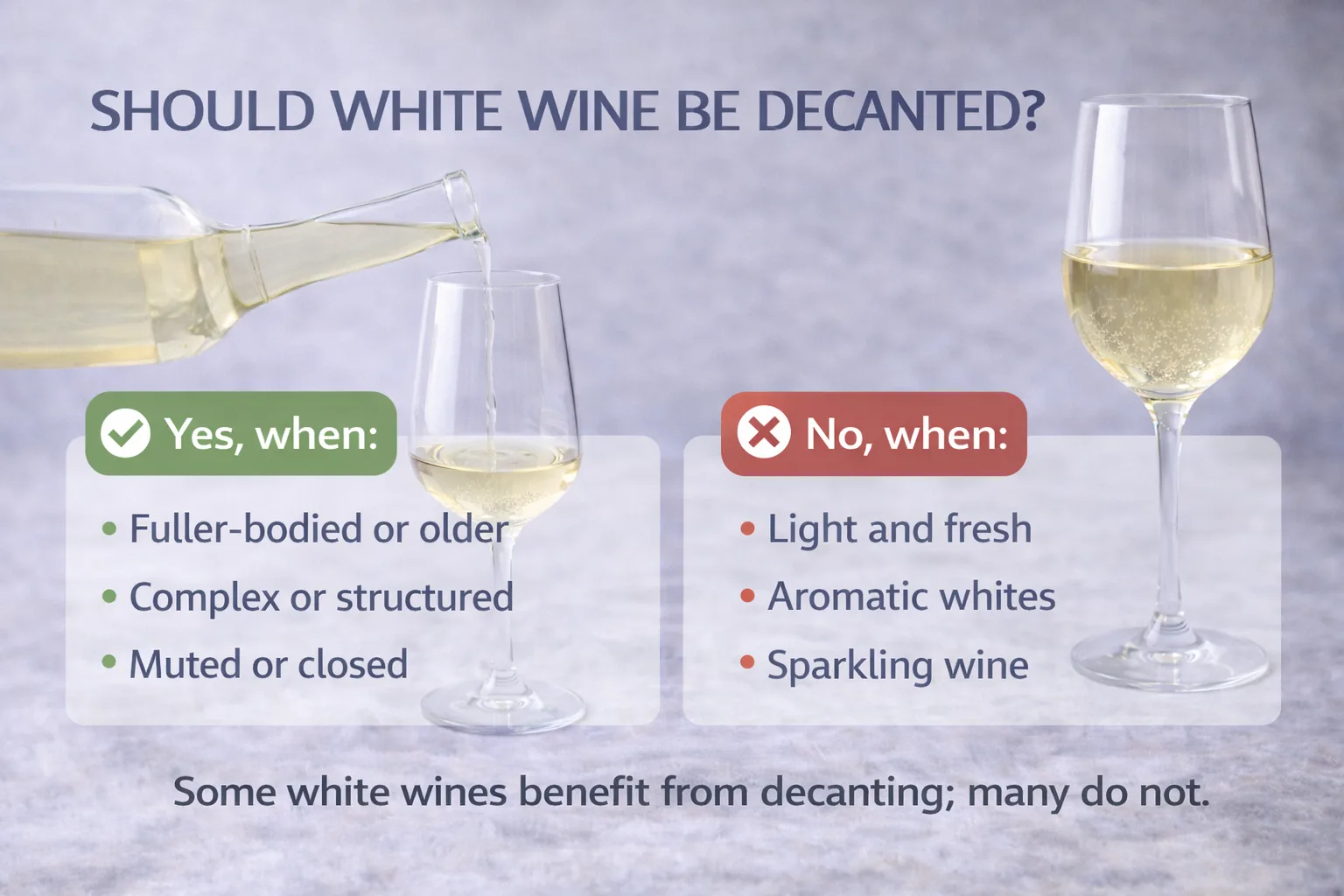
Should white wine be decanted? In some cases, yes. While many white wines are best served straight from the bottle, certain fuller or more complex white wines can benefit from brief decanting to help aromas open up and flavours soften.
This guide answers the question should white wine be decanted, explaining when it improves flavour and aroma, when it should be avoided, and how to approach decanting white wine correctly.
The Short Answer
Sometimes, yes — some white wines benefit from decanting, but many do not.
Light, delicate white wines are usually best served straight from the bottle, while fuller, more complex whites can benefit from brief exposure to air.
Why White Wine Might Be Decanted
Decanting exposes wine to oxygen. This process, known as aeration, can help certain wines open up, releasing aromas and softening structure.
Some white wines are tightly wound when first opened, especially those with complexity, age, or extended lees contact. Decanting can help these wines express themselves more fully.
White Wines That Can Benefit From Decanting
Full-Bodied White Wines
Fuller white wines are the most likely to benefit from decanting.
Examples include:
- Oaked Chardonnay
- White Rhône blends
- Some Italian whites with structure and age
These wines often have more texture and complexity, and brief aeration can enhance aroma and balance.
Older White Wines
Older white wines can sometimes appear muted or closed when first opened. Gentle decanting may help revive aromas and clarify the wine, particularly if there is sediment present.
Care should be taken with very old bottles, as excessive oxygen can cause them to fade quickly.
White Wines With Lees Influence
Wines that have spent time on their lees often have more structure and richness. Decanting can help integrate these elements and bring the wine into balance.
White Wines That Should Not Be Decanted
Light and Delicate White Wines
Light-bodied, aromatic white wines usually do not benefit from decanting.
Examples include:
- Sauvignon Blanc
- Pinot Grigio
- Very young, fresh whites
These wines are designed to be enjoyed for their freshness. Too much oxygen can strip delicate aromas and make them feel flat.
Sparkling White Wines
Sparkling wines should not be decanted. Decanting causes bubbles to dissipate rapidly and removes one of the wine’s defining features.
Does Decanting Change the Taste of White Wine?
Yes. Decanting can:
- Open up aromas
- Soften sharp edges
- Increase complexity
However, too much exposure to air can have the opposite effect, dulling freshness and making the wine feel tired.
How Long Should White Wine Be Decanted?
If decanting white wine, less is more.
Most whites only need 10–30 minutes of aeration. Prolonged decanting is rarely beneficial and can cause the wine to lose vitality.
Decanting vs Letting the Wine Breathe in the Glass
Often, simply pouring white wine into a glass and allowing it to sit for a few minutes achieves a similar effect to decanting.
For many white wines, this gentler approach is preferable and reduces the risk of over-aeration.
Temperature and Decanting White Wine
Temperature plays an important role.
Decanting white wine straight from the fridge can mute aromas. Allowing the wine to warm slightly before or after decanting often improves expression.
The goal is balance, not extreme cold or warmth.
Common Myths About Decanting White Wine
A common myth is that white wine should never be decanted. Another is that decanting always improves wine.
In reality, decanting is a tool. Used correctly, it can enhance certain wines. Used unnecessarily, it can detract from enjoyment.
Practical Decision Guide
Decant white wine if:
- It is full-bodied or structured
- It feels closed or muted on opening
- It has some age or complexity
Do not decant if:
- The wine is light and aromatic
- It is meant to be drunk fresh
- It is sparkling
Summary
White wine does not always need to be decanted, but some styles can benefit from brief aeration. Fuller-bodied, complex or aged white wines may open up with decanting, while light and fresh styles are best served directly from the bottle.
Knowing when to decant white wine helps you enjoy each bottle at its best without unnecessary intervention.