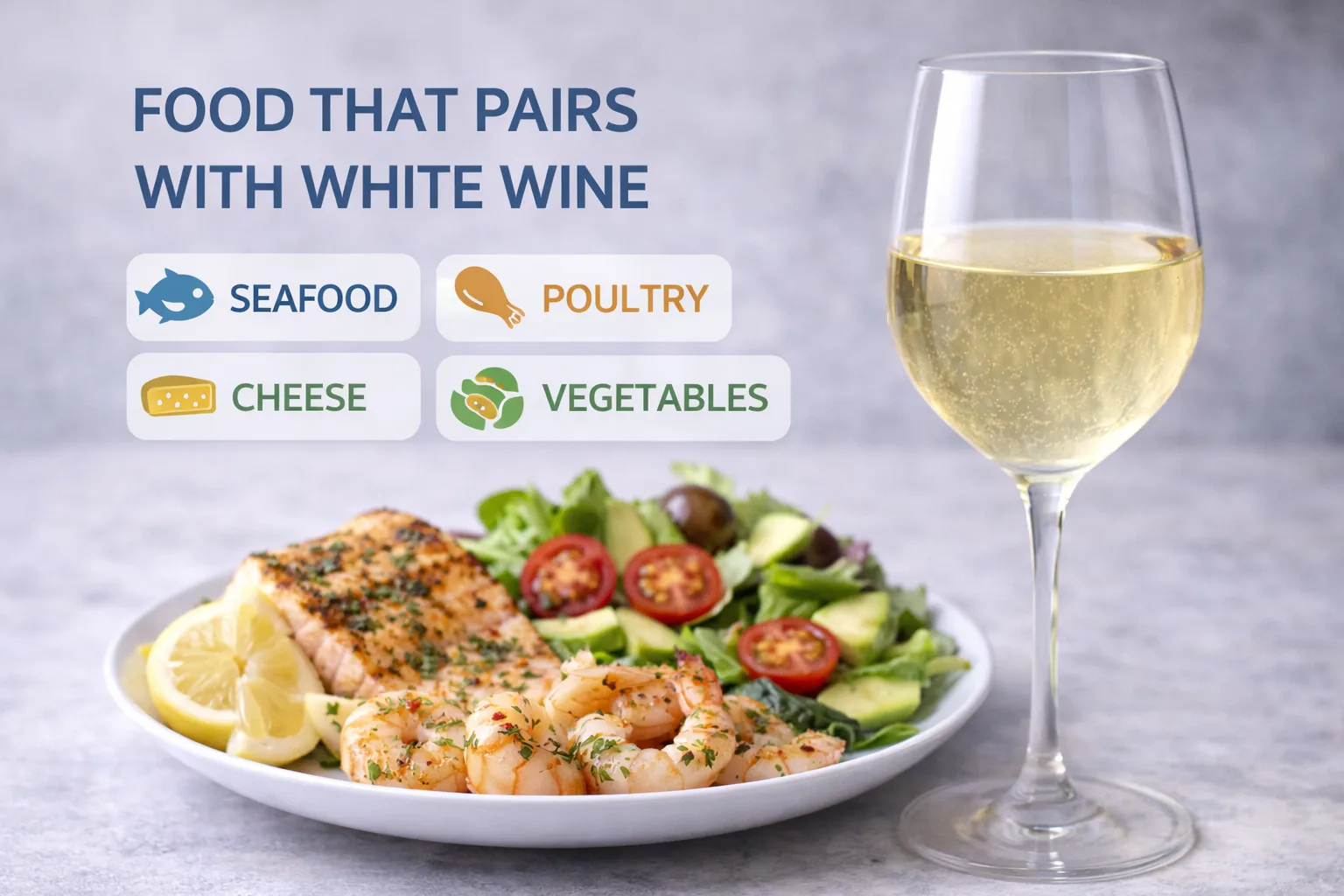
White wine is one of the most versatile wines when it comes to food pairing. Its natural acidity, freshness and wide range of styles mean it can work with everything from light salads to rich, creamy dishes. However, not all white wines pair with food in the same way.
This guide explains what food goes with white wine, starting with simple pairing principles and then breaking down which foods work best with different styles of white wine.
Why White Wine Pairs So Well With Food
White wine generally has higher acidity than red wine, which helps it refresh the palate and cut through richness. Acidity acts like a squeeze of lemon over food, lifting flavours rather than overpowering them.
White wine also tends to have lower tannin levels, making it easier to pair with delicate ingredients such as fish, vegetables and creamy sauces.
Basic Rules for Pairing White Wine With Food
While there are no absolute rules, a few principles make pairing easier.
Match lighter wines with lighter dishes and fuller wines with richer food. Use acidity to balance fat and cream. Avoid pairing very sweet wines with savoury dishes unless sweetness is intentional, such as with spicy food.
Most importantly, consider how the dish is cooked and seasoned, not just the main ingredient.
Seafood and White Wine
Seafood is one of the most natural matches for white wine.
Light, crisp whites work well with oysters, prawns, mussels and grilled fish. The acidity enhances freshness without masking delicate flavours.
Richer fish dishes, such as salmon or tuna, pair better with fuller-bodied whites that can handle more weight and texture.
Poultry and White Wine
Chicken and turkey pair exceptionally well with white wine.
Grilled or roast chicken works with medium-bodied whites that have good balance. Creamy chicken dishes pair better with fuller whites, while herb-based preparations benefit from fresher, more aromatic styles.
White wine often provides more flexibility with poultry than red wine.
Cheese and White Wine
Many people default to red wine with cheese, but white wine can be a better match.
Fresh and soft cheeses pair well with crisp whites. Creamy cheeses work with richer white wines, while salty cheeses benefit from wines with good acidity to refresh the palate.
Vegetables and White Wine
Vegetable-based dishes are often difficult to pair with red wine but work beautifully with white.
Green vegetables pair well with high-acidity whites, while roasted or caramelised vegetables work with slightly fuller styles. Dishes featuring herbs, citrus or olive oil are particularly well suited to white wine.
Spicy Food and White Wine
White wine can be an excellent partner for spicy food.
Slightly off-dry or aromatic white wines help balance heat and spice, while very tannic wines can make spice feel harsher. Acidity and gentle fruitiness help cool the palate.
Pasta and Rice Dishes
White wine pairs well with many pasta and risotto dishes, especially those with cream, seafood or vegetables.
Creamy sauces call for fuller-bodied whites, while lighter sauces benefit from fresher styles. Tomato-based dishes can work with crisp whites if acidity is well matched.
Food Pairing by White Wine Style
Crisp, Light White Wines
Examples include Sauvignon Blanc, Pinot Grigio, Albariño and dry Prosecco.
These wines pair well with:
- Seafood and shellfish
- Salads and light starters
- Grilled vegetables
- Fresh cheeses
Their acidity keeps flavours clean and refreshing.
Medium-Bodied White Wines
Examples include Verdicchio, Soave, Fiano and unoaked Chardonnay.
These wines work well with:
- Roast chicken
- Pasta with light sauces
- Risotto
- Grilled fish
They provide more texture while maintaining freshness.
Full-Bodied and Oaked White Wines
Examples include oaked Chardonnay, Viognier and white Rhône blends.
These wines suit:
- Creamy sauces
- Roast poultry
- Rich fish dishes
- Mushroom-based dishes
Their weight and texture match richer food.
Aromatic White Wines
Examples include Riesling, Gewürztraminer and Muscat.
These wines pair well with:
- Spicy dishes
- Asian cuisine
- Dishes with ginger or chilli
Aromatic intensity complements bold flavours.
Common White Wine Pairing Mistakes
One common mistake is pairing very delicate wine with strongly flavoured food. Another is ignoring the sauce or seasoning and focusing only on the protein.
Serving white wine too cold can also reduce its ability to pair well, as flavours become muted.
White Wine With Everyday Meals
White wine works well with many everyday foods, including simple pasta dishes, grilled vegetables, sandwiches and light meats. Its versatility makes it an easy choice for casual dining.
Practical Pairing Tips
When unsure, choose a dry white wine with good acidity. Avoid extremes, either very heavy or very delicate wines, unless the dish clearly suits them.
Taste and adjust rather than following rigid rules. Personal preference matters as much as theory.
Summary
White wine pairs well with a wide range of foods, from seafood and vegetables to poultry, cheese and creamy dishes. Understanding basic pairing principles and how different white wine styles behave makes it easier to choose the right match.
Knowing what food goes with white wine allows you to enjoy both the wine and the meal more fully, without overthinking the pairing.