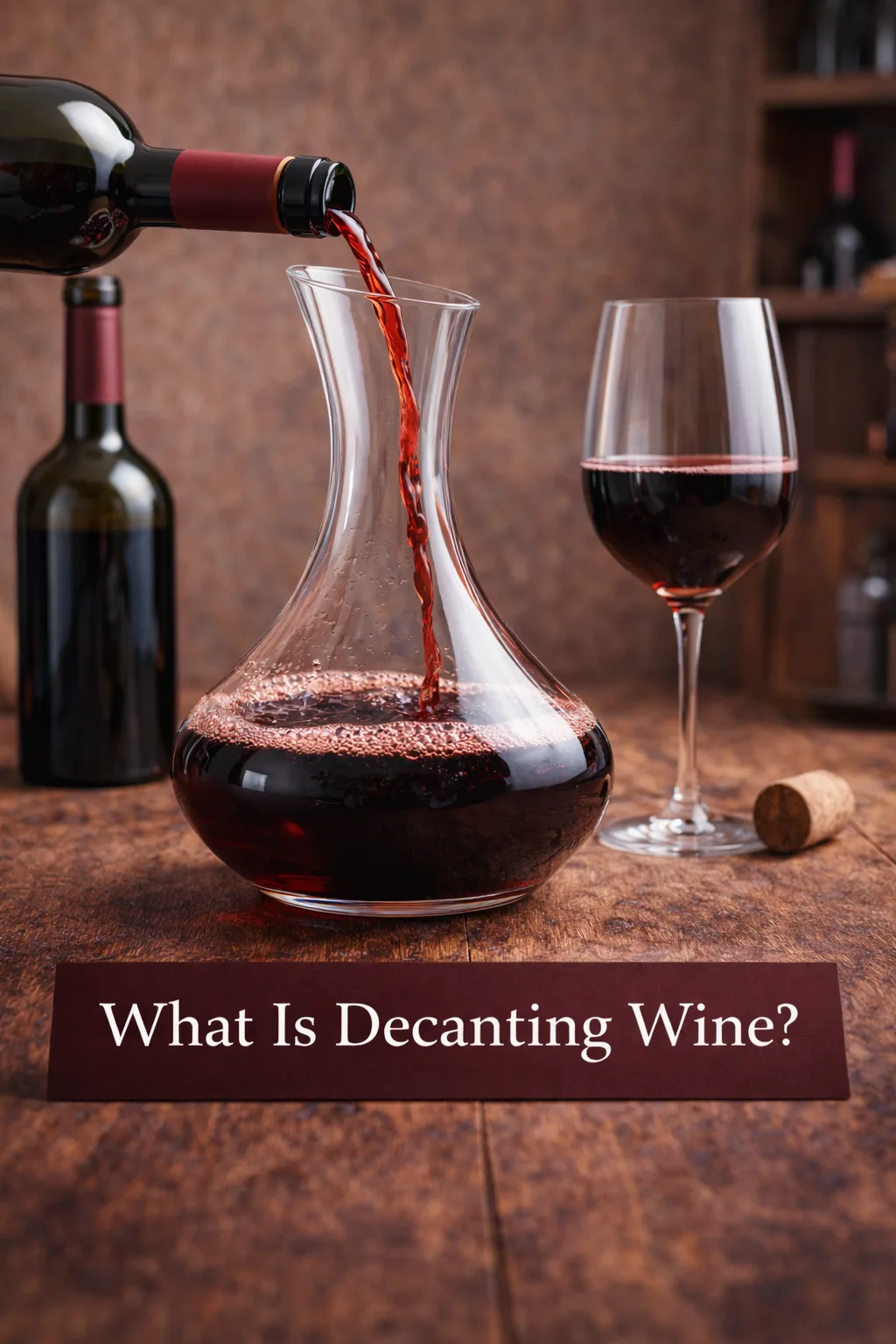
Decanting wine is the process of pouring wine from its bottle into another container, known as a decanter, before serving. While it can look ceremonial, decanting has practical purposes and is not always necessary for every bottle.
When people ask what is decanting wine, they are usually trying to understand whether it is required, what it actually does to the wine, and when it makes a difference. This guide explains what decanting is, why it’s done, which wines benefit from it, and when it should be avoided.
What Does Decanting Do?
Decanting serves two main purposes:
- Exposing wine to oxygen
- Separating wine from sediment
Not all wines need both benefits, and many wines need neither. Understanding the purpose helps decide whether decanting is worthwhile.
Decanting to Introduce Oxygen
When wine is poured into a decanter, it comes into contact with air. This exposure to oxygen can change how a wine smells and tastes.
In some wines, especially young and structured reds, oxygen can:
- Soften tannins
- Release aromas
- Make flavours feel more open and balanced
This is similar to letting wine “breathe,” but decanting increases the surface area exposed to air, speeding up the process.
Decanting to Remove Sediment
Older red wines can develop sediment as tannins and pigments naturally fall out of solution over time. This sediment is harmless but can taste bitter or gritty.
Decanting allows you to:
- Leave sediment behind in the bottle
- Serve clear wine
- Improve texture and appearance
This type of decanting is more about careful handling than oxygen exposure.
Which Wines Benefit From Decanting?
Young, Full-Bodied Red Wines
Many young red wines benefit from decanting because they can be tight or closed when first opened.
Examples include:
- Cabernet Sauvignon
- Syrah / Shiraz
- Aglianico
- Nebbiolo
Decanting these wines for 30–90 minutes can help them open up.
Wines With Heavy Sediment
Older red wines that have thrown sediment often benefit from careful decanting to separate clear wine from deposits.
These wines usually need gentle handling rather than long exposure to air.
Which Wines Do Not Need Decanting?
Many wines do not benefit from decanting and can even lose character if exposed to too much air.
These include:
- Light-bodied red wines
- Delicate older wines
- Most white wines
- Most sparkling wines
For these wines, pouring directly into the glass and swirling gently is usually sufficient.
How Long Should Wine Be Decanted?
There is no universal rule, but general guidance helps.
- Young, tannic reds: 30–120 minutes
- Medium-bodied reds: 20–60 minutes
- Older reds: Minimal time, often just enough to remove sediment
Tasting periodically is more reliable than following a fixed time.
Can Wine Be Decanted Too Long?
Yes. Excessive oxygen exposure can flatten aromas and reduce freshness.
Over-decanting is more common with:
- Older wines
- Lighter-bodied wines
Once a wine tastes dull or lifeless, it has been exposed too long.
Do You Need a Decanter to Decant Wine?
A traditional glass decanter is helpful but not essential. Any clean vessel with enough space to pour the wine safely can work.
What matters most is:
- Cleanliness
- Gentle pouring
- Control over oxygen exposure
The goal is to help the wine, not to perform a ritual.
Decanting vs Letting Wine Breathe in the Glass
Letting wine breathe in the glass exposes it to air more slowly. For many wines, this is enough.
Decanting is useful when:
- A wine feels tightly wound
- You want to speed up aeration
- You need to remove sediment
For everyday wines, glass aeration is often sufficient.
Does Decanting Improve All Wine?
No. Decanting is a tool, not a requirement.
Some wines improve dramatically with air, while others are already balanced when opened. Knowing when not to decant is as important as knowing when to do it.
Common Myths About Decanting Wine
“All red wine should be decanted”
Many reds do not need it.
“Decanting makes bad wine better”
Decanting cannot fix poor-quality wine.
“The longer you decant, the better”
Excessive air exposure can harm wine.
Practical Advice: Should You Decant Wine?
A simple approach works best:
- Taste the wine when opened
- If it feels tight or harsh, consider decanting
- Taste again after 15–20 minutes
This avoids unnecessary handling while letting the wine show its best.
Decanting Wine at Home vs Restaurants
Restaurants often decant for presentation or consistency, while home decanting should be practical and selective.
At home, decant when it improves enjoyment, not because it feels expected.
Summary: What Is Decanting Wine?
Decanting wine means transferring it from bottle to another vessel to expose it to air or remove sediment. Some wines benefit greatly, while others do not need it at all.
Understanding what decanting does — and when to use it — helps you serve wine confidently without unnecessary ritual.