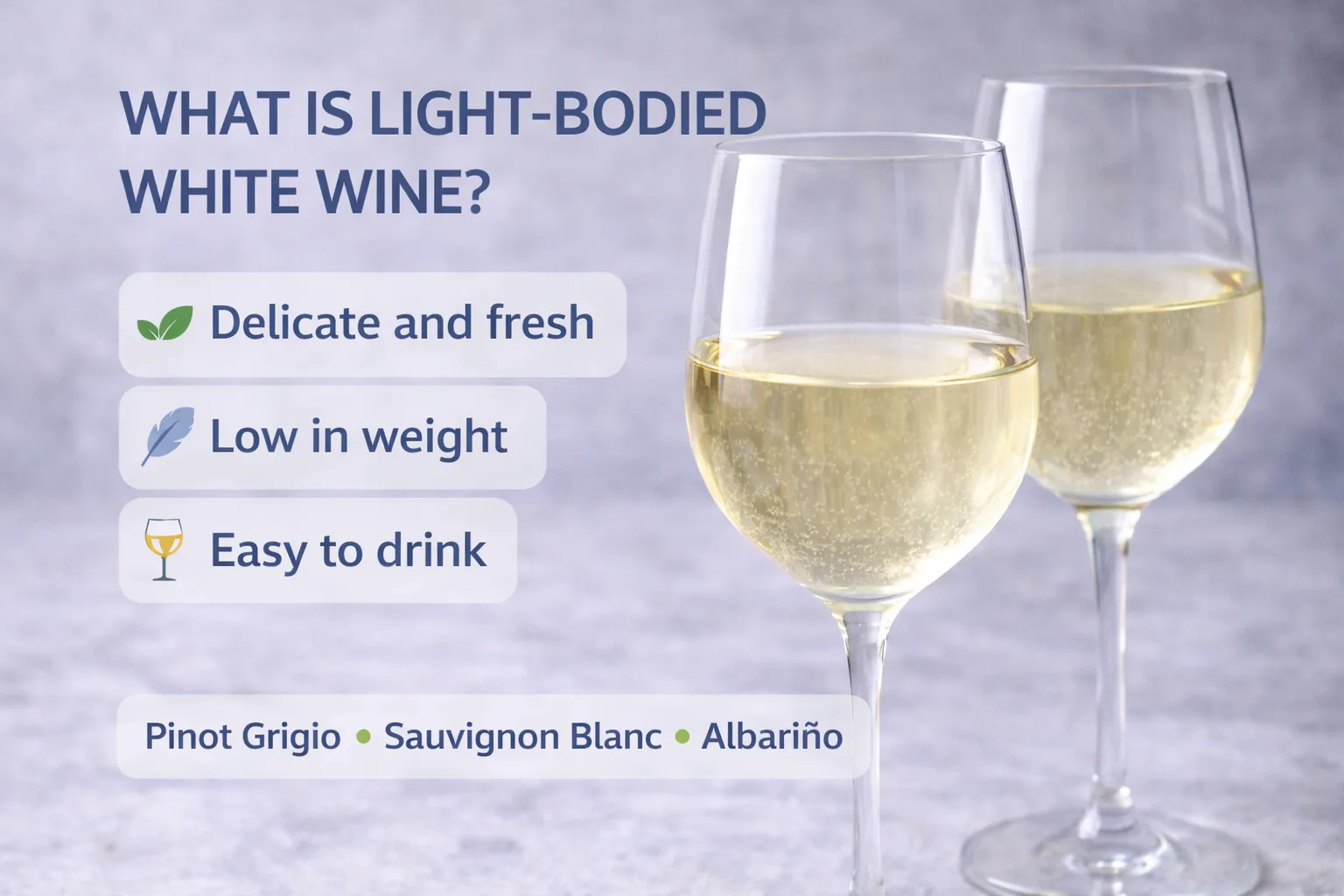
Light-bodied white wine is a term used to describe how a wine feels in the mouth rather than how sweet, acidic, or aromatic it is. When a white wine is described as light-bodied, it means the wine feels delicate, fresh and low in weight on the palate.
This guide explains what light-bodied white wine is, how it differs from medium- and full-bodied wines, what gives wine its body, and which white wine styles are typically considered light-bodied.
The Simple Definition of Light-Bodied White Wine
Light-bodied white wine is white wine that feels light, subtle and easy-drinking when tasted. It does not coat the mouth or feel rich or heavy.
Body refers to the overall weight and texture of the wine, not its flavour intensity or sweetness.
What “Body” Means in Wine
Body describes how wine feels physically in your mouth. It is often compared to the difference between skimmed milk, semi-skimmed milk and full-fat milk.
Light-bodied wines feel closer to skimmed milk. They feel refreshing and clean rather than creamy or dense.
What Makes a White Wine Light-Bodied?
Several factors influence whether a white wine is light-bodied.
Alcohol Level
Lower alcohol wines tend to feel lighter. Alcohol adds weight and warmth, so wines with lower alcohol often feel more delicate.
Grape Variety
Some grapes naturally produce lighter wines. These grapes typically have higher acidity and thinner skins, contributing to a lighter mouthfeel.
Climate and Ripeness
Grapes grown in cooler climates or harvested earlier usually result in lighter-bodied wines. Warmer climates often produce riper grapes and fuller wines.
Winemaking Style
Minimal oak ageing and stainless-steel fermentation preserve lightness. Oak ageing and extended lees contact add weight and richness, moving wines away from a light-bodied style.
Light-Bodied vs Dry White Wine
This is a common point of confusion.
Light-bodied refers to weight and texture.
Dry refers to sugar level.
A white wine can be:
- Light-bodied and dry
- Light-bodied and slightly off-dry
- Dry but not light-bodied
For example, a dry but oaked Chardonnay is not light-bodied, while a light-bodied wine may still taste fruity despite being dry.
Light-Bodied vs Crisp White Wine
Light-bodied and crisp are related but not identical.
Crisp describes acidity and freshness, while light-bodied describes weight. Many light-bodied white wines are also crisp, but a wine can be crisp without being particularly light, and light without being sharply crisp.
Common Light-Bodied White Wine Styles
Several well-known white wines are typically light-bodied.
Pinot Grigio is often light, fresh and subtle. Sauvignon Blanc is usually light-bodied with bright acidity. Italian whites such as Verdicchio and Soave are commonly light and refreshing. Albariño and dry Riesling are also frequently described as light-bodied.
Sparkling wines and lightly sparkling whites also feel light due to acidity and carbonation.
White Wines That Are Not Light-Bodied
White wines that feel rich, creamy or powerful are not light-bodied.
Examples include:
- Oaked Chardonnay
- Viognier
- White wines with high alcohol or heavy oak influence
These wines are described as full-bodied rather than light.
How Light-Bodied White Wine Tastes
Light-bodied white wine typically tastes:
- Fresh and clean
- Subtle rather than intense
- Easy to drink
- Refreshing on the palate
The finish is usually light and crisp, without heaviness.
When to Choose Light-Bodied White Wine
Light-bodied white wine is a good choice when:
- You want something refreshing
- You prefer subtle flavours
- You are drinking wine as an aperitif
- You enjoy wines that do not feel heavy
These wines are especially popular in warm weather and for casual drinking.
Food Pairing With Light-Bodied White Wine
Light-bodied white wines pair best with lighter dishes.
They work well with seafood, salads, vegetables, simple pasta dishes and fresh cheeses. Their low weight means they do not overpower delicate food.
Common Misconceptions About Light-Bodied Wine
Many people assume light-bodied means low quality or lacking flavour. In reality, light-bodied wines can be complex and expressive, just in a more subtle way.
Another misconception is that light-bodied wines must be sweet. Body and sweetness are unrelated.
Summary
Light-bodied white wine describes the weight and texture of a wine, not its sweetness or acidity. These wines feel delicate, fresh and easy-drinking, often with lower alcohol and minimal oak influence.
Understanding what light-bodied white wine means makes it easier to choose wines that suit your taste and drinking occasion.