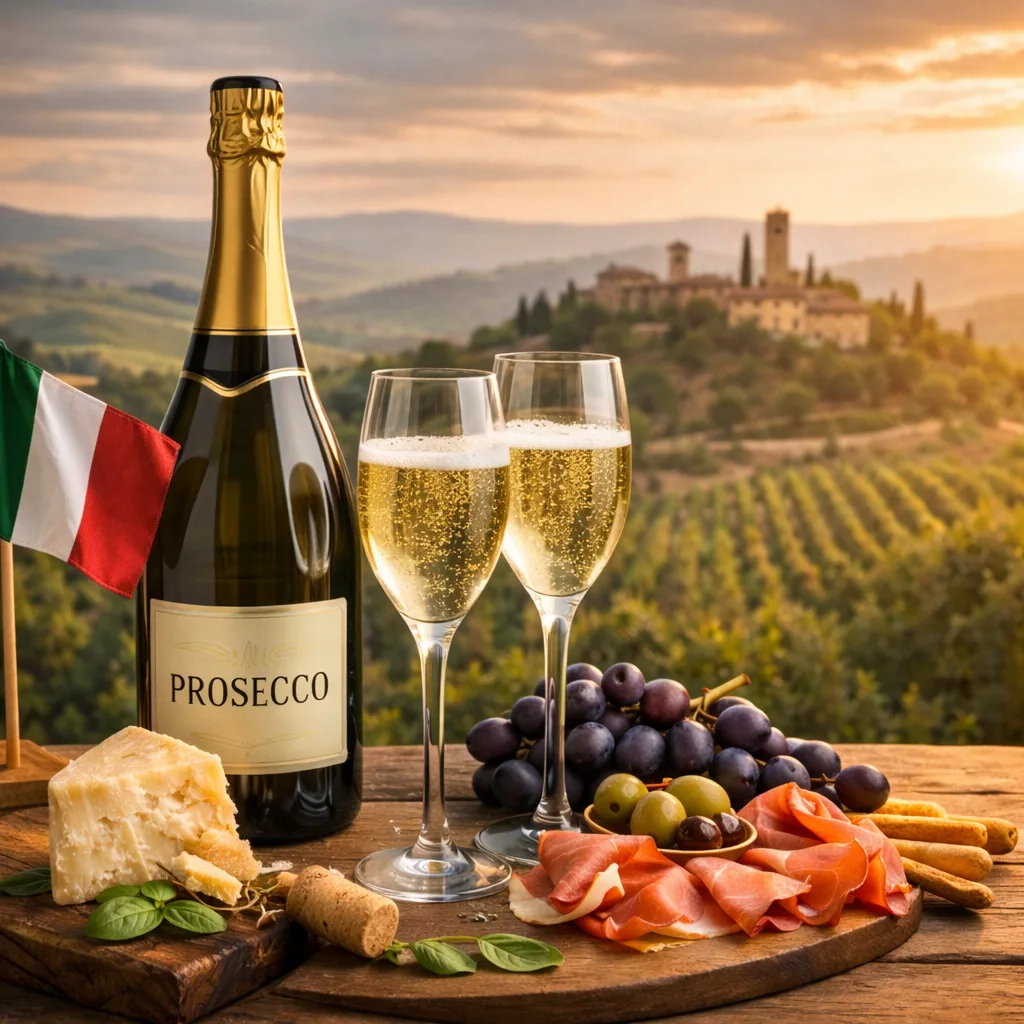
Prosecco is an Italian sparkling wine that has become one of the most popular styles of wine in the world. Known for its light, fresh character and approachable style, Prosecco is widely enjoyed as an aperitif, at celebrations, and alongside food. Despite its popularity, many people are unsure what Prosecco actually is, how it is made, or how it differs from other sparkling wines.
When people ask what is Prosecco, they are usually looking for a clear explanation of where it comes from, what grapes are used, whether it is sweet or dry, and how it compares to Champagne or other sparkling wines. This guide explains Prosecco in simple terms, covering its origins, production methods, styles and key characteristics.
Where Does Prosecco Come From?
Prosecco comes from north-eastern Italy, primarily from the Veneto and Friuli Venezia Giulia regions. The heartland of Prosecco production lies in the hills between the towns of Conegliano and Valdobbiadene, an area widely regarded as the highest quality zone for Prosecco.
Only sparkling wines produced in designated areas of north-eastern Italy and made according to specific rules can legally be called Prosecco. This protected origin is an important part of what defines Prosecco as a wine style.
What Grape Is Prosecco Made From?
Prosecco is made primarily from the Glera grape. Glera is a white grape variety known for producing fresh, aromatic wines with flavours of green apple, pear, citrus and floral notes.
In most Prosecco wines, Glera must make up the majority of the blend. Small amounts of other permitted local grapes may be used, but Glera defines the style and flavour profile.
Is Prosecco a Type of Champagne?
No — Prosecco is not Champagne.
Although both are sparkling wines, Prosecco and Champagne are made in very different ways and come from different countries. Champagne comes from the Champagne region of France and is produced using a traditional bottle-fermentation method. Prosecco, by contrast, is made using a tank-fermentation method that emphasises freshness and fruit character.
Because of these differences, Prosecco tends to be lighter, fruitier and more approachable than Champagne.
How Is Prosecco Made?
Prosecco is produced using the Charmat method, also known as the tank method. In this process, the second fermentation that creates the bubbles takes place in large stainless-steel tanks rather than in individual bottles.
This method preserves the fresh, aromatic qualities of the Glera grape and results in a wine that is:
- Light and fresh
- Fruit-driven
- Lower in alcohol
- Designed for early drinking
The Charmat method is a defining feature of Prosecco and plays a major role in its style.
Is Prosecco Sweet or Dry?
Prosecco can range from very dry to noticeably sweet, depending on how much residual sugar it contains. This is one of the most common sources of confusion about Prosecco.
Most Prosecco sold in the UK is dry, particularly styles labelled Brut or Extra Brut. Some Prosecco styles contain more residual sugar and taste slightly sweet, especially those labelled Extra Dry or Dry.
Understanding the label is the best way to tell how sweet a Prosecco will be.
Prosecco Sweetness Levels Explained
Prosecco uses standard sparkling wine sweetness terms, which can be misleading if you are unfamiliar with them.
Extra Brut is the driest style, with very little sugar and a crisp, sharp taste. Brut Prosecco is also dry and is the most popular everyday style. Extra Dry Prosecco is slightly sweeter than Brut, despite the name, and has a softer, fruitier character. Dry Prosecco is the sweetest common style and has noticeable sweetness.
What Does Prosecco Taste Like?
Prosecco is typically light-bodied, fresh and aromatic. Common flavours include:
- Green apple
- Pear
- Citrus
- White flowers
Compared to other sparkling wines, Prosecco usually has larger, softer bubbles and a gentler mouthfeel. It is designed to be refreshing rather than complex or heavily aged.
Types of Prosecco
Prosecco comes in several different forms, which affect how it is enjoyed.
Prosecco Spumante
This is fully sparkling Prosecco and the most widely recognised style.
Prosecco Frizzante
This is lightly sparkling Prosecco with gentler bubbles and lower pressure.
Prosecco Still
Still Prosecco exists but is rare and not widely exported.
Prosecco and Food Pairing
Prosecco is highly food-friendly due to its acidity and freshness. Dry styles pair well with:
- Light appetisers
- Seafood
- Salty snacks
- Italian antipasti
Slightly sweeter styles can work with fruit-based desserts or light pastries.
Why Prosecco Is So Popular
Prosecco’s popularity comes from a combination of factors:
- Accessible flavour profile
- Lower alcohol compared to many wines
- Versatility with food
- Easy-drinking style
Unlike some sparkling wines, Prosecco does not require long ageing or formal occasions to enjoy.
How Prosecco Differs from Other Sparkling Wines
Compared to Champagne, Prosecco is fruitier and less yeasty. Compared to Cava, Prosecco is often lighter and more aromatic. These differences are largely due to grape choice and production method.
Prosecco is designed to be fresh and approachable rather than complex or oxidative.
Is Prosecco Good Quality?
Prosecco quality varies, but the best examples are well-made, balanced and expressive of their origin. Higher-quality Prosecco often comes from hillside vineyards and shows greater depth and finesse.
As with all wine, quality depends on producer, vineyard location and production choices.
Common Misconceptions About Prosecco
Some common myths include:
- Prosecco is always sweet
- Prosecco is low quality
- All Prosecco tastes the same
In reality, Prosecco covers a range of styles and quality levels.
Summary: What Is Prosecco?
Prosecco is an Italian sparkling wine made primarily from the Glera grape in north-eastern Italy. It is produced using the Charmat method, which preserves fresh fruit flavours and creates a light, approachable style.
Prosecco can be dry or slightly sweet depending on the style, but most Prosecco enjoyed today is dry, refreshing and food-friendly. Understanding how Prosecco is made and labelled makes it much easier to choose the right bottle for your taste.