For many UK drinkers, Italian wine has a taste that is instantly recognisable — savoury, vibrant, mouth-watering and distinctly food-friendly. Even when comparing bottles of similar grapes or styles from France, Spain, Australia or Chile, Italian wine often stands apart. This has led many people to wonder why Italian wine tastes different, what defines the Italian wine flavour profile, and what makes Italian wine so unique compared with other regions. The answer lies in a powerful combination of climate, soil, winemaking tradition, acidity structure, tannin management, cultural food pairing philosophy and the astonishing diversity of Italy’s native grape varieties. This guide explores the signature characteristics that create the national flavour fingerprint of Italian wine and explains how those flavours translate across Italy’s white, red and sparkling styles.
The Role of Acidity: The Foundation of the Italian Wine Taste
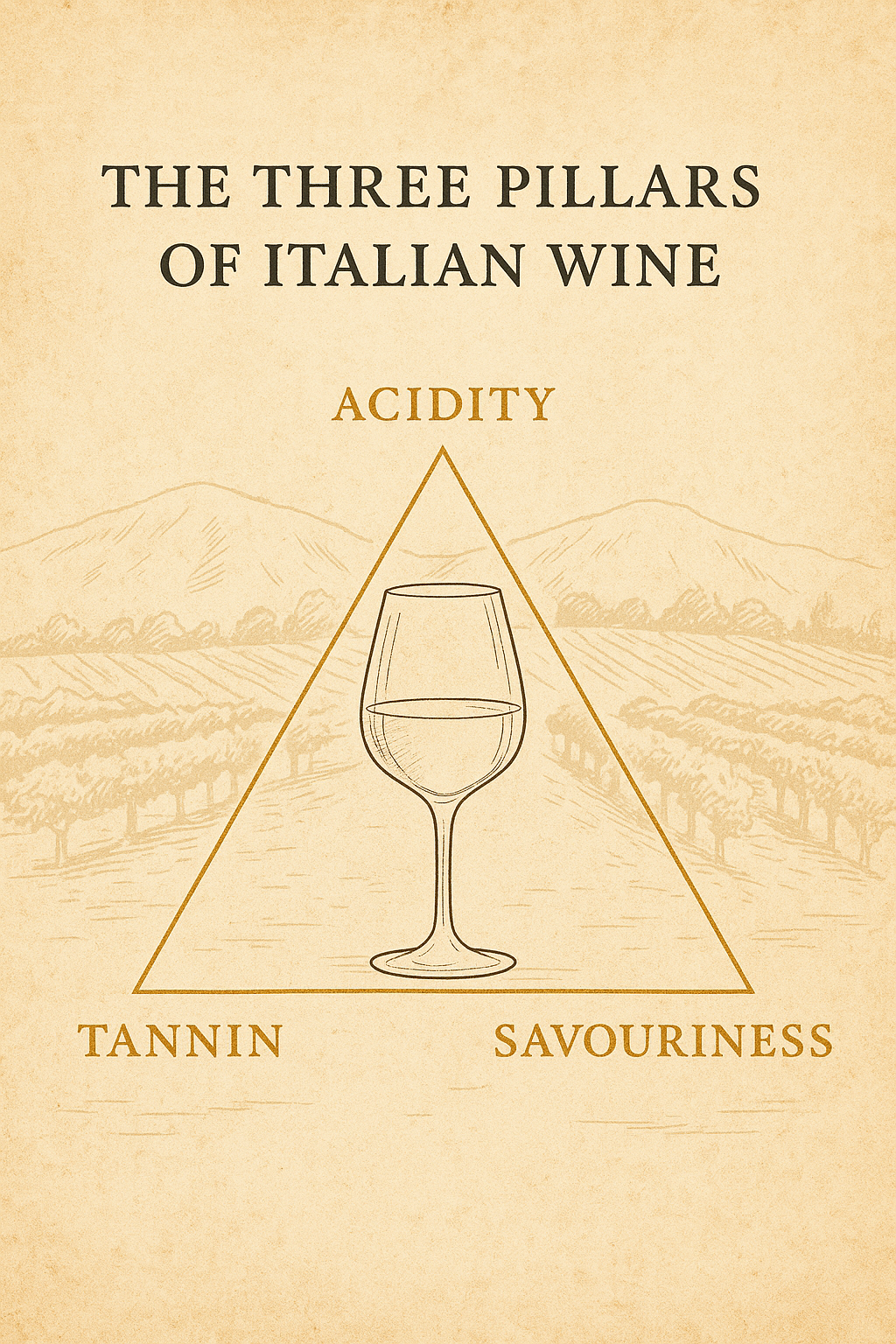
One of the biggest reasons Italian wine tastes different from wine in other countries is acidity. Italy’s vineyards benefit from cooling influences — altitude, sea breezes, night-time temperature drops and wind patterns — meaning grapes retain bright, natural acidity even in warm climates. Acidity creates freshness, tension and the classic mouth-watering effect that defines much of the Italian wine flavour profile. High acidity not only adds vibrancy but also enhances savouriness, minerality and food compatibility. This is why so many Italian wines pair so effortlessly with tomato-based dishes, creamy sauces, seafood and grilled foods. For beginner drinkers learning what Italian wine tastes like, the bright acidity is often the most distinctive characteristic.
Tannins: The Signature of Italian Red Wine
If acidity defines Italian white wines, tannin often defines Italian reds. Grapes like Sangiovese, Nebbiolo, Aglianico, Sagrantino and Montepulciano naturally develop firm, structured tannins, giving Italian red wines their gripping, dry, savoury character. These tannins are rarely soft or sweet; instead, they create a real sense of structure and complexity. This traditional tannin profile is one of the key reasons Italian wine tastes different to many new-world wines, which often emphasise softness, sweetness and roundness. Italian tannins are deliberately food-friendly: they cut through protein and fat, making the wine shine alongside dishes such as steak, ragu, roast meats and aged cheese. This structural style is a hallmark of Italy’s identity and contributes to the unique Italian wine taste that UK drinkers notice immediately.
Savouriness: The Most Overlooked Italian Wine Characteristic
While many wines from around the world focus on fruitiness, Italian wine frequently emphasises savouriness — a subtle herbal, earthy, spicy or umami-like character that adds depth far beyond simple fruit notes. This savouriness is one of the reasons Italian red wines taste so distinctive. Sangiovese often shows dried herbs and tomato leaf; Nebbiolo shows tar, rose, spice and dried red fruit; Nero d’Avola can display cocoa and earth; Montepulciano delivers dark fruit with an unmistakable savoury edge. Even Italian white wines can exhibit a savoury note — Soave with its almond tone, Vermentino with its Mediterranean herbal lift, Pecorino with mineral and flinty character. This savouriness forms a fundamental part of the Italian wine flavour profile and helps explain why Italian wine is unique.
Minerality and Salinity: Italy’s Sea-Driven and Volcanic Influence
Many UK drinkers describe Italian wine as “mineral”, “salty”, “rocky” or “stony”. This is not imagination — Italy’s geography plays a huge role. With over 7,600 km of coastline, Italy exposes countless vineyards to maritime breezes carrying salt aerosols, which influence grape chemistry and concentration. This creates subtle salinity in Italian white wine, especially varieties like Grillo, Vermentino, Pecorino and Carricante. Meanwhile, volcanic regions such as Etna, Vulture and Campi Flegrei produce wines with smoky minerality and tension. These factors contribute significantly to why Italian wine tastes different from wines grown inland or on continental plains. Minerality gives Italian wines freshness, precision and a unique textural quality that stands apart from richer, fruit-heavier wines from other countries.
Ancient Grape Varieties and Genetic Diversity
Italy has more than 500 officially recorded indigenous grapes — the largest collection of native wine varieties in the world. This insane diversity adds endless flavour variation to the national profile. Grapes like Fiano, Greco, Verdicchio, Cortese, Carricante, Catarratto, Nerello Mascalese, Frappato, Negroamaro, Aglianico and Sagrantino have been grown in their regions for centuries and have adapted perfectly to local soils and climates. This creates wines with distinct fingerprints that can’t be replicated elsewhere. Unlike places that rely heavily on international varieties, Italy’s native grapes are deeply tied to regional flavour traditions. This is another reason Italian wine tastes unique — its flavours are born of ancient genetics and local adaptation rather than global winemaking trends.
Regional Microclimates: A Country of Contrasts
Another major reason the taste of Italian wine is so diverse and distinctive is Italy’s extreme variation in climate. From the Alpine north to the volcanic south, Italy contains dozens of microclimates that drastically shape wine flavour. Piemonte’s fog-cooled plains develop Nebbiolo’s aromatic elegance; Tuscany’s rolling hills create Sangiovese’s cherry-herbal charm; Sicily’s heat is balanced by altitude and sea breezes to create fresh wines despite the latitude. In the Bay of Naples, volcanic soils shape thrilling whites and reds with smoky complexity. Sardinia produces aromatic whites shaped by constant sea winds. These microclimates create a national wine style defined not by uniformity but by contrast — yet all anchored by acidity, savouriness and structure.
Food Culture: The Driving Force Behind Italian Wine Style
Perhaps the most culturally important reason Italian wine tastes different is that Italian wine is designed for food. Italian winemaking evolved around regional cuisine: wine and food developed together. Unlike many new-world wines made for standalone enjoyment, Italian wines are built to enhance meals. This means:
- higher acidity to refresh the palate
- savouriness to complement herbs and tomatoes
- tannin to balance oils, fats and proteins
- moderate alcohol to encourage drinking with meals
- bitterness and minerality to create balance
Understanding why Italian wine is so food-friendly helps explain why it tastes unlike wine from Spain, France, Australia or South America. Italy’s national flavour profile is built around compatibility, not sweetness or ripeness.
Herbal and Botanical Notes from Mediterranean Climate
Italian wine often tastes herbal, floral or botanical. This comes from the Mediterranean environment — rosemary, thyme, fennel, citrus blossoms and wildflowers often grow around vineyards and influence wine aromatics. This creates a natural herbal lift in many Italian wines, especially Sangiovese, Nero d’Avola, Grillo and Vermentino. These aromas are part of what Italian wine tastes like and contribute heavily to Italy’s recognisable flavour signature.
Lower Fruit Sweetness Compared to New-World Wines
One of the most noticeable differences when asking why Italian wine tastes different is fruit profile. Italian wines rarely taste sweet or jammy; instead, fruit is fresher, more savoury and more restrained. This is because Italian winemakers prioritise balance and structure over fruit concentration. Even wines from warm climates retain freshness because of altitude, coastal influence, wind and tradition. This “less sugary fruit” approach is a defining part of Italian wine’s national taste.
Volcanic Wines: The Iconic Italian Taste of Smoke, Stone and Citrus
Volcanic wines, especially from Etna and Campania, show unique flavours such as:
- smoky minerality
- sharp citrus
- flint and stone
- savoury tension
These wines offer some of the clearest examples of why Italian wine tastes unique, especially for UK drinkers unfamiliar with volcanic terroirs.
Why Italian Wine Tastes So Different from French Wine
Many drinkers compare the two. France often emphasises elegance, roundness or richness; Italy emphasises acidity, structure and savouriness. French wine often highlights winemaking technique; Italian wine highlights terroir and food pairing. These differences contribute to the strong perception of a distinct Italian wine taste.
Why Italian Wine Tastes Different from Spanish Wine
Spain tends to favour richer, oakier, more powerful styles. Italy maintains brightness, herbal lift and structure. This explains why UK drinkers switching from Rioja to Chianti or Montepulciano immediately notice the contrast.
Putting It All Together: The Italian Wine Flavour Profile
Across all regions, grapes and styles, certain characteristics consistently appear in Italian wine:
- high acidity
- savouriness
- mineral and saline impressions
- herbal or floral aromatics
- textured tannins
- moderate fruit sweetness
- strong food compatibility
This combination forms the national flavour profile of Italian wine, the hallmark of why Italian wine tastes different, and the reason Italy’s wines are so loved by UK drinkers.
Final Thoughts
Italian wine is defined by brightness, savouriness, structure and diversity. It tastes different because Italy’s culture, climate, cuisine and grapes evolved together. Whether you enjoy crisp whites, aromatic styles, savoury reds or volcanic, mineral-driven wines, Italy offers some of the most distinctive flavours found anywhere in the world. Understanding what makes Italian wine unique lets UK drinkers explore Italy with more confidence, curiosity and appreciation — and discover the wines that best suit their personal taste.