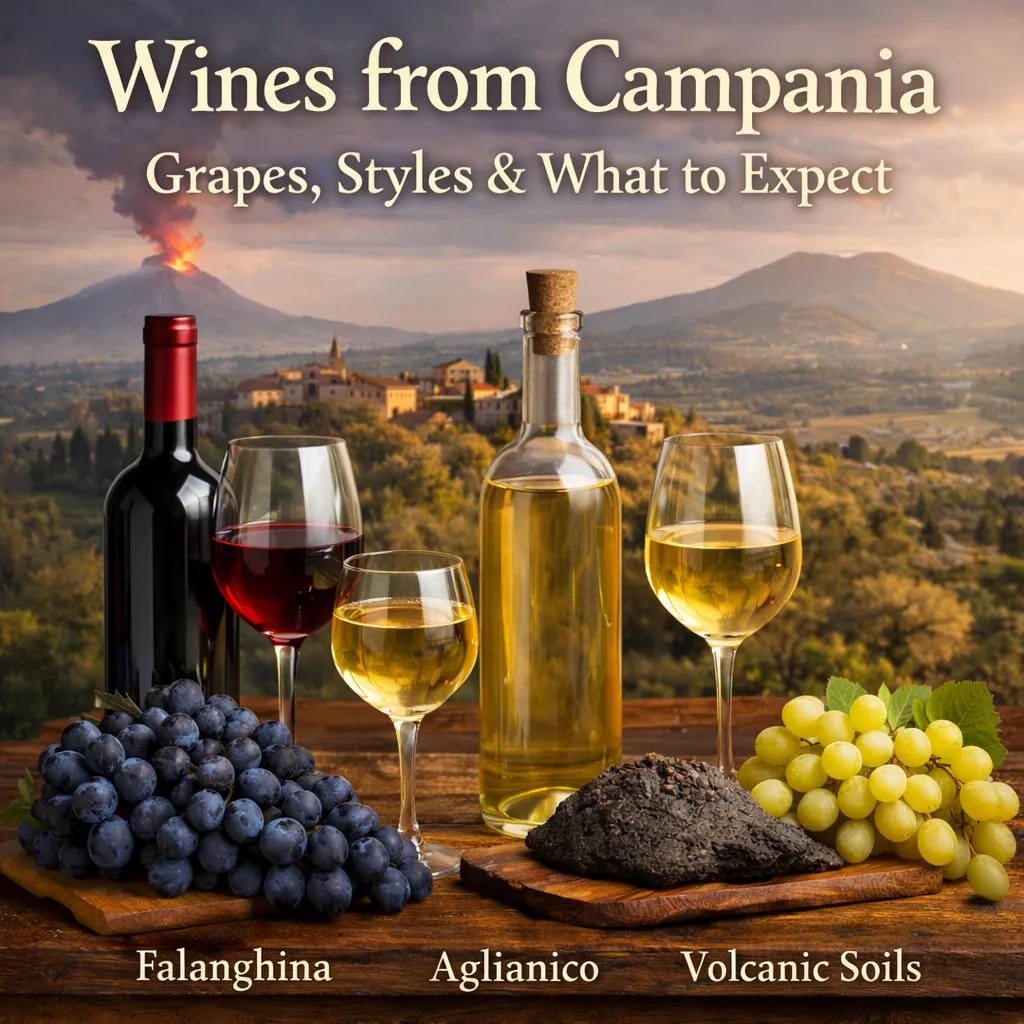
Campania is one of Italy’s most historic and distinctive wine regions. Located in southern Italy, Campania is best known for its ancient vineyards, volcanic soils and native grape varieties that produce wines with strong character, freshness and food-friendly balance.
When people search for wines from Campania, they are usually looking to understand what styles the region produces, which grapes matter most, and how Campanian wines differ from better-known Italian regions such as Tuscany or Piedmont. This guide explains exactly that, covering the main wine styles, grape varieties and sub-regions that define Campania today.
Where Is Campania and Why Does It Matter for Wine?
Campania sits on Italy’s western coast, facing the Tyrrhenian Sea, with vineyards spread across coastal plains, inland hills and mountainous areas. The region includes Naples, the Amalfi Coast and parts of the Apennine mountains, giving it an unusually diverse set of growing conditions.
One of the defining features of Campania is its volcanic influence. Soils shaped by Mount Vesuvius and other ancient volcanic activity are rich in minerals, helping wines retain acidity and structure even in a warm southern climate. This is why many Campanian wines taste fresher and drier than people expect from southern Italy.
What Styles of Wine Come from Campania?
Campania produces a wide range of wines, but the region is especially respected for its dry white wines and structured red wines made from native grape varieties.
In general, wines from Campania are:
- Dry and food-focused
- High in natural acidity
- Less international in style
- Based on grapes rarely grown elsewhere
Sweet wines exist, but they are not the region’s main focus.
The Most Important White Grapes of Campania
Fiano
Fiano is one of Campania’s most famous white grapes and produces dry, aromatic wines with good acidity and ageing potential. Fiano wines often show notes of citrus, pear, herbs and nuts, with a clean, structured finish.
These wines are dry rather than fruity and are well suited to seafood, vegetables and lighter meat dishes.
Greco
Greco produces some of the boldest dry white wines in southern Italy. Compared to many Italian whites, Greco wines are fuller-bodied and more intense, with firm acidity and mineral notes.
Greco wines are often described as powerful rather than delicate, making them a good match for richer food.
Falanghina
Falanghina is one of the most widely planted grapes in Campania and is especially important in coastal and inland areas. Falanghina wines are typically dry, fresh and easy to drink, with citrus and floral notes.
This grape is often the entry point for people discovering wines from Campania, as it combines freshness with approachability.
The Most Important Red Grapes of Campania
Aglianico
Aglianico is the dominant red grape of Campania and is responsible for the region’s most serious red wines. Aglianico wines are always dry and are known for high acidity, firm tannins and long ageing potential.
These wines are structured rather than fruity and are often compared to top red wines from northern Italy in terms of longevity and complexity.
Piedirosso
Piedirosso is a softer, more approachable red grape that produces lighter-bodied wines with fresh acidity and red fruit flavours. While less powerful than Aglianico, Piedirosso plays an important role in traditional Campanian blends and everyday wines.
Key Wine Areas Within Campania
Campania is not a single, uniform wine region. Different inland and coastal zones produce distinct styles, shaped by altitude, soil and climate.
Inland areas tend to produce:
- Fresher white wines
- More structured red wines
- Higher acidity overall
Coastal and volcanic zones often produce:
- Mineral-driven whites
- Lighter, aromatic styles
- Wines influenced by sea air and volcanic soils
This diversity is one of the reasons wines from Campania are difficult to generalise.
Why Campania Wines Taste Different from Other Southern Italian Wines
Southern Italian wines are often associated with richness and ripeness, but Campania breaks that stereotype.
The combination of:
- High-altitude vineyards
- Volcanic soils
- Native grape varieties
- Traditional winemaking
means that many Campanian wines are drier, fresher and more structured than wines from neighbouring regions.
This makes wines from Campania particularly attractive to people who enjoy dry Italian wines but want something less familiar than Pinot Grigio or Chianti.
Are Wines from Campania Usually Dry?
Yes. The vast majority of wines from Campania are dry.
Both the white and red wines of the region are traditionally fermented fully dry and designed to be drunk with food. Sweet wines exist but are niche and not representative of the region as a whole.
If you are looking for dry Italian wines, Campania is one of the most reliable regions to explore.
How to Choose a Wine from Campania
When choosing a Campanian wine, it helps to focus on:
- The grape variety rather than the brand
- Inland areas for structure and freshness
- Coastal or volcanic zones for mineral character
If you enjoy crisp white wines, look for Falanghina, Fiano or Greco.
If you prefer serious red wines, Aglianico is the key grape to know.
Campania Wines and Food Pairing
Campanian wines are closely linked to local cuisine. Their acidity and dryness make them ideal for food, particularly dishes based on:
- Seafood
- Tomatoes
- Vegetables
- Grilled meats
This food-friendly nature is one of the reasons Campania has remained loyal to native grape varieties rather than international styles.
Why Campania Matters in Italian Wine
Campania represents a side of Italian wine that is:
- Ancient rather than modern
- Native rather than international
- Structured rather than sweet
For people interested in understanding Italian wine beyond the most famous regions, wines from Campania offer depth, authenticity and excellent value.
Summary: What to Expect from Wines from Campania
Wines from Campania are defined by native grapes, volcanic soils and a strong tradition of dry, food-focused winemaking. The region produces some of southern Italy’s finest white wines and some of its most age-worthy red wines.
If you are exploring Italian wine by region, Campania is one of the most rewarding places to start, offering distinctive styles that stand apart from more familiar Italian wine regions.