A Step-by-Step Guide for UK Cafés, Restaurants and Hospitality Businesses
If you plan to launch a private label coffee brand, you need a clear process that prioritises consistency, reliability and operational fit. For cafés, restaurants and hospitality businesses, private label coffee works best when it supports day-to-day service rather than adding complexity.
Instead of treating coffee as a creative experiment, successful operators approach the decision as infrastructure. When you launch a private label coffee brand with the right structure, it strengthens margins, reinforces identity and reduces long-term risk.
This guide explains exactly how to launch a private label coffee brand in the UK, building on the fundamentals covered in what private label coffee is, the decision between private label coffee or wholesale coffee, and the product considerations in choosing an Italian espresso blend for cafés.
Step 1: Decide Why You Want to Launch a Private Label Coffee Brand
Before anything else, define your reason for launching a private label coffee brand. Coffee may act as a core revenue stream, a supporting product, or a brand signature.
Cafés and restaurants usually rely on espresso as the backbone of the drinks menu. Offices and hospitality venues use coffee to support staff experience or guest satisfaction. Retail-focused businesses often treat coffee as a packaged product.
Once you clarify this purpose, every later decision becomes easier.
Step 2: Identify Where and How the Coffee Will Be Used
To launch a private label coffee brand successfully, you must design it around real service conditions rather than personal taste.
Busy cafés need tolerance and speed. Restaurants benefit from balance and food compatibility. Offices require broad appeal and low friction. Each environment places different demands on the coffee.
By defining the use case early, you avoid selecting a product that performs well in theory but fails during service.
Step 3: Choose a Coffee Style That Supports Consistency
When businesses launch a private label coffee brand, reliability matters more than novelty. For most UK hospitality settings, Italian-style espresso blends provide the strongest foundation.
As explained in this guide to Italian espresso blends for cafés, these blends prioritise body, balance and milk compatibility. They also tolerate variation in grind, dose and machine performance.
Because of this tolerance, Italian-style espresso works well across different staff members and service pressures.
Step 4: Align Branding With Your Existing Business Identity
Branding plays a critical role when you launch a private label coffee brand. However, the goal is reinforcement, not reinvention.
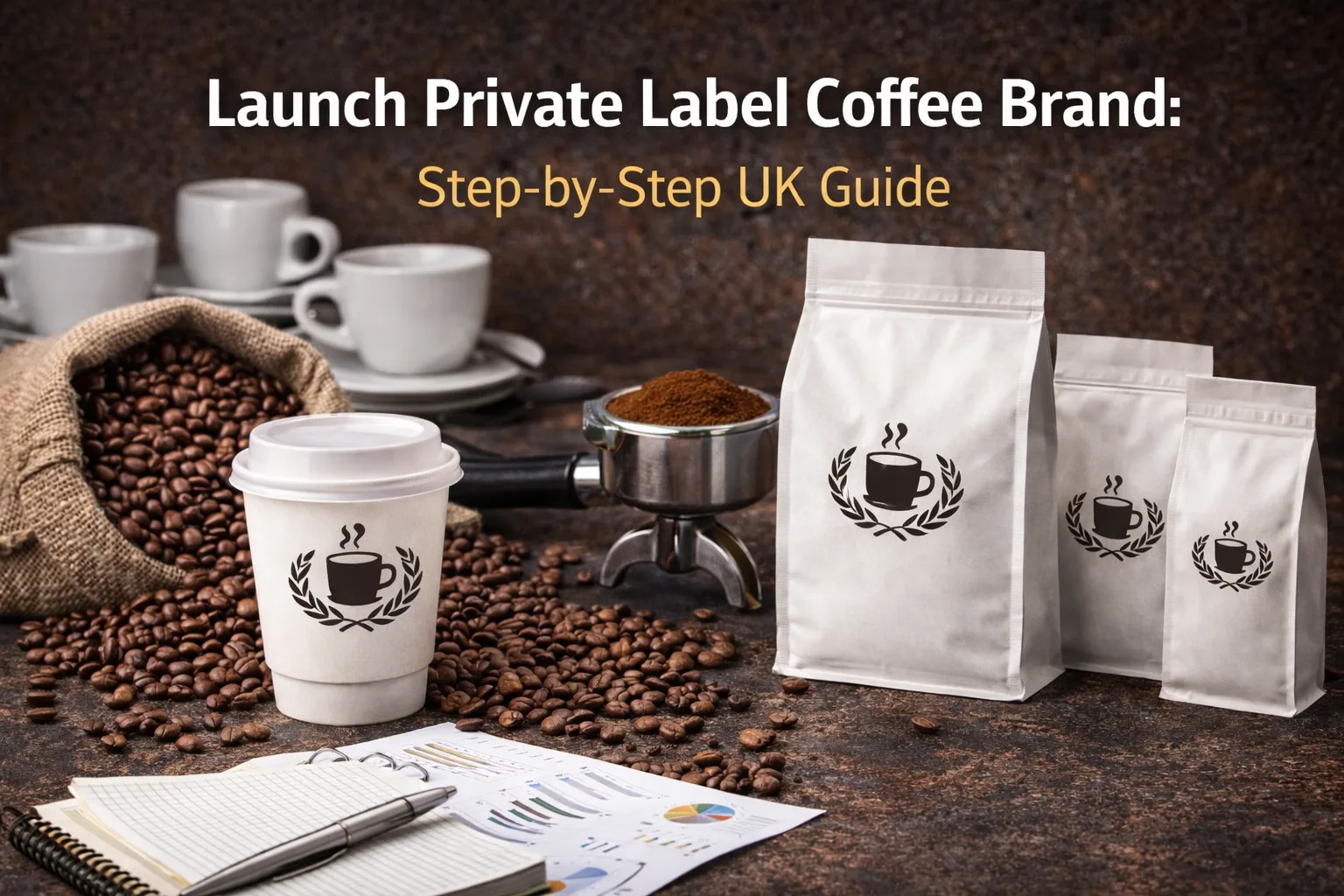
Most cafés and hospitality businesses benefit from understated branding that integrates seamlessly with their existing identity. Simple naming and neutral packaging usually outperform complex storytelling.
Customers value consistency and quality more than elaborate origin narratives.
Step 5: Select Practical Packaging and Formats
Operational simplicity should guide packaging decisions when you launch a private label coffee brand.
Most service environments rely on 1kg bags, while retail or takeaway sales may require smaller formats. Standardising formats simplifies ordering, storage and pricing.
Consistency at this stage reduces waste and avoids unnecessary operational friction.
Step 6: Price the Coffee Around Performance, Not Just Cost
Although cost per kilo matters, performance matters more when you launch a private label coffee brand.
A coffee that extracts consistently often delivers stronger margins in practice because it reduces waste and improves workflow. Yield, staff efficiency and reliability all influence real profitability.
Pricing should reflect total performance rather than headline cost.
Step 7: Choose a Supplier That Supports Long-Term Stability
Supply reliability determines whether a private label programme succeeds or fails. When you launch a private label coffee brand, your supplier must deliver the same blend, the same roast profile and the same availability over time.
Unlike rotating wholesale offerings, private label supply focuses on continuity. This stability protects customer experience and staff confidence.
Solutions such as private label wholesale Italian espresso coffee exist specifically to support hospitality businesses with this requirement.
Step 8: Train Staff for Repeatable Results
Training should remain practical when you launch a private label coffee brand. Staff need to recognise correct extraction, make basic grinder adjustments and maintain consistency.
Because the coffee is designed for tolerance, training focuses on repetition rather than experimentation. This approach reduces waste and builds confidence across shifts.
As a result, customers receive the same experience regardless of who prepares the coffee.
Step 9: Introduce the Coffee Naturally to Customers
When you launch a private label coffee brand, subtle introduction works best. Customers respond positively when the coffee appears as part of the overall experience rather than a promotional feature.
Menus, simple signage or staff recommendations usually provide enough context. Over-explaining the coffee often creates unnecessary expectations.
Step 10: Review Performance and Scale Gradually
After you launch a private label coffee brand, review performance regularly. Focus on consistency, customer feedback, staff confidence and waste levels.
As demand grows, you can scale volumes or adjust delivery schedules without changing the core product.
This gradual approach keeps the programme stable as the business evolves.
Final Thoughts on How to Launch a Private Label Coffee Brand
To launch a private label coffee brand successfully, you must treat coffee as infrastructure rather than marketing.
For UK cafés, restaurants, offices and hospitality businesses, a well-executed private label espresso programme strengthens identity, improves consistency and delivers long-term control.
When done correctly, private label coffee becomes a dependable part of the business instead of a variable.