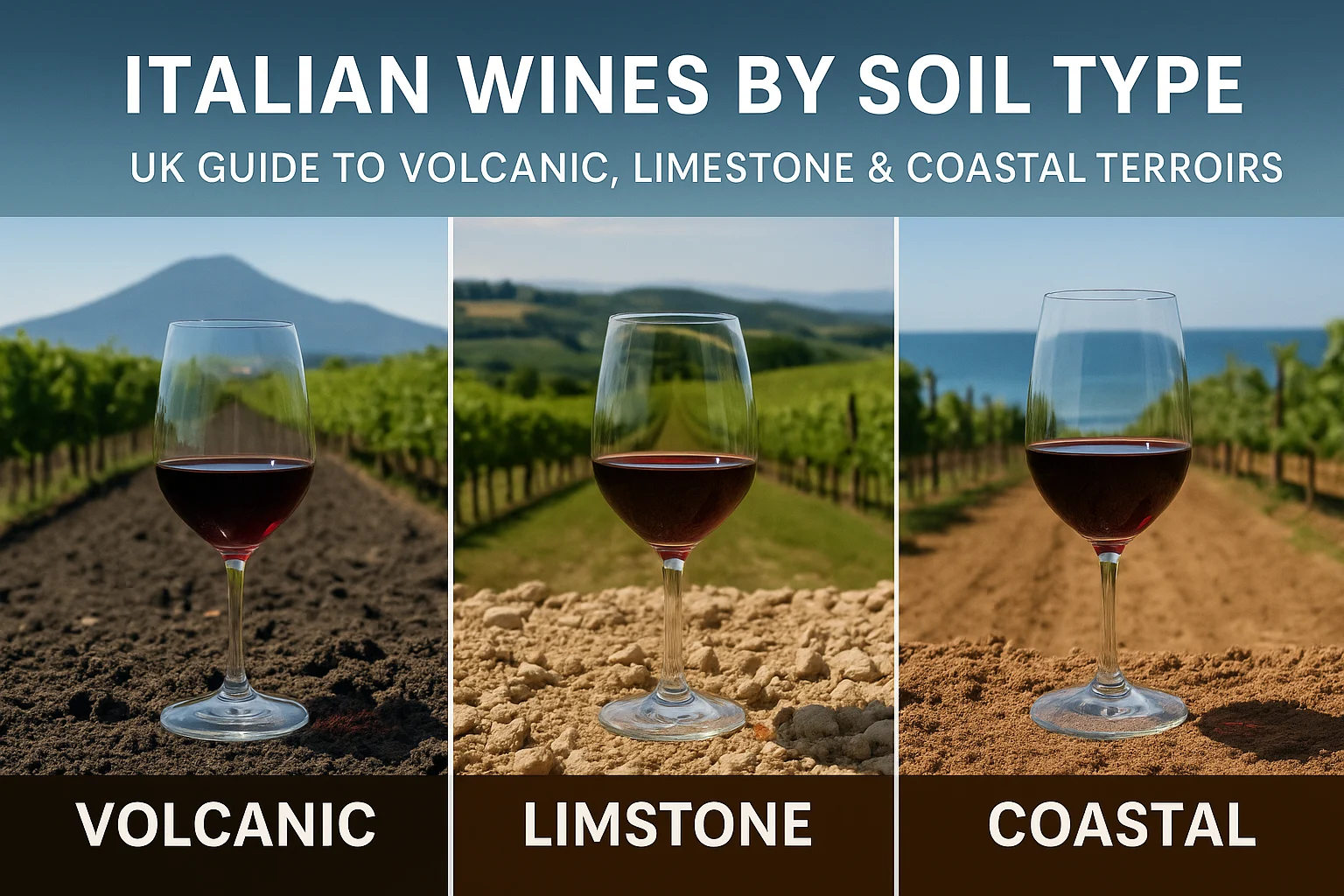
Italy’s extraordinary diversity of terroirs has always been central to its identity, but few factors shape flavour more profoundly than soil. Understanding italian wines by soil type helps UK drinkers appreciate why a volcanic Etna red tastes so different from a limestone-grown Primitivo or a coastal Vermentino shaped by sea breezes. Soil determines structure, minerality, ripeness, aromatics, texture — even how long a wine can age. This guide explores Italy’s major soil types, the regions that define them and the wines that best express each landscape, offering a unique way for UK drinkers to shop and understand Italian wine.
Why Soil Matters More in Italy Than Almost Anywhere Else
Italy is a geological patchwork:
- active volcanoes
- extinct volcanic massifs
- limestone mountain ranges
- coastal marine soils
- ancient seabeds
- moraines and glacial deposits
- clay-rich plains
- sandy, phylloxera-resistant pockets
This complexity is why Italian wines are so diverse even within neighbouring towns. Soil affects:
Drainage
Free-draining volcanic or limestone soils produce elegant, structured wines.
Heat retention
Dark volcanic soils warm quickly; pale limestone stays cool.
Water availability
Clay retains moisture; sand dries fast; coastal soils pick up salinity.
Nutrient profile
Minerals shape flavour and aroma complexity.
In a modern UK market where premium buyers increasingly seek character and origin, soil-driven education is becoming essential — and Italy is the perfect example.
Volcanic Soils — Power, Minerality and Tension
Italy is home to Europe’s greatest volcanic wine territories. Volcanic soils create wines with high acidity, tension, savoury complexity and distinctive mineral tones.
Regions include:
- Etna (Sicily)
- Soave Classico (Veneto)
- Vulture (Basilicata)
- Campi Flegrei (Campania)
- Vesuvio (Campania)
Volcanic soils here consist of basalt, ash, pumice, obsidian and tuff.
Etna (Sicily) — Minerality and Elegance
Etna produces some of the world’s most sought-after volcanic wines.
Grape varieties
- Nerello Mascalese
- Nerello Cappuccio
- Carricante
Soil effect
Etna’s black basalt sands retain heat but drain quickly, resulting in:
- fine tannins
- high acidity
- smoky mineral notes
- red berry aromatics
- incredible ageing potential
These wines appeal strongly to UK drinkers seeking refinement over richness.
Soave Classico (Veneto) — Volcanic Whites with Elegance
The basalt hills of Soave create Italy’s most distinctive volcanic white wines.
Grape
- Garganega
Soil effect
Basaltic soil gives:
- almond
- citrus peel
- peach
- saline minerality
- wet stone
- long, elegant finishes
Premium Soave is ideal for UK seafood dishes, roast chicken, and creamy pasta.
Aglianico del Vulture (Basilicata) — Volcanic Power
Monte Vulture, an extinct volcano, produces bold, structured reds from Aglianico.
Soil impact
The deep volcanic ash and pumice create wines with:
- dark fruit
- smoke
- liquorice
- spice
- immense longevity
These wines appeal to UK drinkers who enjoy Barolo-level depth at better prices.
Campi Flegrei (Campania) — Volcanic Coastal Freshness
Near Naples, ancient volcanic craters shape wines made from Piedirosso and Falanghina.
Soil contribution
- Lightness
- Sea spray salinity
- Floral aromatics
- Herbal complexity
Perfect for summer drinking, seafood and antipasti.
Limestone Soils — Brightness, Purity and Precision
Limestone is one of the most prized soil types in the world. It produces wines with:
- freshness
- precision
- lifted aromatics
- mineral tension
- longevity
This soil type dominates:
- Puglia
- Abruzzo
- Marche
- Veneto
- Campania
- Tuscany (certain areas)
Puglia — Limestone’s Mediterranean Expression
While Puglia is often associated with richness, its best wines come from limestone slopes.
Grapes
- Primitivo
- Negroamaro
- Susumaniello
- Nero di Troia
Soil impact
Limestone reduces alcohol heaviness and preserves acidity, giving:
- greater balance
- redder fruit tones
- fresher aromatics
- enhanced minerality
This makes old-vine Primitivo or Negroamaro from limestone zones far more refined than their clay-based counterparts.
Abruzzo — Mountain Limestone Meets Adriatic Winds
Abruzzo’s limestone-rich soils produce wines with tension and herbal freshness.
Grapes
- Montepulciano d’Abruzzo
- Pecorino
- Trebbiano Abruzzese
Soil effect
- Vibrant acidity
- Mountain herbs
- Mineral texture
These wines excel with British roast chicken, pork and grilled meats.
Marche — Limestone Whites with Power and Detail
Marche’s limestone drives some of Italy’s best whites.
Grapes
- Verdicchio
- Pecorino
Soil effect
- Almond
- Citrus
- White flowers
- Salinity
- Long ageing ability
Verdicchio Classico rivals Burgundy in structure and longevity.
Tuscany — Limestone Elegance in Sangiovese
Some of Tuscany’s finest Chianti vineyards sit on limestone (alberese).
Soil influence
- Red cherry purity
- Fine tannins
- High acidity
- Long finishes
Limestone Sangiovese is ideal for UK Sunday roasts, tomato-based dishes and charcuterie.
Coastal & Marine Soils — Salinity, Freshness and Florality
Italy’s long coastline produces wines shaped by ancient seabeds and maritime influence.
Coastal soils are found in:
- Liguria
- Campania
- Sicily
- Sardinia
- Le Marche
- Abruzzo
These soils consist of:
- marine fossils
- sandy limestone
- seashell deposits
- porous rock
Vermentino — Italy’s Coastal White Hero
Vermentino thrives in coastal regions like Liguria, Sardinia and Tuscany.
Soil effect
- saline minerality
- citrus
- herbs
- refreshing acidity
This is among the best Italian whites for UK seafood, crab, scallops and fish and chips.
Falanghina — Sea Breeze Aromatics
Coastal Campania produces Falanghina with floral lift and Mediterranean herbs.
Soil effect
- sea spray salinity
- soft citrus
- crisp finish
Ideal for summer and light food.
Sicily’s Coastal Whites — Grillo & Catarratto
Sicily’s west coast has marine-influenced soils that shape vibrant, aromatic whites.
Soil effect
- stone fruit
- almond
- Mediterranean herbs
- salty precision
These styles are growing in popularity among UK drinkers.
Clay & Alluvial Soils — Richness, Body and Depth
Clay and alluvial soils produce fuller expressions of Italian grapes.
Regions include:
- Emilia-Romagna
- Veneto plains
- Friuli lowlands
- Puglia valley bottoms
Soil effect
- rounder texture
- deeper colour
- richer fruit
- softer acidity
Clay-based wines are perfect for UK winter drinking.
Sand & Phylloxera-Resistant Soils — Elegance and Fragrance
Sandy soils resist phylloxera, allowing some ungrafted vines to survive.
Found in:
- Sicily
- Veneto
- Tuscany coast
- Sardinia
Soil impact
- soft tannins
- high aromatics
- elegant style
These wines are particularly charming and approachable for UK drinkers.
How UK Drinkers Can Choose Italian Wines by Soil Type
If you want elegance → choose limestone
Chianti, Verdicchio, Pecorino, limestone Primitivo.
If you want smokiness + minerality → choose volcanic
Etna Rosso, Soave Classico, Aglianico del Vulture.
If you want freshness + salinity → choose coastal
Vermentino, Falanghina, Grillo.
If you want richness → choose clay
Montepulciano, fuller Primitivo.
If you want aromatic, softer reds → choose sand
Certain Sicilian reds, coastal Tuscan wines.
Why Soil-Type Education Attracts Premium UK Buyers
Modern UK wine culture is shifting:
- Younger drinkers care about authenticity
- Enthusiasts care about terroir
- Premium buyers want detail, origin and story
Soil type is the single most effective way to differentiate wine quality.
Final Thoughts: Soil as the Soul of Italian Wine
Italy’s diversity of soils is unmatched, and understanding them unlocks a deeper appreciation of flavour, structure and style. Whether the wine comes from volcanic ash, limestone ridges, coastal breezes or ancient seabeds, soil is what gives Italian wines their identity. For UK drinkers looking to explore Italy in a more meaningful way, learning italian wines by soil type is the key to discovering new favourites and understanding why no two bottles ever taste alike.