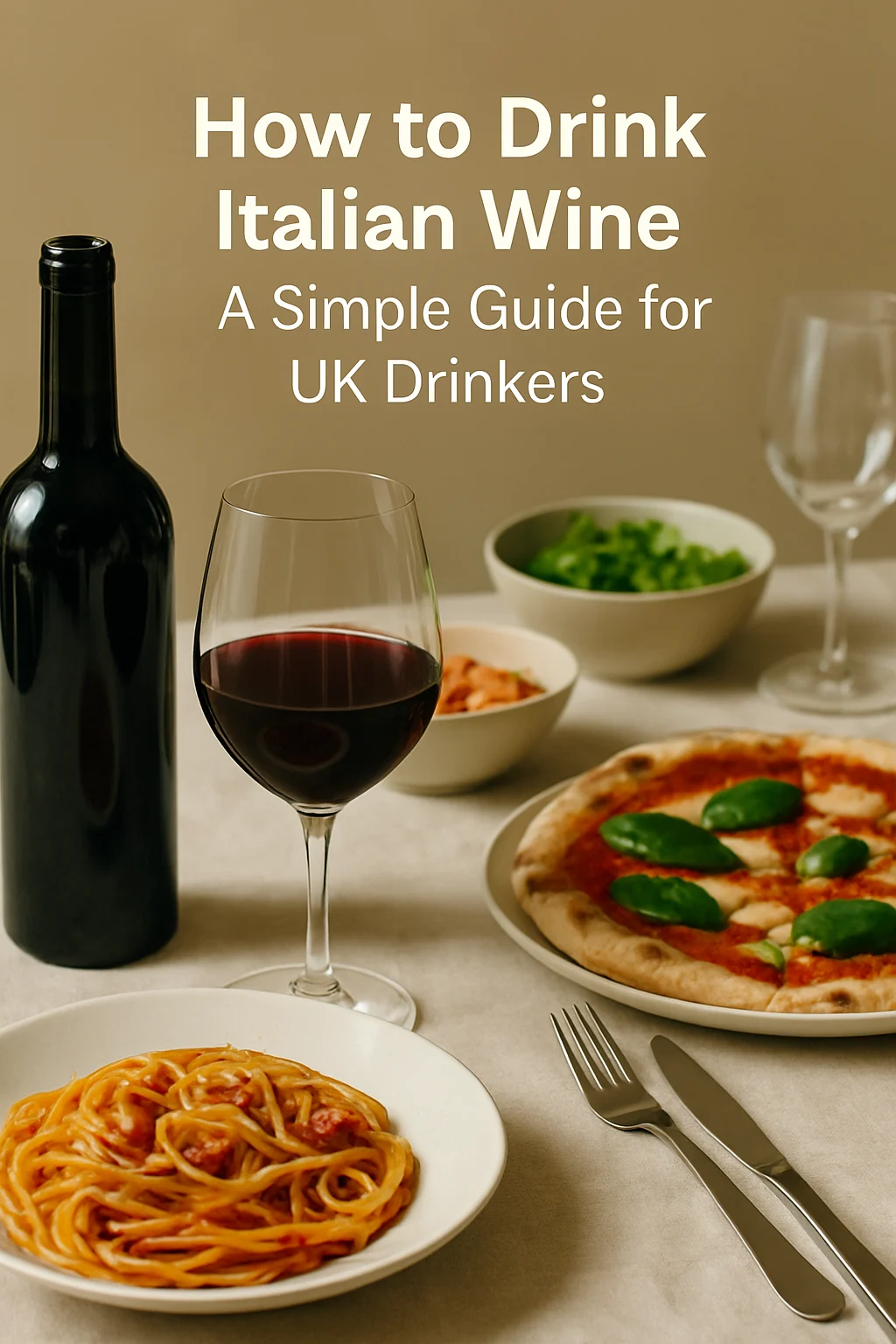
Italian wine is often misunderstood in the UK, not because it is difficult or overly complex, but because many people aren’t sure how to drink Italian wine properly. Italian wines behave differently to what UK drinkers often expect — they are rarely designed to impress instantly, taste soft straight from the bottle, or be judged in isolation. Instead, they are made to work with food, to change over time, and to feel balanced across a meal rather than in a single sip.
This guide explains how to drink Italian wine properly in a UK context — not in terms of etiquette or rules, but in practical, everyday terms. If you’ve ever opened an Italian wine and thought it felt tight, sharp, bitter, or underwhelming at first, this article will explain why that happens and how to get the best from the bottle.
Italian Wine Is Made for the Table, Not the Sofa
One of the biggest differences between Italian wine and many wines commonly sold in the UK is intent. Italian wine evolved as part of daily life, not as a standalone product. It is designed to be drunk with food, often slowly, and often shared. This has a huge impact on how it tastes and how it should be approached.
When Italian wine is tasted on its own, especially straight after opening, it can feel less generous than expected. Acidity may stand out, tannins can feel firm, and flavours may seem restrained. Once food enters the picture, however, those same qualities suddenly make sense. Acidity refreshes the palate, tannins soften, and flavours become more expressive.
If there is one mindset shift that transforms how Italian wine is experienced, it is this: judge Italian wine with food, not before it.
Temperature: The Quiet Game-Changer
Temperature is one of the most common reasons Italian wine is misunderstood in the UK. Many wines are simply served at the wrong temperature, which exaggerates the wrong characteristics.
Red Wine Temperature in the UK
In the UK, red wine is often served at room temperature, but modern homes are warmer than the conditions Italian wines were traditionally drunk in. As a result, reds can taste heavy, alcoholic, or overly tannic.
Most Italian red wines benefit from being served slightly cooler than room temperature, especially medium-bodied or structured styles. A short time in the fridge — even 15 to 20 minutes — can make a noticeable difference, tightening the structure and bringing balance back into the wine.
White Wine Temperature
On the other end of the spectrum, Italian white wines are often served too cold. Ice-cold temperatures mute flavour and make wines feel sharper than they really are. Many Italian whites show far more character when served cool rather than cold, allowing texture and subtle aromatics to come through.
If a white wine feels bland or overly acidic straight from the fridge, give it a few minutes to warm up in the glass before deciding what you think.
Why Italian Wine Often Needs Air
Another common point of confusion is how Italian wine behaves immediately after opening. Many Italian wines, especially reds, can feel closed or tight at first. This is normal and intentional.
Italian winemaking often prioritises structure and longevity over immediate openness. As a result, wines can need time to breathe before they show their best side. This doesn’t mean every bottle needs to be decanted, but it does mean patience is rewarded.
Pouring a glass and letting it sit for a few minutes, or simply giving the bottle time during a meal, often leads to a noticeable change. Aromas open up, tannins soften, and the wine becomes more expressive.
Decanting: When It Helps and When It Doesn’t
Decanting is often misunderstood in the UK as something reserved for expensive or old wines. In reality, decanting Italian wine is less about prestige and more about practicality.
Decanting can help:
- Young, structured red wines
- Wines that feel tight or muted on opening
- Wines intended for rich or hearty meals
It’s usually unnecessary for:
- Fresh, light reds
- Most Italian whites
- Wines designed to be drunk young and casually
If you don’t have a decanter, simply opening the bottle earlier and allowing it to breathe can achieve a similar effect. The goal isn’t ceremony — it’s balance.
Why Italian Wine Can Taste Better on Day Two
A surprisingly common experience with Italian wine is that it tastes better the day after opening. This often surprises UK drinkers, who expect wine to deteriorate quickly once opened.
Italian wines often improve with a little oxygen exposure. On day two, tannins can feel softer, flavours more integrated, and the overall profile more harmonious. This doesn’t mean every bottle will last indefinitely, but it does mean Italian wine is often more resilient than expected.
This quality reflects how Italian wine is traditionally consumed — over meals, not rushed, and not necessarily finished in one sitting.
Food Changes Everything
Italian wine is rarely designed to be the star of the show. Instead, it plays a supporting role, enhancing food and making meals feel complete. This is why Italian wines often feel different when tasted without food.
Acidity cuts through fat, tannins soften alongside protein, and savoury notes complement umami flavours. Foods like tomato-based sauces, cheeses, cured meats, and grilled vegetables all interact naturally with Italian wine.
If a wine feels awkward or unbalanced on its own, try it with food before writing it off. Very often, what felt challenging becomes exactly what makes the pairing work.
Bitterness Isn’t a Fault in Italian Wine
One of the biggest cultural differences between Italian and UK wine preferences is the perception of bitterness. In the UK, bitterness is often viewed negatively, while in Italy it is an accepted and even valued part of flavour.
Italian cuisine includes bitter elements as a matter of course, and Italian wine evolved alongside this palate. A slight bitter edge in wine adds complexity, structure, and food compatibility. When paired with the right dish, bitterness often becomes a strength rather than a drawback.
Understanding this helps reframe wines that might otherwise be dismissed too quickly.
What Not to Worry About
Italian wine culture is far more relaxed than many UK drinkers realise. There are very few hard rules, and perfection is not the goal.
You don’t need:
- Specialist glassware for every wine
- To cellar most bottles for years
- To memorise regions or grape names
- To like every Italian wine you try
Italian wine is about enjoyment, not performance. Some wines will resonate with you more than others, and that’s normal.
How to Approach Italian Wine With Confidence
The easiest way to drink Italian wine properly is to approach it with curiosity rather than expectation. Allow the wine time, serve it thoughtfully, and consider the context in which it’s being drunk.
Ask simple questions:
- Is this meant to be enjoyed with food?
- Does it improve as it opens?
- How does it feel after a few sips rather than the first one?
These small shifts in approach make a significant difference.
Why Italian Wine Rewards Patience
Italian wine doesn’t shout. It doesn’t rush. It reveals itself gradually, often quietly, and usually in the company of food. For UK drinkers used to more immediately expressive styles, this can feel unfamiliar at first.
Once that difference is understood, Italian wine becomes deeply satisfying. It feels honest, balanced, and grounded in tradition. And most importantly, it feels like it belongs at the table, not on a pedestal.
Learning how to drink Italian wine properly isn’t about rules or expertise — it’s about aligning expectations with intention. When you do that, Italian wine stops feeling confusing and starts feeling exactly as it should: natural, rewarding, and easy to enjoy.