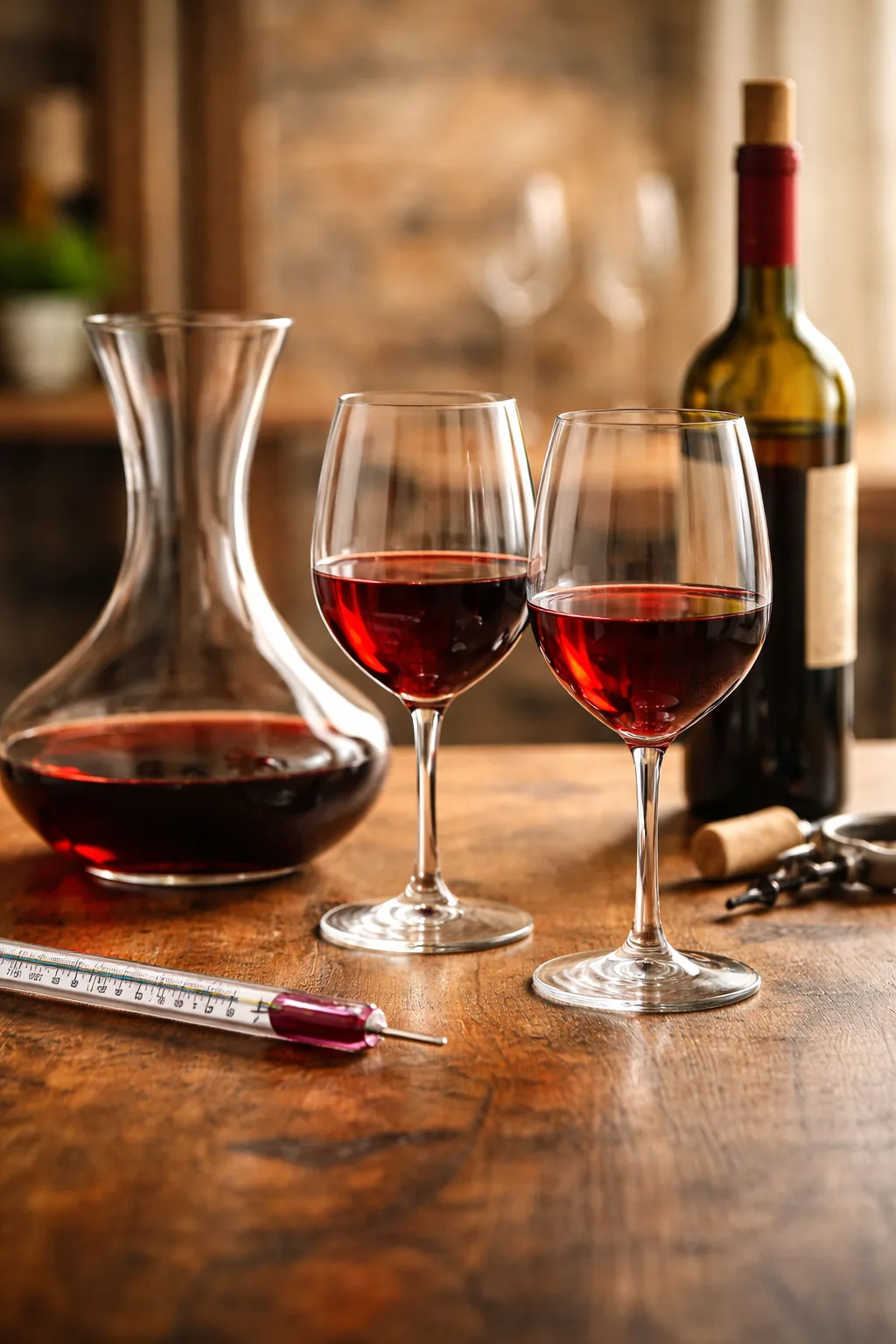
How to serve red wine properly can make a significant difference to how the wine tastes and is experienced. Serving temperature, glassware, decanting and timing all affect aroma, flavour balance and texture, and small adjustments can dramatically improve enjoyment.
This guide explains how to serve red wine — from ideal serving temperatures and glass selection to decanting, pouring and food pairing — so you can present red wine confidently at home or at the table.
Why Serving Matters
Red wine is more than just a drink — it’s a sensory experience. Serving wine incorrectly can:
- Dull aromas
- Suppress flavour nuances
- Accent alcohol or bitterness
- Reduce overall enjoyment
By contrast, serving wine with attention to temperature and glassware helps release aroma compounds and balance flavours, allowing the wine to show its best personality.
Understanding Red Wine Temperature
Temperature is the single most important factor when serving red wine. Many people assume that red wine should always be served warm — but that’s a myth. The goal is to serve red wine at a temperature that:
- Preserves freshness
- Balances tannin structure
- Enhances aroma
- Prevents alcohol from dominating
Most red wines are best served between 14–18°C (57–64°F).
Light Reds
Lighter bodied reds (e.g., Beaujolais, young Pinot Noir) are best served toward the cooler end of the range: around 14–16°C. This preserves bright fruit characters and keeps acidity lively.
Medium–Full Reds
Medium reds (e.g., Chianti, Barbera) and fuller reds (e.g., Bordeaux blends, Rioja) benefit from slightly warmer service: 16–18°C. This allows more fragrant aromas and softer tannins to emerge.
Too Warm vs Too Cold
- Too cold: Wine tastes tight, tannic and muted
- Too warm: Alcohol fumes dominate, making the wine seem flabby
A simple trick:
If the wine feels too warm in your glass, chill it for 5–10 minutes in the fridge and try again.
Choosing the Right Glassware
Glass shape matters because it affects how aromas are delivered to the nose and how the liquid spreads across the palate.
Universal Red Wine Glass
A glass with a wide bowl allows more surface area for the wine to breathe, helping volatile aromatics to open up.
Pinot Noir / Light Red Glass
Slightly larger bowl and tapered rim direct aromas toward the nose and encourage gentle sipping.
Burgundy Glass Tip
For very expressive reds, a wider bowl helps the wine to develop more aroma in the glass.
Whatever glass you use, make sure it is:
- Clean
- Free of detergent residues
- At room temperature (not chilled from storage)
Decanting: When and Why
Decanting means pouring wine from its bottle into a separate vessel. It serves two main purposes:
Aeration
Young, tannic wines often benefit from additional exposure to air. Decanting increases the surface area in contact with oxygen, helping to soften tannins and release more complex aromas.
Removing Sediment
Older reds, especially those aged for many years, can develop sediment. Decanting separates clear wine from sediment, improving clarity and texture.
When to Decant
- Yes: Young, structured reds (e.g., Cabernet Sauvignon, Aglianico)
- Maybe: Medium-bodied or older bottles
- No: Light reds, very old fragile bottles
Decant for anywhere from 30 minutes to 2+ hours depending on the wine’s youth and tannin profile. Taste periodically rather than following a strict time rule.
How to Pour Wine Correctly
A few simple steps to pour wine like a pro:
- Hold the bottle by the base or lower neck
- Pour in gentle, steady motion
- Avoid shaking the bottle
- Fill to the widest part of the glass
- Wipe the lip with a napkin if needed
This allows the wine to breathe slightly in the glass and gives room for aromas to accumulate above the surface.
Serving Opened Bottles Later
Once opened, red wine continues to oxidise. If you plan to drink over multiple glasses or sessions:
- Recork and refrigerate (yes, even reds)
- Store upright to minimise surface area exposed to air
- Use a wine stopper or vacuum seal system if you have one
Most red wine remains drinkable for 1–3 days after opening if stored correctly.
Practical Serving Tips for Different Red Styles
Light, Fruity Reds
Examples: Beaujolais, Dolcetto
Ideal temperature: 14–16°C
Serving approach:
- Light chilling can enhance freshness
- Gentle swirling in glass opens aroma
Medium-Bodied Reds
Examples: Chianti, Barbera
Ideal temperature: 16°C
Serving approach:
- Decanting optional
- Pair with roasted or tomato-based dishes
Full-Bodied Reds
Examples: Cabernet Sauvignon, Aglianico, Shiraz
Ideal temperature: 16–18°C
Serving approach:
- Beneficial to decant
- Great with richer meats and stews
Common Mistakes in Serving Red Wine
Mistake 1: Serving Too Warm
Wine that is too warm emphasises alcohol and reduces freshness. A quick chill solves this.
Mistake 2: Using the Wrong Glass
Narrow glasses trap aromas; wide bowls accentuate them.
Mistake 3: Over-Decanting
Too much time exposed to air can flatten wine. Taste periodically.
Red Wine and Food Pairing Basics
The best wine service enhances food pairing. General rules:
- Light reds with lighter foods (pasta with tomato sauce, grilled fish)
- Medium reds with more flavourful mains (chicken, pork)
- Full reds with rich sauces and red meats
Serve wine slightly cooler than room temperature, not warm, to preserve balance against food.
So, How Should You Serve Red Wine?
In summary, serving red wine well comes down to:
- Correct temperature
- Appropriate glassware
- Considered decanting
- Confident pouring
Wine service doesn’t need to be intimidating — just thoughtful.
Summary: Red Wine Service Essentials
- Aim for 14–18°C depending on body
- Use wide-bowl glassware
- Decant structured wines
- Chill if too warm
- Store opened bottles in the fridge
Serving red wine well enhances both flavour and enjoyment, whether you are hosting a dinner or simply enjoying a glass at home.