Italy is home to more indigenous Italian grapes than any other country in the world — more than 500 documented varieties, with new ones still being rediscovered. For the curious wine lover, this diversity offers an extraordinary opportunity to explore flavours, regions and histories that go far beyond mainstream wines like Chianti, Pinot Grigio or Amarone. This guide explores Italy’s most important native grapes, with a focus on rare and lesser-known varieties that are gaining attention among UK drinkers seeking authenticity, craftsmanship and a real sense of place.
Why Indigenous Italian Grapes Matter
Italy’s native grapes offer three major advantages to UK wine lovers:
Terroir expression
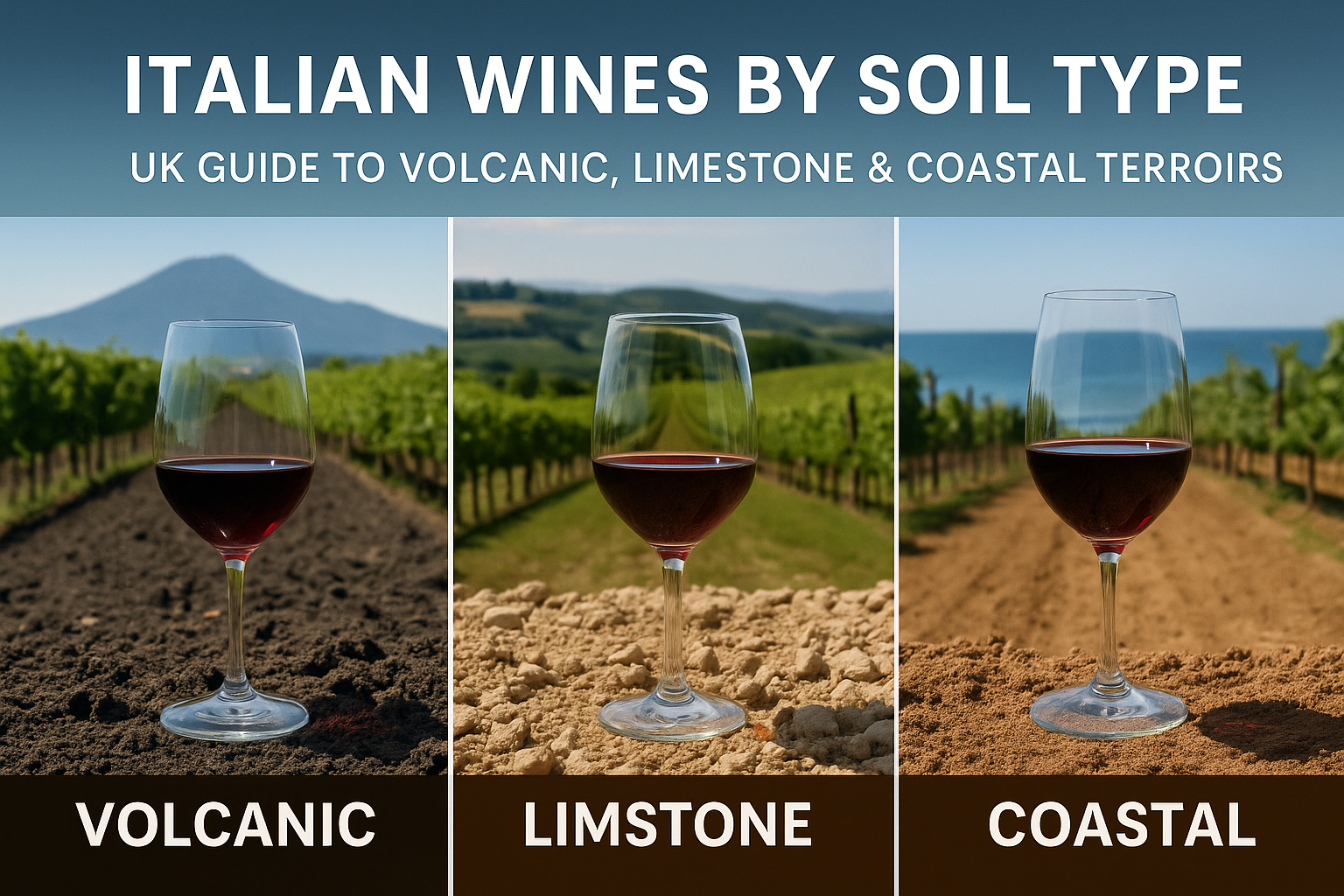
Indigenous grapes evolve over centuries in a specific environment. When you taste Aglianico, Nerello Mascalese, Pecorino or Gaglioppo, you taste landscapes that cannot be replicated elsewhere — volcanic slopes, coastal breezes, mountain valleys or ancient limestone terraces.
Diversity and discovery
While France relies on a handful of international grapes, Italy thrives on genetic diversity. This means endless discovery for UK drinkers who want to go beyond the obvious.
Food friendliness
Italian grapes are designed by history to pair with food — from seafood to roasts, pasta to grilled meats. Their structure, acidity and flavour balance fit perfectly with British cooking.
This guide focuses on the indigenous grapes that define Italy’s most exciting regions — especially those found in artisanal wines you can buy in the UK today.
Aglianico — The “Barolo of the South”
Aglianico is one of Italy’s greatest red grapes, native to Basilicata and Campania. It thrives on volcanic soils, giving it power, structure and longevity.
Flavour profile
- Black cherry
- Plum
- Smoke
- Leather
- Spice
- Earthiness
Why UK drinkers love it
Aglianico offers the depth of Barolo or Brunello at a fraction of the price. For winter drinking, roast dinners and slow-cooked meats, it’s unbeatable.
Greco — Ancient Grape of the South
Greco is one of Italy’s oldest grapes, likely brought by Greek settlers over 2,000 years ago. Now seen mainly in Campania, it produces textured, aromatic whites.
Flavour profile
- Pear
- Peach
- Almond
- Floral notes
- Saline finish
Perfect with
- Seafood
- Chicken dishes
- Light pasta
An essential grape for UK drinkers seeking full-bodied whites with character.
Falanghina — Southern Italy’s Fresh, Coastal White
Native to Campania, Falanghina has become one of Italy’s most exciting white grapes thanks to its freshness and versatility.
Flavour profile
- Citrus
- Apple
- White flowers
- Soft herb notes
Why it works
A brilliant alternative to Sauvignon Blanc for UK customers, with more texture and Mediterranean charm.
Pecorino — The Comeback Grape
Once nearly extinct, Pecorino has become one of Italy’s most fashionable indigenous whites. Originally from Abruzzo and Marche, it now appears on many premium UK wine lists.
Flavour profile
- Lemon zest
- Pear
- Herbs
- Minerality
Ideal for
- Fish
- Risotto
- Fresh salads
It offers a refreshing change from ubiquitous Pinot Grigio.
Gaglioppo — Calabria’s Forgotten Treasure
Gaglioppo is an ancient Calabrian grape that produces elegant, medium-bodied reds full of Mediterranean herbs and savoury tones.
Flavour profile
- Red cherry
- Dried flowers
- Olive
- Tobacco
Why UK drinkers should explore it
It’s refined yet distinctive — perfect for those seeking a lighter red with personality.
Susumaniello — Puglia’s Rare Jewel
One of Italy’s rarest native grapes, Susumaniello has only recently been revived. Native to Puglia, it delivers colour, richness and freshness.
Flavour profile
- Black cherry
- Blueberry
- Spices
- Balsamic hints
Best with
- Barbecue
- Burgers
- Rich pasta dishes
A must-try for UK drinkers who love bold reds but want something new.
Negroamaro — The Dark, Savoury Grape of Salento
Negroamaro is one of Puglia’s signature grapes. Indigenous to the region, it produces deep, earthy, structured reds.
Flavour profile
- Black fruit
- Herbal notes
- Coffee
- Cocoa
- Liquorice
Why it works in the UK
Negroamaro complements stews, roasts, lamb shank and cosy winter meals.
Lacrima — The Aromatic Red of Marche
Lacrima di Morro d’Alba is one of Italy’s most aromatic native grapes, famous for floral intensity.
Flavour profile
- Rose
- Violet
- Blueberry
- Aromatic herbs
Perfect for
- Fragrant dishes
- Soft cheeses
- Charcuterie
It is unlike any other Italian red, offering fragrance similar to Northern Rhône Syrah or aromatic Gamay.
Nero di Troia — Puglia’s Dark Horse
An under-appreciated native grape from northern Puglia, Nero di Troia produces bold, finely structured reds.
Flavour profile
- Black cherry
- Pepper
- Violets
- Dark chocolate
Why UK drinkers should try it
It’s powerful yet refined, delivering character at excellent value.
Garganega — The Heart of Soave
Native to the Veneto, Garganega produces Soave Classico — one of Italy’s great terroir-driven whites.
Flavour profile
- Peach
- Citrus peel
- Almond
- Minerality
Why it’s worth discovering
Quality Soave is nothing like the cheap supermarket versions — it’s elegant, volcanic, long-lived and perfect for seafood or poultry.
Nerello Mascalese — The Burgundy of Sicily
Indigenous to the slopes of Mount Etna, Nerello Mascalese is one of Italy’s most exciting native grapes.
Flavour profile
- Red berries
- Herbs
- Smoke
- Volcanic minerality
Why UK drinkers love it
Volcanic sophistication with Pinot Noir-like finesse — often at more accessible prices.
Coda di Volpe — Campania’s Silky, Historic White
A softer, silkier indigenous white from southern Italy.
Flavour profile
- Peach
- Apple
- Honeysuckle
- Almond
An excellent “winter white” for richer or creamy dishes.
Glera — The Native Grape of Prosecco
Though now globally known through Prosecco, Glera remains an indigenous Veneto grape with surprising versatility.
Best styles
- Brut
- Extra dry
- Col fondo (unfiltered, traditional method)
Premium versions offer far more quality than supermarket Prosecco.
Why Indigenous Grapes Are the Future of Italian Wine in the UK
UK wine drinkers are increasingly moving towards authenticity, heritage and niche storytelling. Indigenous grapes deliver all three:
- They differentiate Donzella from supermarkets
- They appeal to younger, curious drinkers
- They link directly to your future Grape Directory
- They position Donzella as a true Italian specialist
As premium wine culture develops in the UK, the indigenous Italian grape category will only grow stronger.