Prosecco is one of Italy’s most popular sparkling wines, but it is also one of the most misunderstood. Many people assume Prosecco is sweet, while others believe it is always dry. The confusion comes from the way Prosecco is labelled and how sweetness is described in sparkling wine.
The short answer is this: some Prosecco is sweet, but most Prosecco sold today is dry. Understanding which is which depends on knowing how Prosecco sweetness levels work and what terms to look for on the label.
This guide explains whether Prosecco is sweet, why the names can be misleading, and how to choose the right style if you prefer dry or sweeter sparkling wine.
What Does “Sweet” Mean in Prosecco?
Sweetness in Prosecco is determined by residual sugar, which is the amount of natural grape sugar left in the wine after fermentation. In sparkling wines, sweetness levels are categorised using specific terms that appear on the label.
These terms apply to all sparkling wines, including Champagne, Prosecco and Cava, but the wording often causes confusion because it does not follow everyday language.
In simple terms:
- Lower residual sugar = drier taste
- Higher residual sugar = sweeter taste
However, acidity and bubbles can make a wine taste fresher and less sweet than the sugar level suggests.
Is Prosecco Generally Sweet or Dry?
Most Prosecco is dry, not sweet.
The most common styles of Prosecco sold in the UK are Brut and Extra Dry, both of which are intended to be refreshing, crisp and easy to drink rather than dessert-like.
That said, Prosecco can range from very dry to noticeably sweet depending on the style chosen.
Prosecco Sweetness Levels Explained
This is where most of the confusion comes from. Prosecco uses sweetness labels that sound contradictory if you are not familiar with sparkling wine terminology.
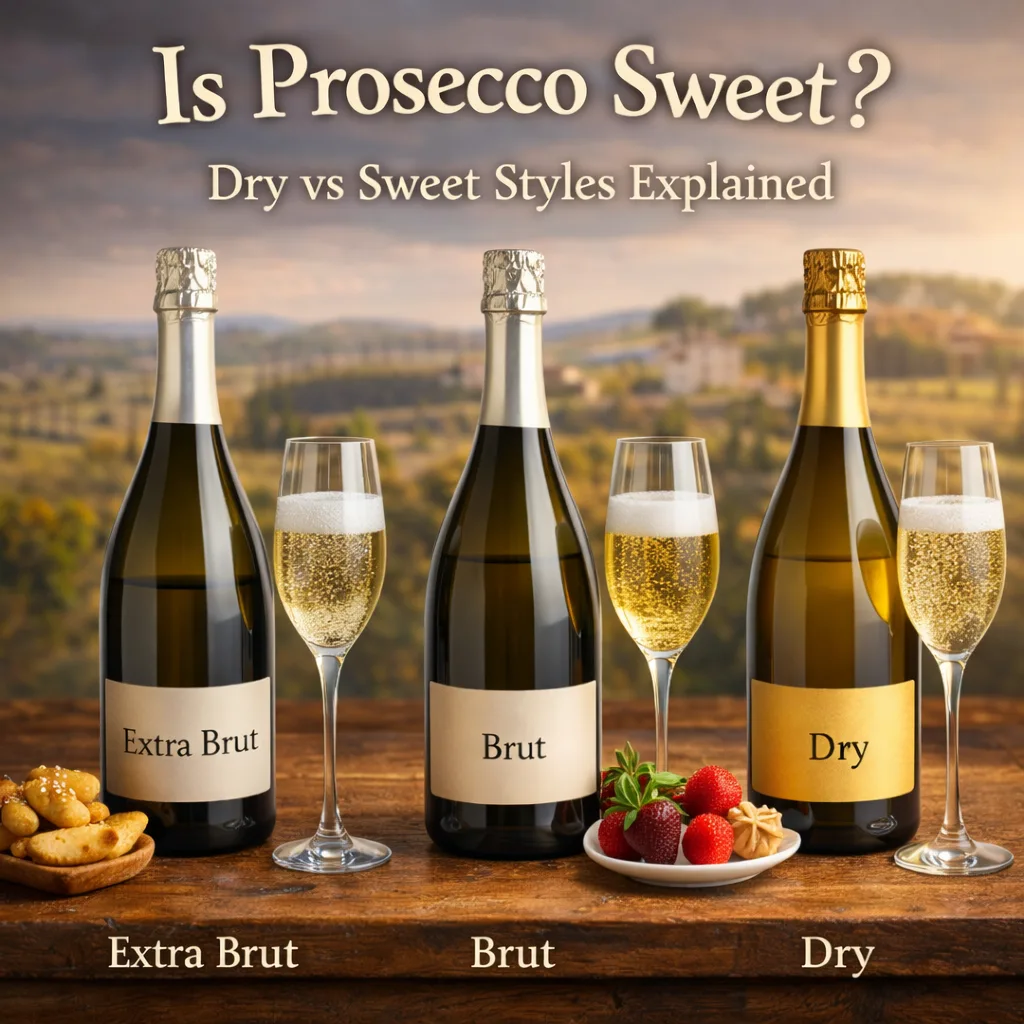
Extra Brut Prosecco
Extra Brut is the driest style of Prosecco. It contains very little residual sugar and tastes crisp, sharp and refreshing.
Extra Brut Prosecco is ideal for people who prefer:
- Very dry wine
- High acidity
- Minimal fruit sweetness
Brut Prosecco
Brut Prosecco is also dry and is the most popular style for everyday drinking. It has slightly more residual sugar than Extra Brut, but it still tastes dry and balanced.
This style works well as:
- An aperitif
- A food-friendly sparkling wine
- A drier alternative to sweeter sparkling wines
Extra Dry Prosecco (Misleading Name)
Despite the name, Extra Dry Prosecco is sweeter than Brut.
Extra Dry Prosecco contains more residual sugar and tastes slightly off-dry. It often has softer fruit flavours and a rounder mouthfeel.
This style appeals to people who:
- Find Brut too sharp
- Enjoy a touch of sweetness
- Prefer a softer sparkling wine
Dry Prosecco
Dry Prosecco is the sweetest common style. It has a noticeable sweetness and is often enjoyed on its own rather than with food.
This style is less common in the UK but is sometimes chosen by those who enjoy sweeter sparkling wines.
Why Prosecco Is Often Thought to Be Sweet
There are several reasons why Prosecco has a reputation for being sweet, even when it is dry.
Firstly, fruit-forward flavours can create the impression of sweetness. Prosecco is made primarily from the Glera grape, which naturally produces fresh, fruity aromas such as apple, pear and peach.
Secondly, lower alcohol levels can make Prosecco taste softer and more approachable than drier still wines.
Finally, many people are introduced to Prosecco through Extra Dry styles, which do contain a little sweetness compared to Brut.
All of this contributes to the idea that Prosecco is sweet, even though most examples are technically dry.
Is Prosecco Sweeter Than Champagne?
Generally speaking, Prosecco tastes sweeter than Champagne, even when the sugar levels are similar.
This is because:
- Prosecco is fruit-driven
- Champagne is higher in acidity
- Champagne often has more savoury notes
However, a Brut Prosecco and a Brut Champagne can have very similar residual sugar levels on paper.
Which Prosecco Should You Choose If You Don’t Like Sweet Wine?
If you prefer dry wine, look for:
- Extra Brut Prosecco
- Brut Prosecco
Avoid:
- Dry Prosecco
- Very fruity styles if you are sensitive to sweetness
Checking the label is more reliable than relying on brand descriptions.
Which Prosecco Is Best If You Like a Touch of Sweetness?
If you enjoy a softer, slightly sweeter style:
- Extra Dry Prosecco is often the best balance
- It still tastes fresh but avoids sharp acidity
For noticeably sweet Prosecco, choose:
- Dry Prosecco
Does Prosecco Pair Better with Sweet or Savoury Food?
Dry Prosecco styles pair best with:
- Salty snacks
- Light starters
- Seafood
- Italian appetisers
Sweeter Prosecco styles work better with:
- Desserts
- Fruit-based dishes
- Light pastries
Matching sweetness levels helps keep the wine balanced.
Is All Prosecco Made the Same Way?
Prosecco is made using the Charmat method, where the second fermentation happens in large tanks rather than in the bottle. This method preserves fresh fruit flavours and helps keep Prosecco light and approachable.
The production method contributes to Prosecco’s fresh, fruity style, which can sometimes be mistaken for sweetness.
So, Is Prosecco Sweet?
Prosecco can be sweet, but most Prosecco is dry.
The key is understanding the label:
- Extra Brut and Brut are dry
- Extra Dry is slightly sweet
- Dry is the sweetest common style
Once you know what to look for, choosing the right Prosecco becomes straightforward.
Summary: Prosecco Sweetness at a Glance
Prosecco ranges from very dry to sweet, but the majority of bottles sold are dry styles designed for easy drinking and food pairing. The confusing naming system is the main reason Prosecco’s sweetness is misunderstood.
By checking the sweetness level on the label, you can confidently choose a Prosecco that matches your taste, whether you prefer crisp and dry or soft and slightly sweet.