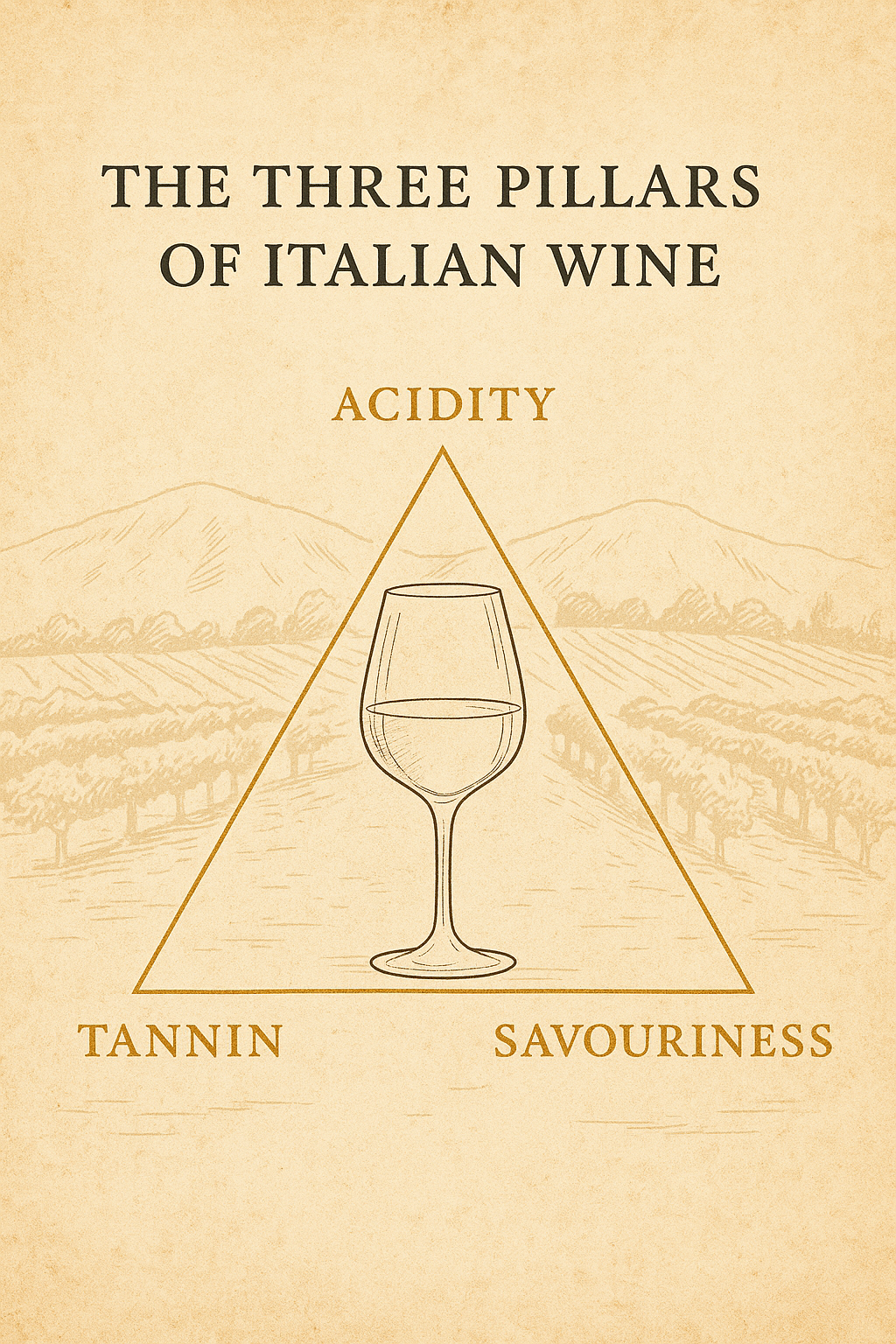
Italian wine has a taste that is instantly recognisable: bright, savoury, structured and incredibly food friendly. Whether you pick up a bottle of Chianti, Soave, Barolo, Montepulciano, Nero d’Avola or Verdicchio, there is a shared identity running through all Italian styles. Understanding why Italian wine tastes the way it does helps UK drinkers choose better bottles and appreciate the depth, balance and craftsmanship behind Italy’s winemaking culture. The core reason lies in three defining characteristics that shape almost every Italian wine: acidity, tannin and savouriness. These three elements form the pillars of the Italian wine flavour profile and explain why Italian wine tastes different from wines made elsewhere and why it pairs so naturally with food.
Acidity — The Backbone of Italian Wine
Acidity is the foundation of Italian wine and one of the main reasons Italian wines taste fresh, bright and energetic. Italy’s geography plays a key role: despite warm summers, vineyards benefit from altitude, coastal winds, varying microclimates and significant day–night temperature changes. These cooling influences help grapes retain natural acidity throughout ripening. Acidity gives wine a mouth-watering feel, adds precision and prevents it from becoming heavy or flat. It is why Italian white wines taste crisp and mineral and why Italian red wines feel lively rather than overly rich. In white wines such as Gavi, Soave, Verdicchio, Vermentino, Fiano, Pecorino and Grillo, acidity delivers clarity, citrus lift and refreshing structure. In reds such as Chianti, Nebbiolo, Nerello Mascalese and Barbera, it provides vibrancy and balance. Acidity is also a major reason Italian wine pairs so well with food: it cuts through richness, enhances flavour and refreshes the palate with each sip.
Tannin — The Structure and Strength of Italian Reds
Tannin is the second pillar and one of the key components that define the character of Italian red wine. Tannins come from grape skins, seeds and stems and create the dry, gripping feeling on the palate. Several of Italy’s most important red grapes naturally produce high levels of tannin, which is why many Italian reds feel firm, structured and age worthy. Grapes such as Nebbiolo, Sangiovese, Aglianico, Sagrantino and Montepulciano are known for delivering wines with grip, depth and long-term ageing potential. This is intentional: Italian wine evolved alongside Italian cuisine, which features meat, cheese, tomatoes and olive oil. Tannins bind to proteins and fats in food, softening their texture and enhancing both the wine and the dish. This makes tannin a crucial reason why Italian wine is so food friendly. Rather than aiming for sweetness or softness, Italian winemakers prioritise balance, structure and authenticity, resulting in wines that feel savoury, layered and refined.
Savouriness — The Signature Italian Flavour
The third pillar, savouriness, is perhaps the most distinctive. Whereas many wines from other countries focus on ripe fruit flavours, Italian wines frequently show herbal, earthy, spicy and umami-like characteristics. These savoury notes form a major part of what makes Italian wine taste unique. They come from a combination of indigenous grape varieties, Mediterranean vegetation, local climate, traditional winemaking and diverse soils. In red wines, savouriness appears as dried herbs, tomato leaf, spice, earth, tea leaf, olive or subtle bitterness. Chianti often shows herbal cherry and tomato leaf; Nebbiolo displays rose, tar and dried spices; Montepulciano brings dark fruit with savoury depth; Nero d’Avola offers cocoa, pepper and earth. In white wines, savouriness can appear as almond, saline minerality, herbs or flinty undertones, particularly in Soave, Verdicchio, Grillo and Etna Bianco. This savouriness gives Italian wines complexity and depth, making them more food compatible and less reliant on sweetness or heavy oak.
How These Three Pillars Work Together
Acidity, tannin and savouriness do not exist separately; they interact to create the unmistakable Italian wine experience. Acidity brings freshness and precision. Tannin adds structure and backbone. Savouriness introduces complexity and depth. Together they produce wines that feel balanced, lively and expressive rather than overly fruity or heavy. These pillars explain why Italian wines rarely taste sweet, why they maintain freshness in warm climates and why they stand out in blind tastings. They also explain why Italian wines consistently pair well with such a wide range of foods, from tomatoes and rich sauces to grilled meats and hard cheeses.
Why Italian Wine Tastes Different from New World Wine
One of the biggest contrasts UK drinkers notice is between Italian wine and wines from the New World such as Australia, Chile, South Africa or California. New-world wines often emphasise fruit richness, softness, sweetness and high alcohol. Italian wines focus instead on brightness, herbal character, dryness and structure. This difference is intentional: Italian wine is produced with balance and food compatibility in mind. Rather than delivering bold sweetness or fruit concentration, Italian winemakers aim for tension, authenticity and harmony.
Why Italian Wine Tastes Different from French Wine
Although France and Italy share a long wine heritage, the flavour profiles differ in distinctive ways. French wines often emphasise elegance, roundness and controlled ripeness, while Italy prioritises acidity, tannin, herbal lift and savouriness. French wines frequently rely more on oak influence; Italian wines rely more on grape and terroir expression. Switching from Bordeaux or Burgundy to Chianti, Barolo or Etna highlights these differences immediately. This contrast is a key part of Italy’s identity and appeal.
How to Choose Italian Wine Using the Three Pillars
Using the three pillars as a guide makes it easier for UK drinkers to choose wines they’ll enjoy. If you like fresh, crisp wines, choose high-acid whites such as Gavi, Soave, Verdicchio, Vermentino or Grillo. If you enjoy refreshing, food-friendly reds, go for Sangiovese, Barbera, Nebbiolo or Nerello Mascalese. If you want structure and depth, choose more tannic reds such as Barolo, Brunello, Aglianico or Sagrantino. If you enjoy earthy, herbal or savoury flavours, pick wines known for complexity such as Chianti Classico, Montepulciano, Nero d’Avola, Verdicchio or Etna wines. These pillars turn Italian wine selection into a logical, enjoyable process.
Final Thoughts
The three pillars of Italian wine — acidity, tannin and savouriness — shape every region, grape variety and style across Italy. They explain why Italian wine tastes different, why it is so consistently food friendly and why it appeals so strongly to UK drinkers. Recognising these elements helps wine lovers choose bottles with confidence and understand the incredible diversity Italy offers. Whether you enjoy crisp whites, savoury reds or complex volcanic wines, Italy’s unique structure and character provide an extraordinary world of flavour to explore.