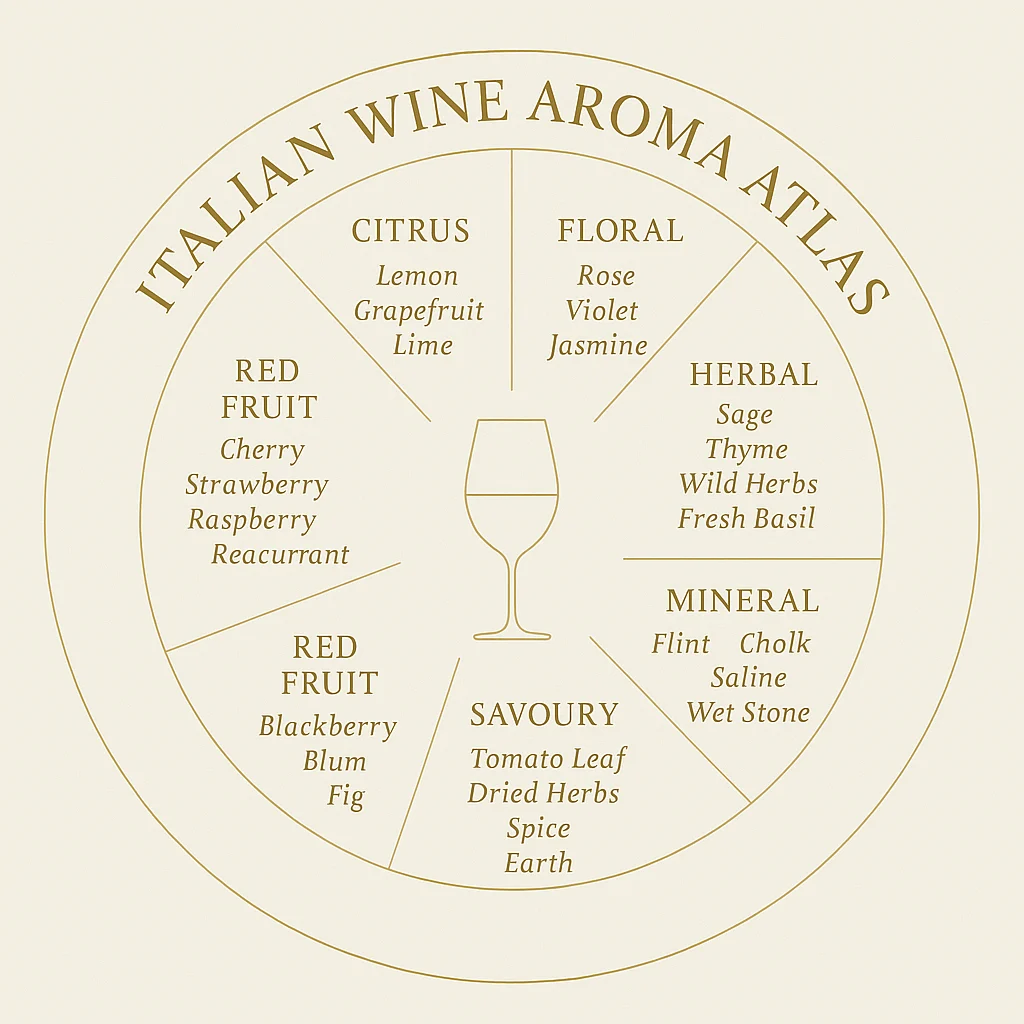
Italian wine is known for its diversity and character, but one of the most captivating aspects for UK drinkers is the wide range of aromas found across the country’s native grape varieties. From delicate floral whites to smoky volcanic reds, Italian wines express a unique aromatic identity shaped by regional traditions, local climates and centuries of winemaking heritage. Understanding these aromas helps drinkers feel more confident when choosing Italian wine and reveals the story behind every bottle. This Italian Wine Aroma Atlas explores the signature smells of Italy’s most important grapes and shows how to recognise them in the glass.
Why Aromas Matter in Italian Wine
Aromas are the first indicator of a wine’s personality. Italian grapes are particularly expressive, often reflecting the landscape where they grow: Alpine freshness, Mediterranean herbs, volcanic minerality or orchard-fruit richness. Unlike wines that depend heavily on oak or sweetness, Italian wines typically highlight natural grape character and terroir, making aroma identification an essential tool for choosing a style you enjoy.
Aroma Signatures of Italy’s Most Important White Grapes
Gavi (Cortese)
Gavi is known for its clean and delicate profile. Aromas include citrus, green apple, white flowers and a faint almond note, often accompanied by a flinty, mineral edge that reflects Piemonte’s soils.
Soave (Garganega)
Soave offers soft pear, peach, citrus, white blossom and a gentle almond tone. A subtle mineral element often sits beneath the fruit, giving it elegance and lift.
Verdicchio
Verdicchio shows lemon oil, green apple, herbal notes, almond skin and a saline freshness. These aromas are distinctive and make Verdicchio one of Italy’s most characterful whites.
Vermentino
Vermentino produces vibrant aromas of lime, grapefruit, white peach, pine, herbs and Mediterranean salinity. It is one of Italy’s most aromatic coastal whites.
Grillo
Grillo typically expresses citrus peel, melon, orange blossom, herbs and a clean saline note. The combination of citrus and coastal freshness is a hallmark of Sicilian whites.
Pecorino
Pecorino offers bright citrus zest, pear, sage, white flowers and a crisp mineral undertone. Its herbal character gives it a distinctly Italian personality.
Fiano
Fiano is rich and expressive, with aromas of honey, hazelnut, smoke, citrus oil and white flowers. Over time it becomes more complex and layered.
Greco
Greco often shows stone fruit, citrus peel, herbs and a smoky mineral note influenced by Campania’s volcanic soils.
Carricante (Etna Bianco)
Carricante displays lemon, crushed stone, smoke, wild herbs and volcanic minerality. Its aromas are pure and linear, offering a clear expression of Etna’s slopes.
Aroma Signatures of Italy’s Most Important Red Grapes
Sangiovese
Sangiovese produces red cherry, dried herbs, tomato leaf, violets and subtle spice. These aromas reflect Tuscany’s warm climate and herbal landscape.
Nebbiolo
Nebbiolo is highly aromatic, offering rose petals, tar, dried cherry, redcurrant, liquorice, tobacco and spice. Its floral-earthy combination is instantly recognisable.
Montepulciano
Montepulciano brings aromas of dark plum, blackberry, cocoa, spice and soft earthiness. It is round yet savoury.
Nero d’Avola
Nero d’Avola offers dark fruit, plum, cocoa, black pepper and Mediterranean herbs. These warm, spicy aromas reflect Sicily’s sun and volcanic terrain.
Frappato
Frappato shows strawberry, raspberry, rose, pomegranate and light spice. Its bright, floral profile makes it one of Italy’s most aromatic light reds.
Nerello Mascalese (Etna Rosso)
Nerello Mascalese features red berries, rose petals, herbs, smoke and volcanic minerality. It feels both delicate and smoky, shaped by Etna’s ash-rich soils.
Aglianico
Aglianico displays black cherry, leather, earth, smoke, spice and sometimes balsamic tones. Its deep aromatics reflect high-altitude vineyards and volcanic influence.
Corvina
Corvina, the grape behind Valpolicella and Amarone, offers sour cherry, redcurrant, rose, almond and spice. In dried-grape styles it gains chocolate, fig and sweet spice aromas.
Why Italian Wines Smell the Way They Do
Italian wine aromas come from native grapes, varied climates, local vegetation and traditional winemaking approaches. Alpine areas produce crisp, floral whites; coastal vineyards encourage citrus, herbs and saltiness; volcanic zones add smoke and minerality; warmer southern regions create ripe fruit with savoury depth. Italian winemaking values freshness, authenticity and balance, which allows aromatic complexity to shine rather than being masked by heavy oak or sweetness.
How to Use Aromas to Choose Italian Wine
Recognising aromatic patterns helps drinkers choose wines confidently. If you enjoy floral and delicate aromas, look for Nebbiolo, Frappato or Soave. If you prefer citrus-driven whites, choose Verdicchio, Grillo or Vermentino. For richer, more textured whites, try Fiano or Greco. Savoury reds such as Chianti, Etna Rosso, Montepulciano or Nero d’Avola are ideal for drinkers who enjoy herbal or earthy aromas. Aromas act as a guide to understanding the personality of each grape.
Final Thoughts
Italy’s native grapes create some of the most distinctive aromatic profiles in the wine world. From citrus and herbs to smoke, flowers and volcanic minerals, the aromas of Italian wine reveal the story of each region. Understanding these aromas helps UK drinkers choose wines more confidently and explore Italy with a deeper sense of connection and discovery. The Italian Wine Aroma Atlas provides a foundation for recognising and enjoying the expressive smells that define Italy’s most important grapes.