Dry white wine is one of the most commonly used terms in wine, yet it is also one of the most misunderstood. Many people assume “dry” refers to acidity, bitterness, or even how wine feels in the mouth. In reality, dry white wine simply means the wine contains very little residual sugar.
This guide explains what dry white wine is, how it differs from sweet white wine, how to recognise it, and which styles are considered dry.
The Simple Definition of Dry White Wine
Dry white wine is white wine that has little to no remaining natural sugar after fermentation. During winemaking, yeast converts grape sugar into alcohol. When nearly all the sugar is converted, the wine is described as dry.
Dry does not mean sour, sharp, or harsh. It only refers to sweetness level.
Why Dry White Wine Can Taste Fruity
One of the main sources of confusion is flavour.
Dry white wines can taste fruity, even though they are not sweet. Aromas and flavours such as apple, pear, peach or citrus come from the grape itself, not from sugar.
Your brain often interprets fruit flavours as sweetness, even when the wine is technically dry.
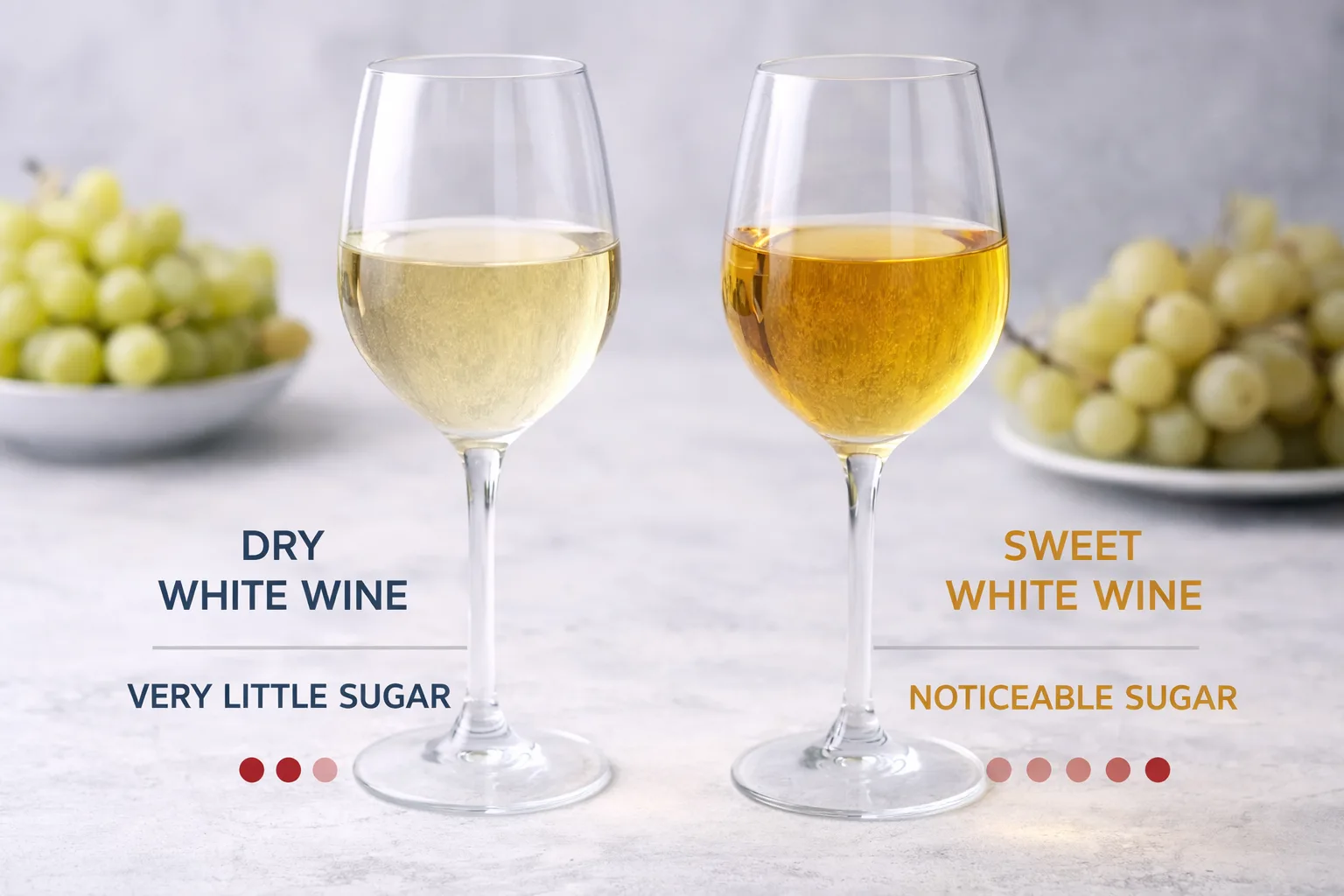
Dry vs Sweet White Wine
The difference between dry and sweet white wine comes down to residual sugar.
Dry white wines contain very little residual sugar and taste crisp and clean. Sweet white wines contain noticeable sugar and taste sweet on the palate.
Some wines fall between the two and are described as off-dry or medium-dry.
How Dry White Wine Is Measured
Sweetness in wine is measured in grams of residual sugar per litre.
Most dry white wines contain so little sugar that it is barely detectable to most people. The exact threshold varies, but dry wines generally fall below levels that register as sweet.
Acidity also plays a role. High acidity can make a wine taste drier than it actually is.
Common Dry White Wine Styles
Many of the most popular white wines in the world are dry.
Sauvignon Blanc is typically dry and crisp, known for citrus and herbal notes. Pinot Grigio is usually dry, light and refreshing. Chardonnay is most often dry, whether oaked or unoaked, although the style can vary. Italian whites such as Verdicchio, Soave and Fiano are also typically dry.
Sparkling wines labelled Brut are usually dry as well.
White Wines That Are Not Dry
Some white wines are intentionally made sweet or off-dry.
These include many dessert wines, late-harvest wines and some styles of Riesling or Moscato. These wines are clearly sweet and are usually labelled or described as such.
It is important not to assume sweetness based on grape variety alone.
Does “Dry” Mean High Alcohol?
No. Dryness refers to sugar, not alcohol.
A wine can be dry and low in alcohol, or sweet and high in alcohol. Alcohol level depends on grape ripeness and winemaking choices, not sweetness alone.
Does Oak Affect Dryness?
Oak ageing does not make wine sweet.
However, oak can add flavours such as vanilla, spice or toast, which some people mistake for sweetness. An oaked Chardonnay can still be completely dry.
How to Tell If a White Wine Is Dry
To identify a dry white wine:
- Look for words like “dry”, “crisp” or “fresh” in tasting notes
- Avoid wines described as sweet or dessert-style
- Check if the wine is labelled Brut in the case of sparkling wine
- Ask for guidance if unsure
Over time, tasting experience makes this easier.
Food Pairing With Dry White Wine
Dry white wines are extremely versatile with food.
They pair well with seafood, salads, grilled vegetables, poultry and lighter pasta dishes. Their acidity helps cut through richness and refresh the palate.
This versatility is one reason dry white wine is so popular.
Common Misconceptions About Dry White Wine
Many people believe dry means bitter or unpleasant. Others think fruity wines must be sweet. Both assumptions are incorrect.
Dry white wine can be soft, aromatic and approachable while still containing very little sugar.
Why Most White Wine Is Dry
Most white wine produced globally is dry. This is because dry wines pair more easily with food and appeal to a wide range of tastes.
Sweet white wines exist, but they represent a smaller portion of overall production.
Summary
Dry white wine is white wine with little or no residual sugar. It may taste fruity, crisp or aromatic, but it does not taste sweet. Understanding what dry means makes it easier to choose white wine confidently and enjoy it with food.