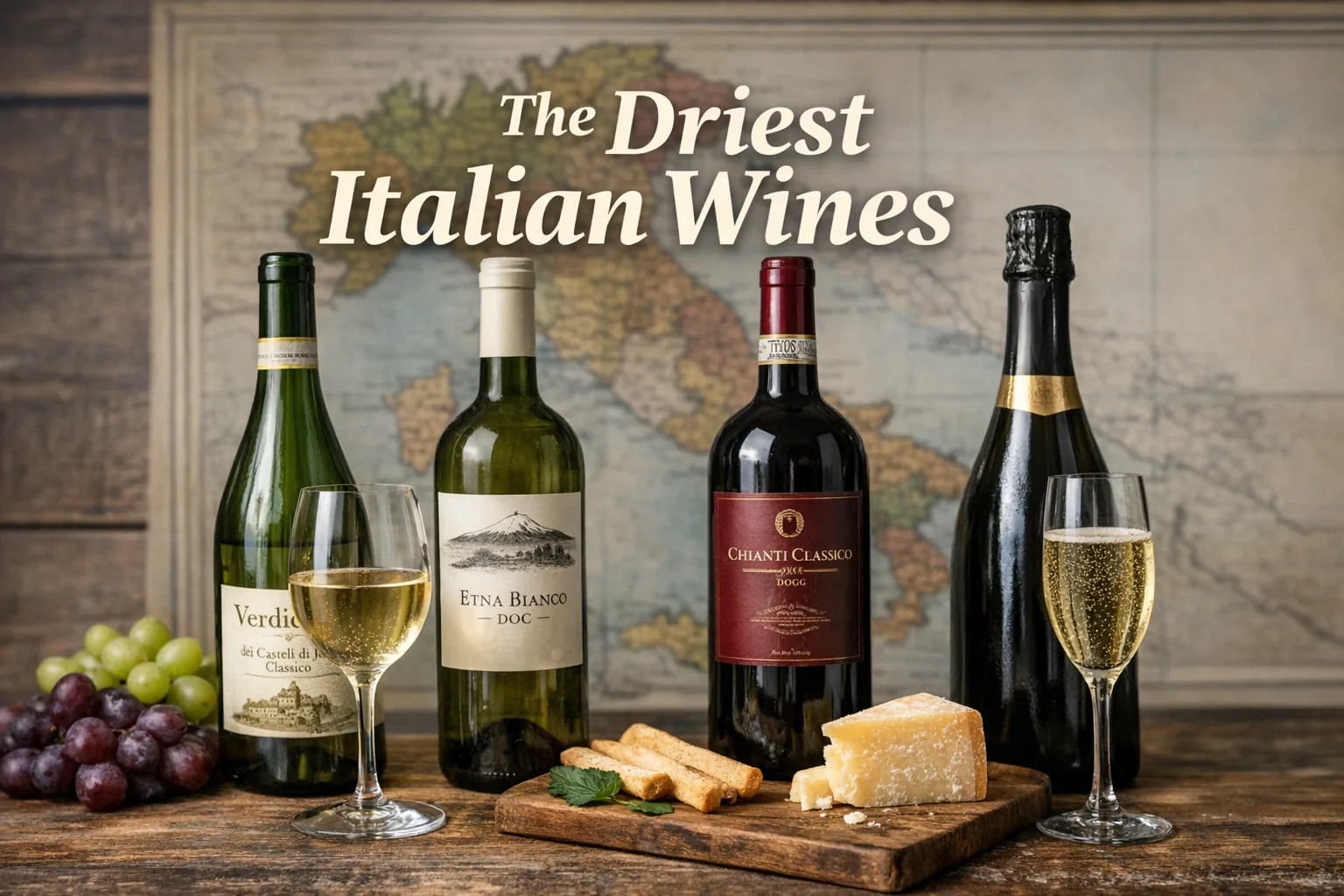
When people ask what is the driest Italian wine, they are usually looking for one thing: a wine with little to no sweetness. Italian wines are often described as crisp, fresh or mineral, but “dry” can mean different things depending on grape variety, region and winemaking style.
The short answer is this: many Italian wines are technically very dry, but some styles are perceived as drier than others because of their high acidity, low fruit sweetness and clean finish. In this guide, we’ll explain what “dry” really means in wine, which Italian wines are considered the driest, and how to choose one with confidence.
What Does “Dry” Mean in Wine?
In wine terms, dry refers to residual sugar. Residual sugar is the natural grape sugar left behind after fermentation. A wine is considered dry when almost all of that sugar has been converted into alcohol.
As a general guide:
- Dry wines usually contain less than 4 grams of sugar per litre
- Off-dry wines contain slightly more and may taste faintly sweet
- Sweet wines have clearly noticeable residual sugar
However, dryness is not just about sugar levels. Acidity plays a major role in how dry a wine tastes. Wines with high acidity can feel extremely dry, sharp and refreshing even if they contain a small amount of residual sugar. This is one of the reasons Italian wines are so often described as dry.
Italy’s climate, native grape varieties and traditional winemaking methods tend to produce wines with naturally high acidity and restrained fruit sweetness.
What Is the Driest Italian Wine Overall?
There is no single “driest” Italian wine, but several styles consistently rank among the driest because of their structure and flavour profile.
In general, the driest Italian wines are high-acid, low-aroma styles that focus on freshness, minerality and savoury notes rather than ripe fruit. These wines tend to finish very cleanly on the palate, which is why they are often described as bone-dry.
Most of the driest Italian wines are white, although many Italian red wines are also technically dry.
The Driest Italian White Wines
Verdicchio
Verdicchio is widely regarded as one of the driest Italian white wines. It is known for its high acidity, citrus-driven profile and slightly bitter almond finish. That bitterness contributes to a very dry sensation on the palate, even though the wine is usually fermented fully dry.
Verdicchio is produced primarily in Marche and is often paired with seafood, vegetables and light pasta dishes.
Soave Classico
Soave Classico, made mainly from the Garganega grape, is another extremely dry Italian white wine. Good examples are crisp, mineral and lightly floral, with very little fruit sweetness.
Soave from the Classico zone tends to be drier and more structured than basic Soave, making it a strong choice if you are specifically looking for a dry wine.
Fiano di Avellino
Fiano di Avellino is a dry white wine from Campania that combines high acidity with savoury, nutty notes and minimal sweetness. While it can have rich aromas, the palate is typically very dry and structured.
This style often surprises people because the nose suggests richness, but the finish is firm and dry.
Etna Bianco
Etna Bianco, usually dominated by the Carricante grape, is one of the driest-tasting Italian white wines available. The volcanic soils of Mount Etna produce wines with piercing acidity, saline minerality and almost no sense of sweetness.
These wines are often described as austere or razor-sharp, making them ideal for those who prefer very dry styles.
Are Italian Red Wines Dry?
Most Italian red wines are technically dry, meaning they contain very little residual sugar. However, some reds can taste sweeter due to ripe fruit flavours, alcohol levels or oak ageing.
Dry-tasting Italian reds tend to emphasise acidity, tannin and savoury characteristics rather than fruit sweetness. Examples include:
- Barbera
- Chianti Classico
- Nebbiolo-based wines such as Barolo and Barbaresco
These wines may taste rich or full-bodied, but they are not sweet.
Is Prosecco Dry or Sweet?
Prosecco causes a lot of confusion when people ask what the driest Italian wine is. This is because Prosecco uses different sweetness labels.
The driest styles of Prosecco are:
- Brut
- Extra Brut
Confusingly, Extra Dry Prosecco is actually sweeter than Brut, despite the name. If you want the driest Italian sparkling wine, always look for Brut or Extra Brut on the label.
How to Choose the Driest Italian Wine
If you want to consistently choose dry Italian wines, keep these tips in mind:
- Look for wines labelled secco (dry)
- Choose high-acid regions such as Northern Italy, coastal areas or volcanic zones
- Avoid styles described as amabile or dolce
- Focus on classic, traditional appellations rather than modern, fruit-forward styles
Understanding grape variety and region is often more useful than relying on marketing terms alone.
Quick Summary
If you are asking what is the driest Italian wine, the answer depends on style rather than a single bottle. However, some of the driest Italian wines include Verdicchio, Soave Classico, Fiano di Avellino and Etna Bianco. Many Italian red wines are also technically dry, even if they taste rich or fruity.
Italian wines are prized for their balance, acidity and food-friendly nature, which is why dry styles dominate the country’s winemaking tradition. Once you understand how dryness works in wine, choosing the driest Italian wine becomes much easier.