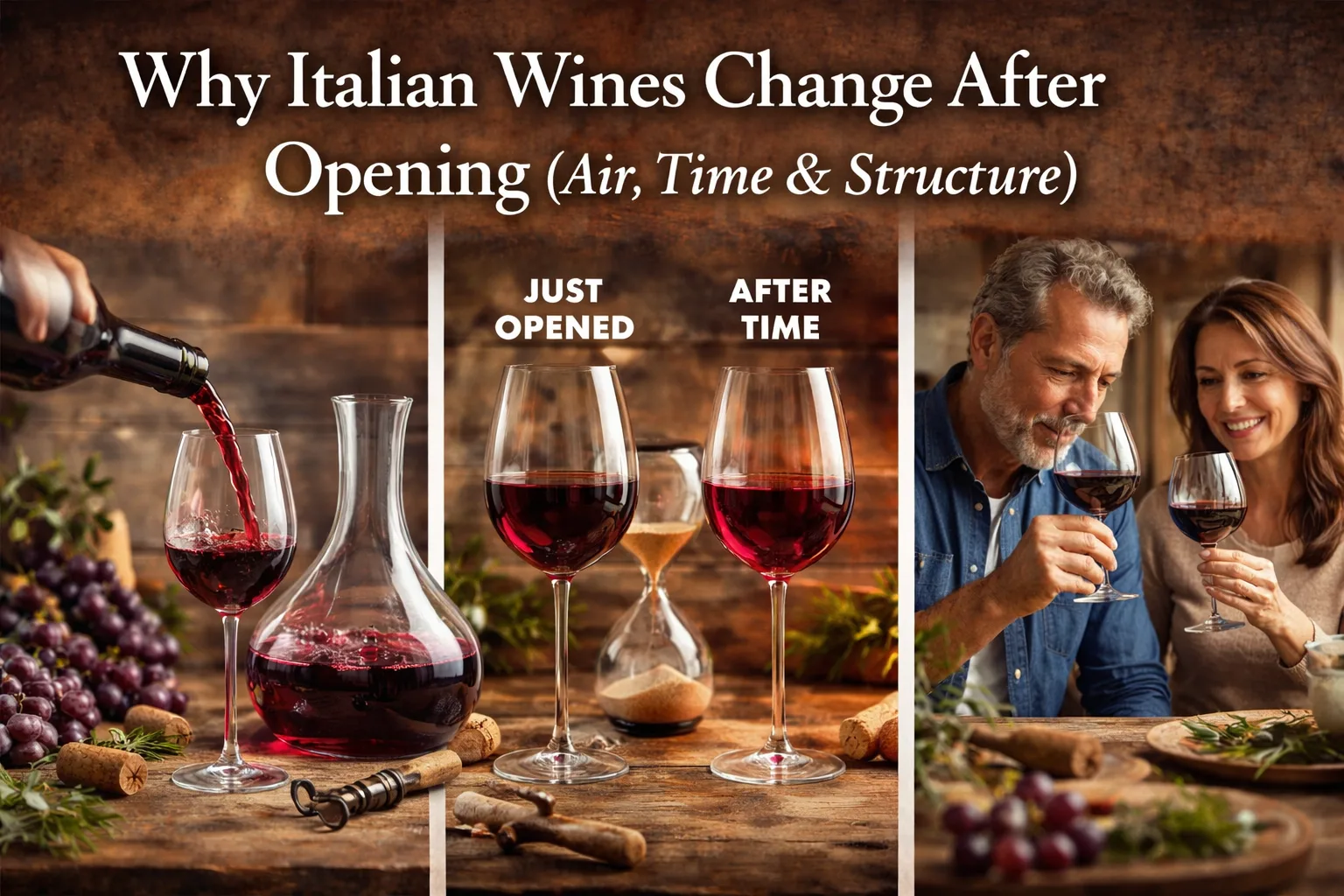
Many UK wine drinkers notice something curious when opening an Italian bottle. The first glass can taste tight, muted or even slightly awkward, yet half an hour later the wine seems softer, more expressive and better balanced. By the next day, it may taste different again — sometimes better, sometimes simply changed. This leads to confusion and the assumption that something is “wrong” with the wine.
In reality, Italian wines often change more after opening because of how they are built. Their structure, acidity and traditional winemaking methods mean they react strongly to air and time in the glass. This article explains why that happens, what is normal, and how UK drinkers can get the best out of Italian wine once the bottle is opened.
Italian Wines Are Built With Structure, Not Immediate Softness
One of the defining traits of Italian wine is structure. Acidity, tannin and balance are prioritised over immediate softness or sweetness. This makes the wine better with food and more stable over time, but it also means the wine may not show its best side immediately after opening.
When first poured, an Italian wine can seem closed or restrained. Aromas may be muted and flavours feel tight. This is not a flaw. It is often a sign that the wine has been protected from oxygen and needs time to open up.
Many modern international wines are designed to taste generous and expressive the moment they are opened. Italian wines are rarely made that way, especially those from traditional or family-run producers.
Oxygen Is Not the Enemy — It’s a Trigger
When wine meets air, chemical reactions begin almost immediately. Oxygen interacts with aroma compounds, tannins and acids, causing the wine to evolve.
Italian wines tend to respond more noticeably to oxygen because they have:
- Higher natural acidity
- Firmer tannin structure
- Less reliance on residual sugar or heavy oak
These elements act like a framework. When oxygen enters the wine, that framework begins to relax, allowing aromas to lift and flavours to broaden.
This is why Italian wines often improve noticeably after 15–60 minutes in the glass, even without formal decanting.
Why the First Glass Often Tastes Different From the Second
Many people judge a wine too quickly. The first sip is taken immediately after opening, before the wine has had a chance to breathe.
With Italian wine, this first impression can be misleading. The second glass, poured after the bottle has been open for a short while, often tastes rounder and more expressive. Acidity feels less sharp, tannins smoother, and aromas more defined.
This change is not imagined. It is the wine adjusting to oxygen exposure, revealing layers that were initially held back.
Acidity Reacts Strongly to Air
Acidity is a major reason Italian wines change so noticeably after opening. When young or tightly made, acidity can dominate the palate. As the wine breathes, acidity integrates more fully with fruit and savoury notes.
This does not mean acidity disappears. Instead, it becomes part of a more complete picture, supporting freshness rather than standing out.
For UK drinkers accustomed to softer styles, this transformation can be dramatic and surprising.
Tannins Soften With Exposure
Red Italian wines often rely on tannin for structure rather than sweetness or alcohol. Tannins can feel drying or firm when the wine is first opened.
As oxygen interacts with tannins, they begin to polymerise and soften. This process starts within minutes and continues over hours. The result is a wine that feels smoother and more harmonious without losing backbone.
This is why many Italian reds benefit from time in the glass, even if they are not formally decanted.
Aromas Unfold Gradually
Italian wines often emphasise savoury, herbal, earthy or mineral aromas rather than overt fruit. These aromas can be subtle and slow to emerge.
When exposed to air, volatile aromatic compounds are released, making the wine smell more complex and expressive. Notes that were hidden at first begin to appear, adding depth and interest.
This gradual unfolding is one of the pleasures of Italian wine, especially when enjoyed slowly over a meal.
Why Italian Wines Can Taste Better the Next Day
Another common experience is that an Italian wine tastes surprisingly good the day after opening. This is not a coincidence.
Because of their balance and acidity, many Italian wines are resilient. Overnight exposure to limited oxygen can further soften structure and integrate flavours, especially if the bottle is re-corked and kept cool.
While not all wines improve after a day, many Italian reds and structured whites hold up well and sometimes show more clarity and cohesion on the second day.
When Change Becomes a Problem
It is important to distinguish positive evolution from oxidation. Italian wines change with air, but they are not immune to damage.
Signs that a wine has gone too far include:
- Flat or dull aromas
- Browned colour in whites
- Sour or sherry-like notes
These changes usually take longer than a few hours and depend on storage conditions. Properly stored Italian wines are generally robust and forgiving.
Temperature Plays a Role
Temperature affects how quickly wine changes after opening. Warm conditions accelerate oxygen interaction, while cooler temperatures slow it down.
Serving Italian wine too warm can make changes feel abrupt and unbalanced. Slightly cooler serving temperatures allow evolution to happen more gradually and elegantly.
This is especially relevant in UK homes, where central heating can raise room temperature significantly.
Glass Shape Makes a Difference
The size and shape of the glass influence how much air the wine is exposed to. Larger bowls increase surface area, speeding up aeration.
Italian wines with structure often benefit from a slightly larger glass, which allows aromas to develop without rushing oxidation. Small glasses can trap the wine, making it seem closed for longer.
Why This Is Often Misunderstood in the UK
Many UK drinkers expect consistency from the first sip to the last. When a wine changes noticeably, it can be seen as a flaw rather than a feature.
Italian wine culture views evolution as normal and desirable. Wine is meant to be consumed over time, alongside food, conversation and changing conditions.
Understanding this cultural context helps UK drinkers appreciate why Italian wines behave the way they do.
How to Get the Best From Italian Wine After Opening
You do not need specialist equipment to enjoy this evolution. A few simple habits make a big difference.
Open the bottle 15–30 minutes before drinking. Pour a small amount and let it sit in the glass. Avoid judging the wine immediately. Drink slowly and notice how aromas and texture change.
If the wine feels tight at first, patience is often rewarded.
Not All Italian Wines Change in the Same Way
Lighter, fresher styles may change subtly, while structured reds and traditional whites show more dramatic evolution. Older wines can change quickly, sometimes peaking within a short window.
The key is awareness rather than rules. Italian wines invite attention and reward curiosity.
What This Means for UK Wine Drinkers
Understanding why Italian wines change after opening removes uncertainty and builds confidence. It allows drinkers to relax, give the wine time, and enjoy the journey rather than seeking instant gratification.
This is one of the reasons Italian wines feel so satisfying with meals. They evolve alongside the food, adapting and opening as the evening progresses.
Final Thoughts
Italian wines change so much after opening because they are built with structure, balance and longevity in mind. Air, time and patience unlock their full character rather than diminishing it.
For UK wine drinkers, this is not something to worry about. It is an invitation to slow down, engage with the wine and experience it as a living product rather than a static one.
Once understood, this quality becomes one of the most rewarding aspects of drinking Italian wine.