Irpinia is one of Italy’s most distinctive yet under-appreciated wine areas. Located inland within the Campania region of southern Italy, Irpinia is known for its high-altitude vineyards, volcanic and limestone soils, and long tradition of producing structured, food-friendly wines.
When people search for wines from Irpinia, they are usually trying to understand what styles the region produces, which grape varieties matter most, and how Irpinia differs from better-known Italian wine regions. This guide explains exactly that, covering Irpinia’s location, key grapes, wine styles and why the region has earned growing respect among wine lovers.
Where Is Irpinia?
Irpinia lies in the province of Avellino, inland from Naples and the Amalfi Coast. Unlike the coastal areas of Campania, Irpinia’s vineyards are mostly planted on hillsides and elevated inland terrain. These higher altitudes bring cooler night temperatures, which help grapes retain acidity even in a warm southern Italian climate.
The soils of Irpinia are shaped by ancient volcanic activity and limestone deposits. This combination contributes freshness, minerality and structure to the wines, giving them a profile that often surprises people who associate southern Italian wine with richness alone.
The Main Grape Varieties of Irpinia
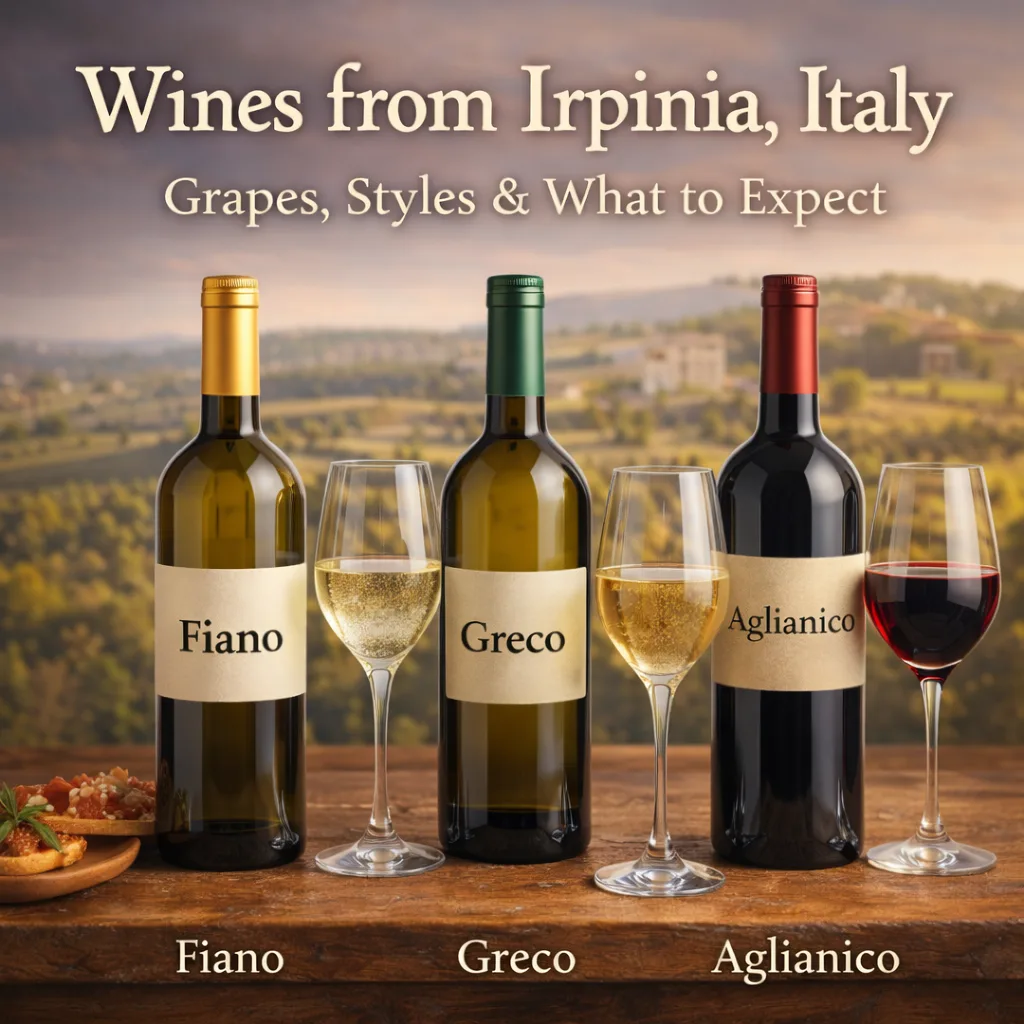
Irpinia is defined by native Italian grape varieties rather than international grapes. The most important are Fiano and Greco for white wines, and Aglianico for red wines.
Fiano
Fiano is one of southern Italy’s great white grapes, and Irpinia is its most important home. Wines made from Fiano di Avellino are typically dry, medium-bodied and aromatic, with flavours that can include pear, citrus, herbs and subtle nutty notes.
Fiano wines from Irpinia are known for their balance between richness and acidity, and many examples develop additional complexity with age.
Greco
Greco is another historic white grape that performs particularly well in Irpinia. Greco di Tufo wines are usually dry and structured, with pronounced minerality and firm acidity.
Compared to many Italian white wines, Greco can feel more powerful and textural, making it well suited to food rather than casual sipping.
Aglianico
Aglianico is the dominant red grape of Irpinia and one of Italy’s most serious red wine varieties. Wines made from Aglianico are always dry and are known for high acidity, firm tannins and excellent ageing potential.
In Irpinia, Aglianico reaches its most refined expression, producing wines that can age for many years and develop complex savoury flavours over time.
Important Wine Designations in Irpinia
Irpinia is home to several highly regarded Italian wine classifications that highlight both grape variety and place.
Fiano di Avellino DOCG
Fiano di Avellino holds DOCG status, Italy’s highest quality classification. These wines must be made from Fiano grown in designated areas around Avellino. They are typically dry, aromatic and well balanced, with the ability to age gracefully.
Greco di Tufo DOCG
Greco di Tufo is another DOCG wine from Irpinia. Made exclusively from Greco grapes, these wines are known for their mineral intensity, freshness and distinctive character.
Taurasi DOCG
Taurasi is Irpinia’s most famous red wine designation. Produced from Aglianico, Taurasi wines are powerful, structured and age-worthy. They are often compared to some of Italy’s most prestigious red wines for their complexity and longevity.
Wine Styles You’ll Find in Irpinia
Irpinia produces two main styles of wine: dry white wines and structured red wines.
Dry White Wines
White wines from Irpinia, particularly those made from Fiano and Greco, are dry, fresh and food-friendly. They often show citrus, stone fruit and mineral notes, supported by lively acidity.
These wines pair well with seafood, vegetables, light pasta dishes and fresh cheeses.
Structured Red Wines
Red wines from Irpinia are typically based on Aglianico and are more powerful in style. They tend to be high in tannin and acidity, making them excellent partners for richer dishes and slow-cooked meats.
Some Irpinia reds benefit from decanting or time in the glass to fully open up.
Food Pairing with Irpinia Wines
Irpinia wines are closely linked to local cuisine, and their structure makes them particularly versatile at the table.
Fiano and Greco work well with seafood, grilled vegetables, herb-based dishes and lighter cheeses. Aglianico-based wines are better suited to red meats, braised dishes, tomato-based sauces and aged cheeses.
The natural acidity of Irpinia wines helps them cut through richer foods and keeps them balanced.
What Makes Irpinia Unique
Irpinia stands out among Italian wine regions for several reasons. Its inland location and higher elevations create fresher wines than many other southern Italian areas. The influence of volcanic and limestone soils adds mineral character, while the focus on native grape varieties preserves a strong sense of place.
Rather than following international trends, Irpinia has remained rooted in traditional winemaking, producing wines that are dry, structured and expressive of their origin.
Choosing Wines from Irpinia
When selecting a wine from Irpinia, focusing on grape variety is often more helpful than focusing on brand. Fiano di Avellino and Greco di Tufo are reliable choices for dry white wines, while Taurasi and other Aglianico-based wines are ideal for those who enjoy serious red wines.
Many producers in Irpinia prioritise balance and authenticity over heavy oak or excessive ripeness.
Summary: Wines from Irpinia
Wines from Irpinia reflect a unique combination of elevation, soil and native grape varieties. The region produces some of southern Italy’s finest dry white wines and some of its most age-worthy red wines.
For anyone looking to explore Italian wine beyond the most familiar regions, Irpinia offers depth, character and a clear sense of place.