
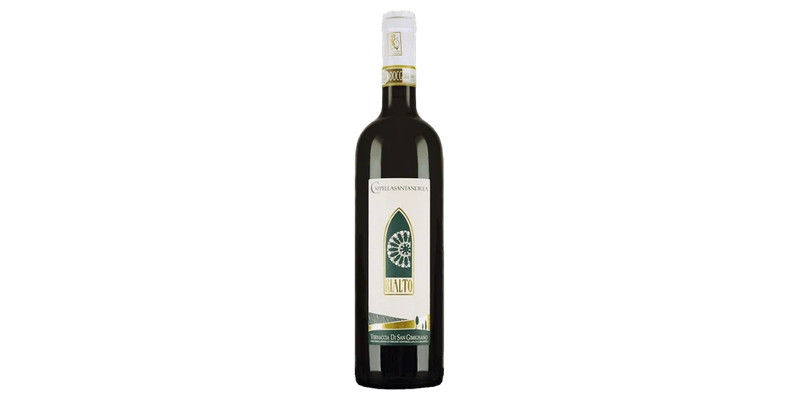
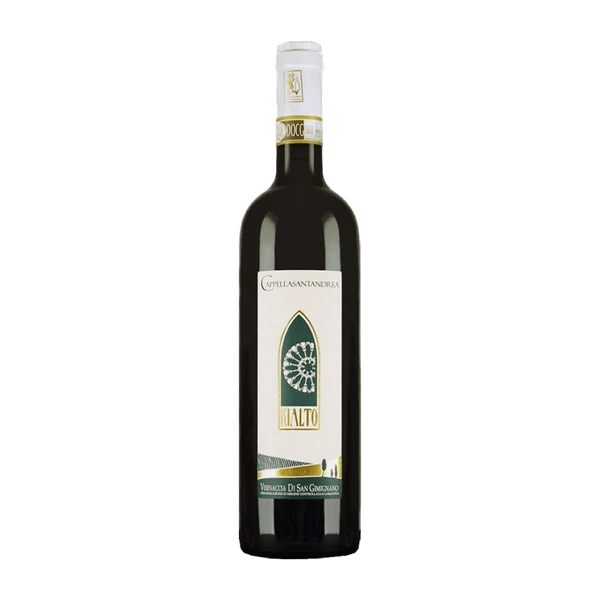
Rialto Vernaccia di San Gimignano DOCG Riserva 2024 – Cappella Sant’Andrea – 75cl
Price range: £25.50 through £296.95
Additional information
| Weight | N/A |
|---|---|
| Bottle Quantity | 1, 6, 12 |
Rialto Vernaccia 2024 – Cappella Sant’Andrea Riserva
Rialto Vernaccia 2024 is a dry Tuscan white with ripe orchard fruit, fresh herbs and a gently salty finish. Made by Cappella Sant’Andrea from old vines in San Gimignano, this Riserva has the depth and texture for a special meal. Pour it with roast fish, scallops or chicken cooked with herbs and a splash of white wine.
Made from 100% Vernaccia di San Gimignano, Rialto comes from one of the area’s oldest vineyards. It is a characterful expression of Tuscany’s historic white grape, with a generous palate and the freshness to keep each mouthful lively.
What does Rialto Vernaccia taste like?
Expect apple and yellow plum, a little citrus and hints of fresh herbs. As it opens in the glass, the wine’s savoury, mineral character becomes part of the appeal, adding interest alongside the fruit.
The palate is dry, rounded and full, with a smooth texture and a lingering finish. At 13.5% ABV, it has enough presence for richer seafood dishes, buttery sauces and roast poultry. That combination of freshness and substance makes it a particularly rewarding white to enjoy over dinner.
Old vines and careful winemaking
Cappella Sant’Andrea is an organic family estate run by Flavia Del Seta and Francesco Galgani. Their vineyards sit in the hills around San Gimignano, where ancient marine soils are an important part of the area’s identity.
The grapes for Rialto are harvested by hand and carefully selected. Fermentation takes place in stainless steel with native yeasts, followed by time on the fine lees — the yeast sediment left after fermentation. This maturation helps develop the wine’s rounded texture and complexity before further rest in bottle.
Food pairings for Rialto Vernaccia
Our suggested pairings make the most of its generous texture and savoury freshness:
- Roast sea bass or sea bream: especially with lemon, olive oil and herbs.
- Scallops or prawns with butter: the wine has the weight for the sauce and freshness for the seafood.
- Roast chicken with tarragon: a lovely match for its orchard fruit and herbal notes.
- Mature pecorino: serve with good bread for a simple Tuscan-inspired supper.
How to serve it
Serve at 10–12°C in a generous white-wine glass. Let the bottle warm slightly after taking it from the fridge so the fruit, herbs and texture can open up. Taste it again alongside the food to enjoy how the pairing develops.
Discover the estate and its wines at our Italian white wines.
What You Should Know About This Wine
Helpful insights on serving, pairing and what to expect from this bottle.