
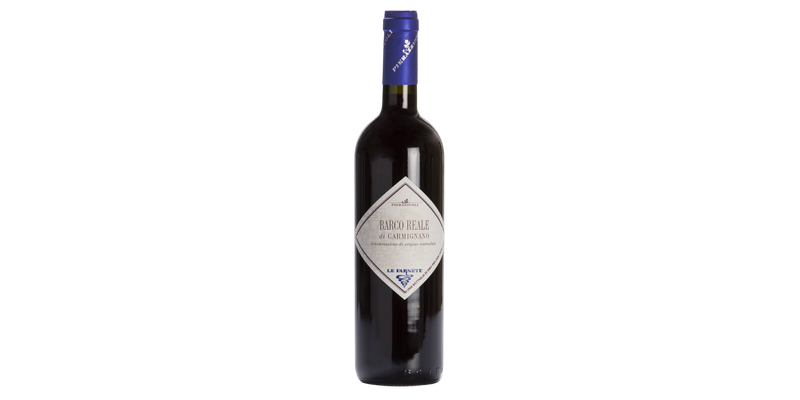
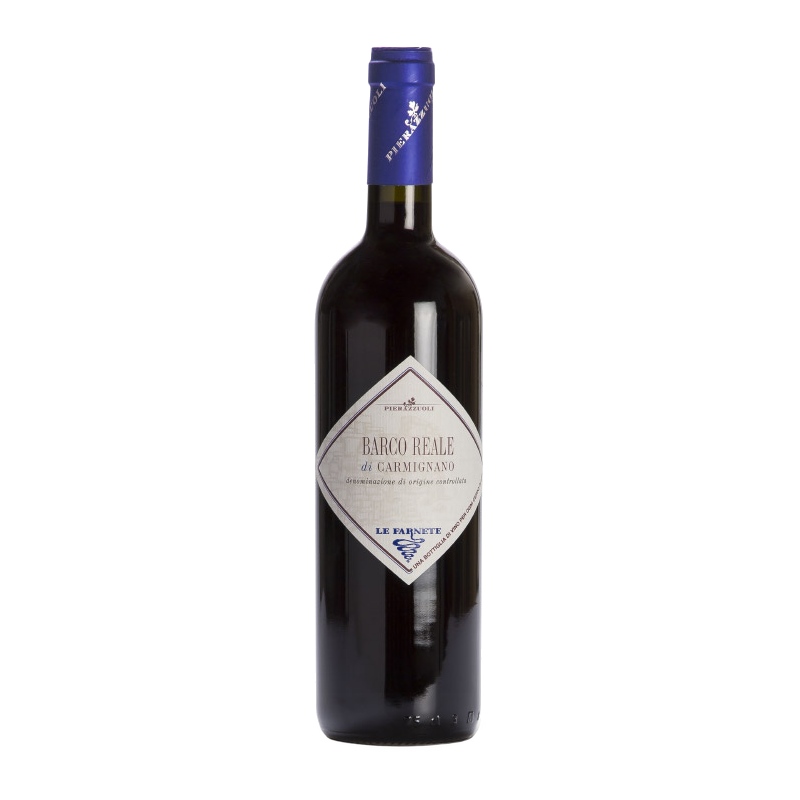
Le Farnete Barco Reale di Carmignano DOC 2024 – 75cl
Price range: £14.50 through £168.95
Additional information
| Weight | N/A |
|---|---|
| Bottle Quantity | 1, 6, 12 |
Le Farnete Barco Reale di Carmignano 2024
Le Farnete Barco Reale 2024 is a generous Tuscan red with ripe fruit, gentle spice and a smooth, rounded feel. Made from 80% Sangiovese and 20% Cabernet Sauvignon, it brings together the freshness of Tuscany’s signature grape and the depth of Cabernet. Open a bottle with a slow-cooked ragù, grilled meat or a generous board of salami and cheese.
What does Le Farnete Barco Reale taste like?
Expect inviting fruit aromas with a delicate spicy edge. On the palate, the wine has a soft opening, a satisfying medium-to-full body and supple tannins: enough gentle grip to work with food, while keeping the texture rounded.
It is a dry red at 14% ABV, with a persistent finish that carries the fruit and spice through. There is plenty of flavour for a hearty dinner, balanced by freshness that keeps each sip lively. If you enjoy Tuscan reds with generous fruit and an approachable texture, this is a rewarding bottle to try.
Sangiovese and Cabernet from Carmignano
Le Farnete belongs to the Pierazzuoli family and lies in Carmignano, close to Florence. The estate’s vineyards sit among olive groves and Mediterranean vegetation, in a part of Tuscany with a long tradition of blending Sangiovese and Cabernet Sauvignon.
The name Barco Reale recalls the historic Medici hunting reserve around Carmignano. Today, this blend offers an enjoyable introduction to the area’s wines, with a style that feels especially at home around the dinner table.
The grapes are fermented in stainless steel, and the wine matures in steel before resting in bottle. This approach keeps the emphasis on fruit, freshness and the character of the two grapes.
Food pairings for Le Farnete Barco Reale
Our suggested matches range from a simple supper to a Sunday roast:
- Tagliatelle with beef or sausage ragù: the wine’s fruit and gentle tannins suit a rich, slowly cooked sauce.
- Grilled lamb or roast pork: try rosemary potatoes and roasted vegetables alongside.
- Tuscan salami and mature pecorino: a particularly good choice for an antipasti board.
- Mushroom lasagne or aubergine parmigiana: savoury vegetables and baked cheese make satisfying meat-free matches.
Serving your bottle
Serve at 16–18°C in a red-wine glass. If the bottle is warm, a short spell in the fridge will help bring the fruit and freshness into focus. Pour it as dinner is served and allow the aromas to develop in the glass.
Explore our selection of Italian red wines.
What You Should Know About This Wine
Helpful insights on serving, pairing and what to expect from this bottle.