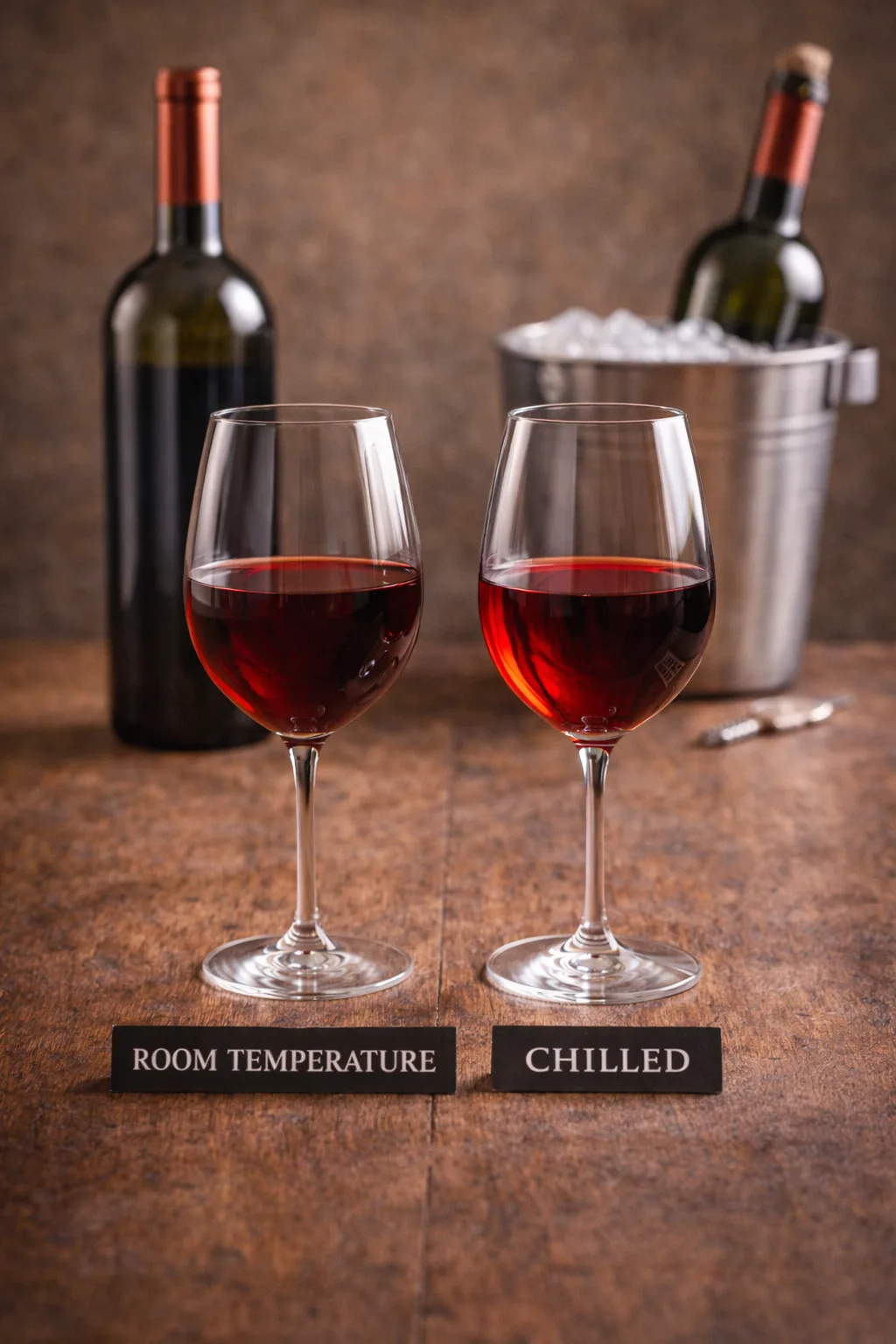
Whether red wine should be chilled is one of the most common questions among wine drinkers. Some people think all red wine should be served at room temperature, while others prefer it slightly cooler. The truth is that most red wine can benefit from a slight chill, especially in warmer weather or with lighter styles—but the key is knowing when and how much.
This guide explains when red wine should be chilled, what temperature works best for different styles, and how chilling affects flavour and structure.
What People Mean by “Chilled”
When people talk about chilling wine, they usually mean serving it cooler than typical room temperature. In wine terms, “room temperature” is often too warm for most modern homes, and wine served straight from a warm kitchen can taste flabby or overly alcoholic.
Chilling wine isn’t about making it feel cold in your mouth — it’s about balancing aroma, acidity and tannins so the wine is enjoyable.
Traditional Advice vs Modern Practice
Older wine etiquette often said that red wine should be served at “room temperature,” which historically referred to cool cellar temperatures (around 16–18°C). However, modern indoor temperatures are often much warmer — typically 20–22°C or more — which makes many red wines seem hot and unbalanced.
Today’s practical rule is:
- Serve red wine slightly cooler than room temperature, especially in warmer climates or seasons.
This is a more accurate approach than starting with the assumption that red wine is never chilled.
How Chilling Affects Red Wine
Chilling red wine changes how we perceive its flavours and structure:
Reduces Perceived Sweetness and Bitterness
Cooler temperatures can make wines taste less sweet and less bitter, which helps preserve balance.
Smooths Tannins
A slight chill can soften the perception of tannins, making the wine feel smoother on the palate.
Enhances Freshness
Lower temperatures help preserve acidity and make fruity notes feel more vibrant rather than flabby.
Too much chilling, however, can suppress aroma and complexity, so moderation is key.
Ideal Chilling Temperatures for Red Wine
Different styles of red wine benefit from different serving temperatures:
Light-Bodied Reds (Best Slightly Chilled)
Examples: Beaujolais, Gamay, Pinot Noir (light)
Best served at: 12–14°C
Why: Enhances freshness, balances fruit and avoids heavy alcohol sensation.
Medium-Bodied Reds (Cool but Not Cold)
Examples: Chianti, Barbera, Sangiovese
Best served at: 14–16°C
Why: Keeps the wine balanced while allowing structure and flavour to show.
Full-Bodied Reds (Cooler than Room Temp)
Examples: Cabernet Sauvignon, Syrah, Aglianico
Best served at: 15–17°C
Why: A slight chill prevents alcohol from dominating and helps acidity remain lively.
Too Cold
Serving red wine at fridge temperature (4–7°C) is generally too cold, muting aromas and flavours. However, brief chilling (10–15 minutes) before serving can help bring the wine into its ideal range.
When Red Wine Should Definitely Be Chilled
In Warmer Weather
On a hot day, chilling enhances refreshment and balance.
Light Red Styles
Light, fruity reds often perform best when cooler.
Wines with Higher Alcohol
Chilling can help rein in the perception of heat from alcohol.
Wines with Pronounced Tannins
A slight chill can soften the perception of aggressive tannins.
When You Shouldn’t Chill Red Wine
There are cases where chilling isn’t necessary:
- Very old red wines with delicate aromas
- Red wines with complex bouquet that you want to fully express
- When serving with rich, warm dishes — moderate temperature is better
The key is to use temperature to enhance enjoyment, not hinder it.
Practical Ways to Chill Red Wine
Here are simple methods to chill red wine without overdoing it:
Fridge for 10–20 Minutes
For light reds or during hot weather, pop the bottle in the fridge briefly.
Ice Bucket with Water and Ice
Fill a bucket with ice and water and immerse the bottle for 5–10 minutes.
Wine Chillers
Wine fridges with adjustable zones make this easy and precise.
Is Chilled Red Wine “Wrong”?
No. Chill preference is not a rule — it’s a stylistic choice based on:
- Wine style
- Weather
- Personal taste
- Food pairing
The idea that red wine should never be chilled comes from outdated conventions. In reality, a slight chill often enhances balance and drinkability.
Chilled Red Wine and Food Pairing
Slightly chilled red wine pairs well with:
- Grilled meats
- Tomato-based pasta dishes
- Mediterranean cuisine
- Cold cuts and antipasti
The cool temperature helps cut through richer textures and keeps flavours aligned.
Common Misconceptions
“Chilling ruins red wine”
Not if done briefly and modestly. Extreme cold suppresses aroma, but slight cooling enhances balance.
“Only white wine should be chilled”
This is overly simplistic. Many reds benefit from cooler service.
“Chilled red wine is just for summer”
Not true — it’s about balance everywhere.
How Long Should You Chill Red Wine?
Short and practical:
- 10–20 minutes in a fridge
- 5–10 minutes in ice water
This brings most reds into the ideal service range without dulling flavour.
Final Tips
- If a wine tastes hot or unbalanced at room temperature, chill it briefly.
- Let light reds be cooler than heavy reds.
- Avoid full fridge chill unless you plan to let the wine warm slightly before serving.