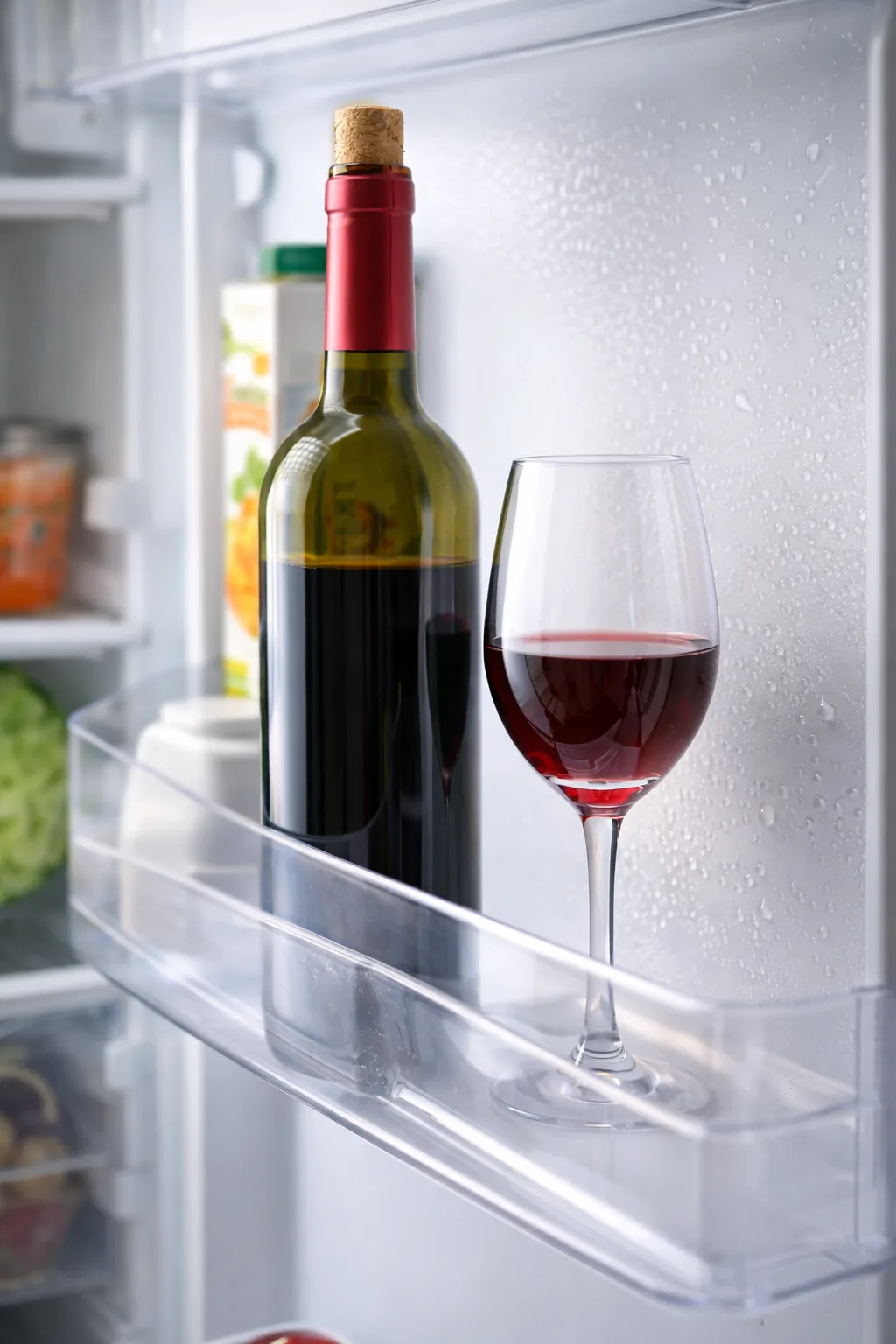
Red wine is traditionally served warmer than white wine, which leads many people to assume it should never be refrigerated. In reality, refrigerating red wine is often the best way to preserve it, especially once the bottle has been opened.
This guide explains whether red wine should be refrigerated, when it makes sense to do so, and how refrigeration affects flavour, aroma and longevity.
The Short Answer
Yes, red wine should usually be refrigerated after opening. Cold storage slows oxidation and helps preserve freshness. Before drinking, the wine can be allowed to warm slightly.
Unopened red wine does not normally need refrigeration, but temperature still matters.
Why Refrigeration Matters for Red Wine
Red wine changes when exposed to oxygen, heat and light. Oxidation begins as soon as the bottle is opened, gradually dulling fruit flavours and flattening aroma.
Refrigeration slows this process by:
- Reducing chemical reactions
- Preserving acidity and structure
- Extending the wine’s drinkable life
Heat is one of the main reasons opened red wine spoils quickly, which is why storing it at room temperature is rarely ideal.
Should You Refrigerate Opened Red Wine?
Yes. Once opened, red wine should be resealed and stored in the fridge.
This applies to:
- Light red wines
- Medium-bodied reds
- Full-bodied reds
Even wines usually served warm benefit from cold storage between pours.
How Long Red Wine Lasts When Refrigerated
When stored correctly in the fridge:
- Light reds often last 2–3 days
- Medium-bodied reds last around 3–4 days
- Full-bodied reds may last up to 5 days
Without refrigeration, these timeframes are significantly shorter.
Does Refrigeration Ruin Red Wine?
No. Refrigeration does not damage red wine.
Cold temperatures temporarily mute aromas, but this effect disappears once the wine warms slightly in the glass. Refrigeration does not permanently alter flavour or structure.
How to Serve Red Wine After Refrigeration
After removing red wine from the fridge:
- Let it sit for 10–20 minutes
- Pour into a glass and allow it to warm gently
- Swirl the wine to release aromas
This brings the wine back to a comfortable serving temperature without sacrificing freshness.
Should Unopened Red Wine Be Refrigerated?
Unopened red wine does not usually need to be refrigerated unless:
- Your home is very warm
- You lack a cool, dark storage space
Ideally, unopened red wine should be stored at a stable, cool temperature away from light. Refrigeration is not harmful but is not necessary for long-term storage.
Is It Better to Refrigerate or Leave Red Wine Out?
For opened bottles, refrigeration is always better.
Leaving red wine out at room temperature:
- Accelerates oxidation
- Reduces lifespan
- Flattens flavour quickly
Even resealed bottles deteriorate faster if kept warm.
Does Wine Style Affect Refrigeration?
Yes, but the rule still holds.
Light reds benefit the most from refrigeration. Medium and full-bodied reds still benefit, but may need slightly longer warming time before drinking.
Regardless of style, refrigeration extends freshness.
What About Wine Fridges?
Wine fridges are ideal because they:
- Maintain stable temperatures
- Avoid excessive cold
- Reduce light exposure
If you have one, storing opened red wine in a wine fridge is excellent. If not, a standard fridge works perfectly well.
Common Myths About Refrigerating Red Wine
Many people believe refrigerating red wine is wrong or unsophisticated. In fact, it is practical and recommended once a bottle is opened.
Another myth is that cold ruins flavour. In reality, temperature control protects flavour rather than harming it.
Practical Storage Routine
After opening a bottle of red wine:
- Pour your glass
- Reseal the bottle tightly
- Store it upright in the fridge
- Remove briefly before the next pour
This simple routine preserves quality with minimal effort.
Summary
Red wine should usually be refrigerated after opening to slow oxidation and preserve flavour. Refrigeration does not damage the wine and helps it last longer. Before drinking again, allowing the wine to warm slightly ensures it tastes as intended.
Understanding when and why to refrigerate red wine helps you enjoy every bottle at its best.