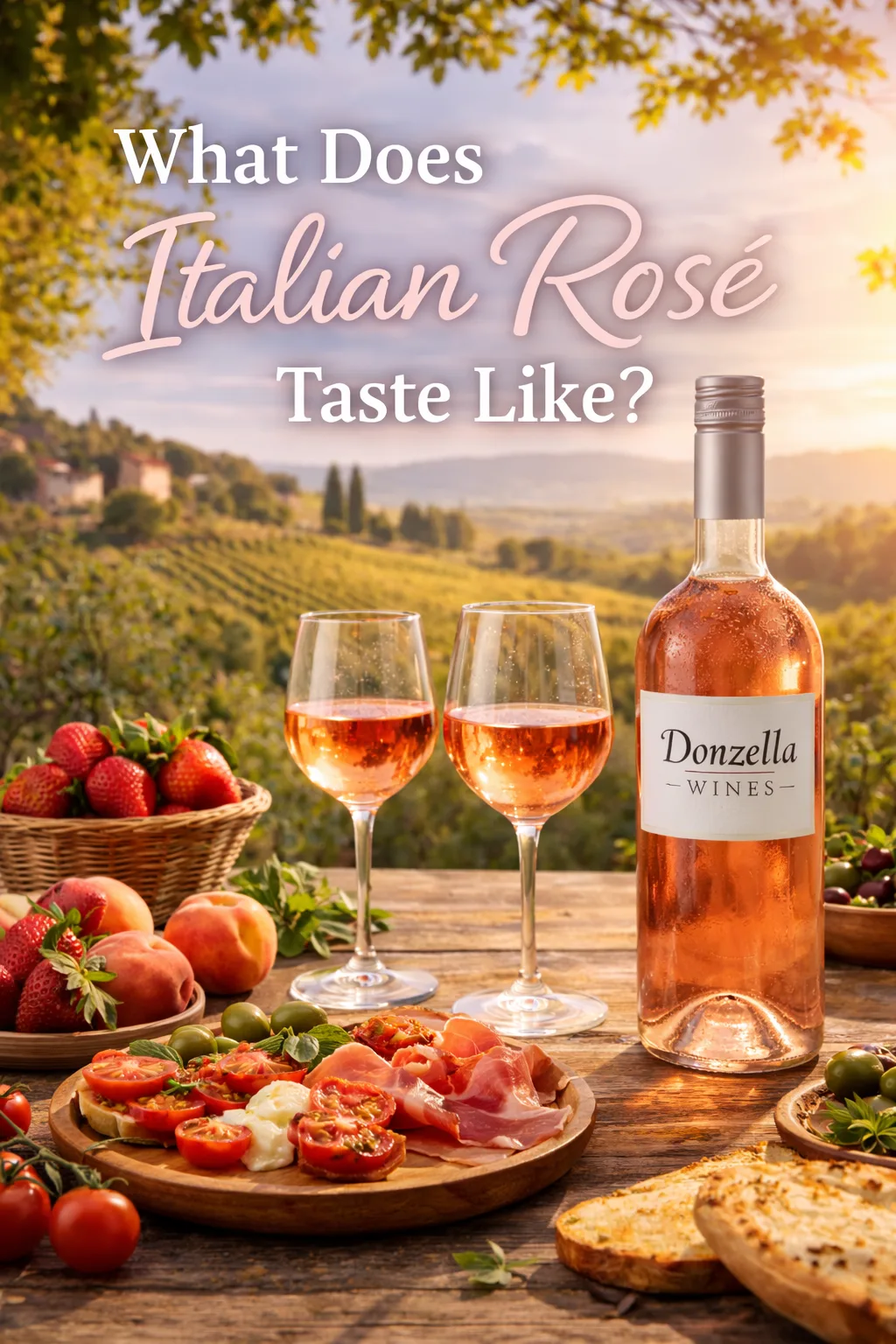
What does Italian rosé taste like? In most cases, Italian rosato is dry, refreshing and food-friendly, with flavours that range from citrus and strawberry to cherry and pomegranate depending on the region. Unlike mass-market pink wines, traditional Italian rosé focuses on balance rather than sweetness. As a result, it appeals to both white and red wine drinkers. In this guide, you’ll learn exactly what Italian rosé tastes like, why styles differ by region and how to choose the right bottle for your palate.
If you want deeper technical detail on dryness or sugar levels, you can also read our dry Italian rosé wine guide and our Italian rosé sugar content breakdown.
What does Italian rosé taste like in general?
Most Italian rosé wines taste fresh, crisp and lightly fruity. Common flavour notes include strawberry, raspberry, cherry, watermelon and citrus peel. Occasionally, you may also detect floral hints such as rose petal or orange blossom. Importantly, these aromas do not indicate sweetness. Instead, they reflect grape variety and fermentation style.
In addition, acidity plays a major role in shaping flavour. High acidity keeps the wine refreshing and prevents it from feeling heavy. Because of this, Italian rosato pairs extremely well with food and works as an all-rounder wine.
How region changes the taste of Italian rosé
Italy’s geography creates huge variation in rosé flavour. Northern regions have cooler climates, which leads to lighter wines with higher acidity. Southern regions, on the other hand, experience warmer temperatures, producing riper fruit flavours and fuller body.
Northern Italian rosé flavour profile
Rosé from northern areas such as Veneto and Friuli tends to taste delicate and crisp. Expect subtle strawberry, citrus, green apple and melon notes. These wines often feel similar to dry white wines but with a gentle red fruit edge. Therefore, they suit drinkers who enjoy Sauvignon Blanc or Pinot Grigio.
Southern Italian rosato flavour profile
In contrast, southern Italy produces deeper coloured rosato with bolder flavour. Here, cherry, raspberry and pomegranate notes dominate. Although these wines feel richer in the mouth, they still finish dry. Consequently, this style appeals to red wine drinkers looking for something more refreshing.
How grape variety affects flavour
Different grapes create different flavour profiles. For example, Pinot Grigio makes very pale rosé with citrus and light berry notes. Meanwhile, Negroamaro produces darker rosato with ripe red fruit and spice. Montepulciano adds body and cherry character, while Sangiovese brings acidity and savoury notes.
Although grape skins influence colour and aroma, fermentation removes sweetness. As a result, the wine remains dry regardless of grape type.
Does Italian rosé taste sweet?
No. Traditional Italian rosé does not taste sweet. Any fruitiness you experience comes from aroma compounds, not sugar. Often, people confuse ripe fruit flavour with sweetness. However, residual sugar levels in Italian rosato are extremely low.
For a technical explanation of sugar levels, read our Italian rosé sugar content guide.
How alcohol changes the taste
Alcohol influences mouthfeel. Wines with higher alcohol feel rounder and warmer. For instance, southern rosato often sits around 13–13.5% ABV, which can create a slightly sweet impression. However, this sensation comes from alcohol, not sugar.
How acidity shapes flavour
Acidity is what makes Italian rosé refreshing. High acidity sharpens flavours and prevents the wine from feeling flabby. Northern rosé usually has higher acidity, giving a zippy finish. Meanwhile, southern rosato balances ripe fruit with enough acidity to stay fresh.
Does colour affect taste?
Not directly. Pale rosé is not automatically lighter in flavour and dark rosé is not automatically sweeter. Colour depends on skin contact length and grape variety rather than sweetness. Therefore, it’s better to judge rosé by region and grape instead of shade.
How Italian rosé compares to other countries
French Provence rosé is typically very pale and mineral. Spanish rosado is often darker and bolder. American rosé, however, is frequently sweeter. Italian rosato sits between these styles, offering both delicate and rich expressions while remaining dry.
What Italian rosé tastes like with food
With food, Italian rosé becomes even more expressive. Light styles highlight seafood, grilled vegetables and salads. Fuller styles complement pizza, pasta, BBQ chicken and cured meats. Because of this versatility, rosato works across many cuisines.
Seasonal flavour changes
During summer, chilled rosé tastes extra refreshing, with citrus and berry flavours standing out. In cooler months, fuller rosato shows more structure and savoury notes, making it ideal for autumn dishes.
How to choose the right Italian rosé for your taste
If you prefer white wine, choose pale northern rosé. Conversely, if you prefer red wine, choose deeper southern rosato. For crisp styles, look for higher acidity. Meanwhile, if you enjoy rounder wines, choose rosato from warmer regions.
Common myths about rosé flavour
Rosé is not sweet. Rosé is not simple. Rosé is not only for summer. In reality, Italian rosato can be complex, structured and food-focused.
Final thoughts
So, what does Italian rosé taste like? Overall, it tastes fresh, dry and expressive, with flavours ranging from citrus and strawberry to cherry and pomegranate depending on region and grape. As one of the most versatile wine styles available, it works for casual drinking and food pairing alike.
If you want to explore further, read our dry Italian rosé wine guide and our Italian rosé sugar content article for full technical detail.