Italian rosé wine regions may not be as famous as Provence or Rioja, yet Italy produces a stunning variety of rosato styles thanks to its diverse climate, soils and grape heritage. Understanding where Italian rosé comes from helps you choose bottles that match your taste and food, and sets realistic expectations for colour, flavour and body. In this guide, we’ll explore the major regions making rosé, how climate and geography shape the wine, and what styles you can expect from each place.
This article complements our existing cluster on dry Italian rosé. If you haven’t already, we recommend reading our dry Italian rosé wine guide, our summer overview of best Italian rosé for summer, and our flavour breakdown on what Italian rosé tastes like.
Why Italian rosé regions matter
Italy’s wine regions span from cool Alpine foothills in the north to sun-drenched Mediterranean coasts in the south. This variation in temperature, altitude and soil directly influences rosé character. Cooler regions produce wines with higher acidity and lighter body, while warmer areas yield rosato with richer fruit and structure. By region, you can predict style before you buy.
Key northern Italian rosé wine regions
Northern Italy is home to some of the most delicate and refreshing rosato styles. Here, cooler temperatures preserve acidity and subtle aromatics.
Veneto
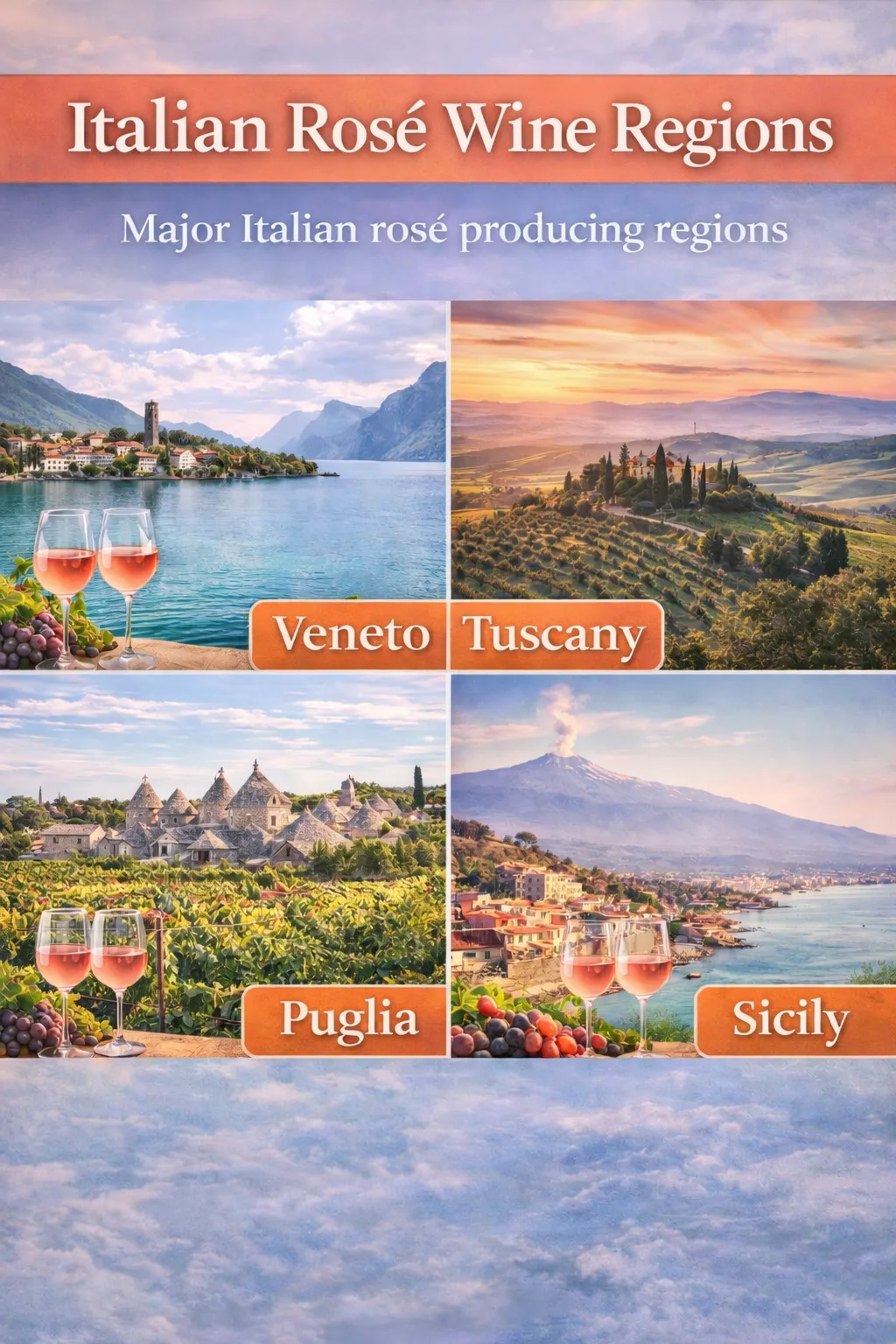
The Veneto region — stretching from vineyards near Lake Garda to plains east of Verona — is known for elegant, crisp rosé. Wines from this area are often pale in colour with citrus and red berry notes. Veneto produces rosé from varieties such as Pinot Grigio and indigenous grapes, and these wines are excellent for aperitifs and light seafood dishes.
Friuli-Venezia Giulia
Friuli, near the Adriatic and the Alps, makes some of Italy’s most pristine rosé. The cooler climate and mineral soils give rosato fine acidity and clean fruit expression. Expect floral and citrus notes with a long finish. These wines are perfect with fresh salads, shellfish and sushi-style plates.
Trentino-Alto Adige
High-altitude vineyards in Trentino-Alto Adige produce rosé with intense freshness and brightness. Local Pinot Nero and Lagrein rosatos show cherry and cranberry flavours with a firm backbone of acidity. This region is ideal for light summer lunches and pairings with soft cheeses.
Central Italian rosé wine regions
Moving south, central Italy opens up a blend of mountain and coastal influences. Rosato from this area often balances fruit depth with vibrant acidity.
Tuscany
Tuscany is world-famous for red wines, but it also makes expressive rosato styles from Sangiovese and local blends. These rosés often show strawberry, red plum and herbal notes. They are versatile with food, pairing well with tomato-based pasta and grilled vegetables.
Umbria and Marche
Just east of Tuscany, Umbria and Marche produce rosé with bright acidity and medium body. These wines often carry red fruit and citrus character, with a touch of minerality that complements Mediterranean cuisine.
Southern Italian rosé wine regions
Southern Italy has more sunshine and heat, which leads to riper grapes and richer rosato styles. These wines still finish dry but often exhibit deeper colour and flavour intensity.
Puglia
Puglia, the heel of Italy’s boot, is one of the most important rosé-producing regions. Negroamaro and other local varieties create rosato with vibrant red fruit, pomegranate notes and a pleasing structure. These wines are perfect with BBQ, grilled meats and rich pasta dishes.
Campania
Campania’s coastal vineyards benefit from sea breezes, which help retain acidity even in heat. Rosé from this area often shows floral aromatics, citrus and red berry fruit. It pairs beautifully with seafood pasta, grilled vegetables and lighter meats. Campania rosato is a standout example of how southern rosé can still feel refreshing.
Sicily
Sicily’s Mediterranean climate produces rosato with ripe fruit profiles and slightly fuller body. Nero d’Avola rosé is common here, showing cherry, raspberry and herbal elements. Serve Sicilian rosato with aromatic dishes, spice-infused food and grilled fish.
How geography shapes rosé style
Temperature swings between day and night (diurnal variation) are crucial for rosé quality. Cooler nights preserve acidity and freshness, while sunny days ensure ripe fruit development. Regions with greater diurnal range — like Friuli and Alto Adige — produce rosé with particularly lively profiles.
Soil also matters. Limestone and clay soils often produce wines with minerality and structure, while sandy soils can lead to lighter, more aromatic rosé.
Grape varieties by region
Different grapes thrive in different regions. In the north, Pinot Grigio and local red varieties like Lagrein shape rosato style. Central Italy’s Sangiovese brings acidity and herbal lift. Southern grapes like Negroamaro and Nero d’Avola bring deeper fruit and texture. By knowing the grape, you can anticipate flavour and body before tasting.
Choosing summer rosé by region
If you want something for bright sunny afternoons, pale northern rosé from Veneto or Friuli is ideal. For summer evenings or heartier food, a southern rosato from Puglia or Campania offers more body while remaining refreshing. This regional logic helps you pick bottles that suit your plans.
Food pairing by region
Light northern rosé excels with seafood, salads and antipasti. Central rosato pairs well with grilled vegetables and tomato-based pasta. Southern rosato stands up to BBQ, sausages and rich pasta dishes. For detailed pairing ideas, see our guide on what food goes with Italian rosé.
Dry rosé and regional labels
Italian rosato is almost always dry. To understand dryness and sugar levels in rosé, read our Italian rosé sugar content guide. Regional DOC and IGP labels help ensure quality standards are met, and these labels often correlate with typical style profiles.
Is rosé always regional?
While Italian rosé reflects regional characteristics, winemakers increasingly experiment with blends and non-traditional styles. However, the backbone of rosato style still comes from the region’s climate, grape and terroir.
Pairing regional rosato with occasions
Veneto and Friuli rosé are great for summer brunches and lunches. Tuscany and central rosato work well for dinners and family meals. Southern styles are excellent for BBQ, casual evenings and heartier foods.
Buying rosé by region
When you shop, check the region on the label. DOC or IGP is a good indicator of quality. Northern rosé often comes from cooler appellations. Southern rosato will often be labelled with Puglia or Campania. Researching the region helps you pick bottles that meet your taste and occasion.
Final thoughts
Italian rosé wine regions offer a remarkable breadth of styles — from pale, delicate wines in the north to richer, fruit-driven rosato in the south. By understanding the geography, grape varieties and regional character, you can choose Italian rosé with confidence. For more on finding the right rosé for your palate and occasion, explore our buyer’s guide and other cluster articles linked throughout this page.