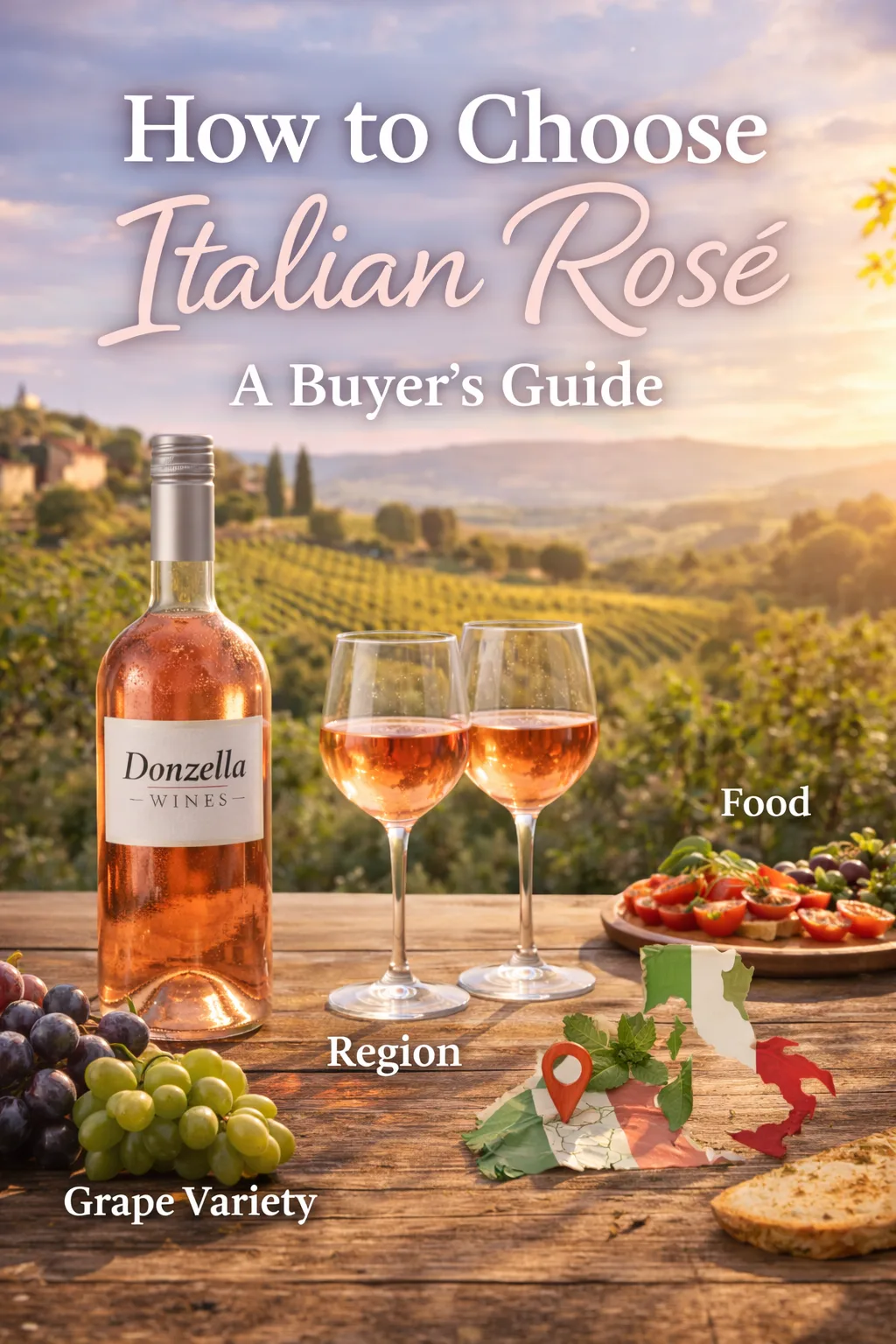
How to choose Italian rosé depends on your taste preferences, the food you plan to serve and the style of wine you normally enjoy. Italian rosato comes in many expressions, from pale and crisp northern styles to richer southern rosés with more body. In this guide, you’ll learn exactly how to choose the right Italian rosé based on region, grape variety, alcohol level, acidity and occasion so you can buy with confidence instead of guessing.
If you’re new to Italian rosé, you may also want to read our dry Italian rosé wine guide, our Italian rosé sugar content breakdown and our flavour guide on what Italian rosé tastes like.
Start with your usual wine preferences
The easiest way to choose Italian rosé is to look at what you already drink. If you normally prefer white wine, you will enjoy lighter rosé styles with high acidity and delicate fruit. These wines feel refreshing and crisp. If you usually drink red wine, choose deeper coloured rosato with more body and richer fruit flavours. This approach ensures you stay within your comfort zone while still trying something new.
Choose by region
Region plays a major role in how Italian rosé tastes. Climate, altitude and grape choice all influence style.
Northern Italy
Northern regions such as Veneto and Friuli produce pale rosé with high acidity and subtle fruit. These wines are light, fresh and perfect for warm weather. Choose this style if you like Sauvignon Blanc, Pinot Grigio or Albariño.
Central Italy
Central regions use grapes such as Sangiovese, producing rosato with balanced fruit and acidity. These wines feel slightly fuller than northern styles but remain fresh. They work well with food and casual drinking.
Southern Italy
Southern regions such as Puglia and Campania produce deeper coloured rosato with ripe fruit flavours and more structure. These wines suit red wine drinkers who want something refreshing without losing intensity.
Pick the right grape variety
Grape variety strongly influences flavour. Pinot Grigio produces very pale rosé with citrus and subtle berry notes. Negroamaro creates darker rosato with cherry and spice. Montepulciano adds body and richness. Sangiovese offers savoury notes and acidity. Choosing by grape helps you predict the style before opening the bottle.
Understand dryness and sugar
Italian rosé is almost always dry. However, many people confuse fruit flavour with sweetness. To understand this better, read our guide on Italian rosé sugar content. If you dislike sweet wine, Italian rosato is a safe choice. Always avoid bottles described as semi-sweet or dolce.
Check the alcohol level
Alcohol gives clues about style. Wines around 11.5–12% ABV are usually lighter and crisper. Wines around 13–13.5% ABV feel rounder and fuller. Higher alcohol does not mean sweetness, but it does affect mouthfeel. Choose based on whether you prefer lighter or richer wines.
Match rosé to the occasion
Occasion matters when choosing Italian rosé. For summer afternoons or aperitifs, choose pale northern styles. For dinner parties, choose rosato with more body. For BBQs, southern rosato works best. For gifting, choose a well-known region or DOC label to show quality.
Pair rosé with food
Food pairing is one of rosé’s biggest strengths. Light rosé pairs with seafood, salads and grilled vegetables. Fuller rosato pairs with pizza, pasta, grilled chicken and cured meats. Because Italian rosé is dry, it works with savoury dishes far better than sweet wines.
Look for quality indicators
Check for DOC or IGP on the label. These indicate regulated production standards. Look for vintage information and producer details. Avoid overly branded bottles with vague descriptions. Real Italian rosé focuses on region and grape rather than lifestyle marketing.
Decide on budget
Good Italian rosé does not need to be expensive. Entry-level bottles can still offer excellent quality. However, extremely cheap rosé is often mass-produced. Spending slightly more usually means better balance and flavour.
Still unsure? Start here
If you are unsure where to begin, read our dry Italian rosé wine guide for a full overview of styles and regions. This will help you understand what suits your taste before buying.
Common mistakes when choosing rosé
Do not choose based on colour alone. Do not assume fruity means sweet. Do not ignore alcohol level. Do not buy purely on brand marketing. Focus on region, grape and style instead.
Final thoughts
Learning how to choose Italian rosé gives you confidence and saves money. By understanding regions, grapes, alcohol and food pairing, you can pick bottles that suit your taste every time. Italian rosato offers huge variety, and once you know what to look for, it becomes one of the easiest wines to buy well.
For deeper knowledge, explore our guides on Italian rosé flavour, sugar content and our main dry rosé pillar article.