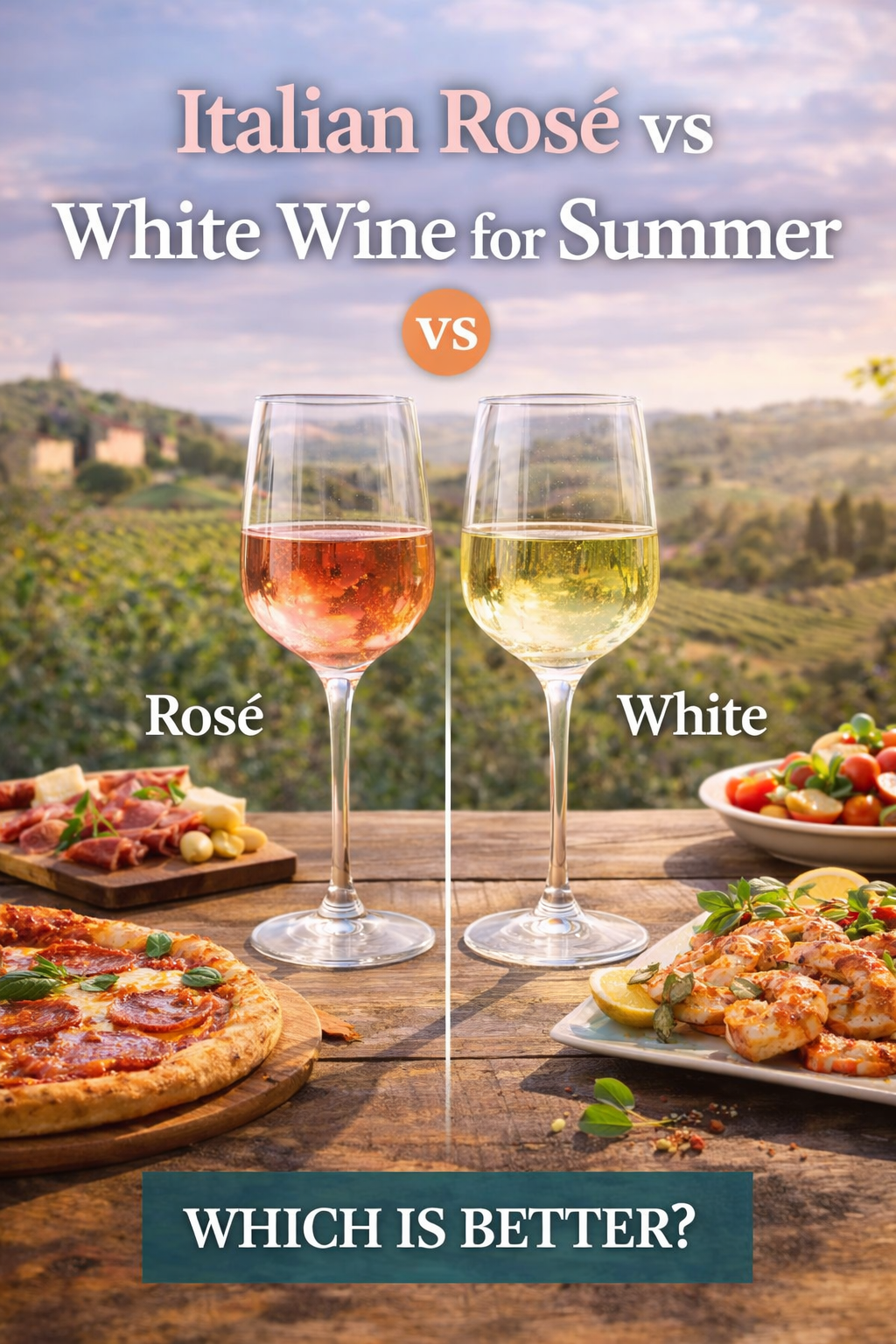
Best Italian rosé for summer is not about trends or fancy labels. Instead, it comes down to choosing the right style for hot weather, food and social occasions. Italian rosato is one of the most underrated summer wines because it delivers refreshment, flavour and versatility without sweetness. In this guide, you will learn why Italian rosé works so well in summer, which styles suit different occasions and how to serve it properly so every bottle performs at its best.
Before diving in, you may find it useful to read our dry Italian rosé wine guide, our breakdown of Italian rosé sugar content, our flavour guide on what Italian rosé tastes like, our explanation of whether Italian rosé is dry, our buyer’s guide on how to choose Italian rosé and our pairing article on what food goes with Italian rosé.
Why Italian rosé is perfect for summer
Summer wine needs to be refreshing, light and versatile. Fortunately, Italian rosé ticks every box. Because it is naturally dry, it never feels cloying in warm weather. Meanwhile, high acidity refreshes the palate and keeps each sip lively. As a result, rosato remains enjoyable even on the hottest days.
Another reason Italian rosé works so well is its food focus. Italian wine culture revolves around meals, which means rosato is designed to complement dishes rather than overpower them. Consequently, it becomes the ideal wine for outdoor dining, barbecues and long summer evenings.
What makes a good summer rosé
Several characteristics define a great summer rosé. First of all, acidity is essential. Without it, wine feels flat and heavy in heat. Secondly, dryness matters. Sweet wine becomes tiring very quickly when temperatures rise. Finally, alcohol level plays a role. Wines around 11.5–12.5% ABV feel lighter and more refreshing than higher-alcohol bottles.
Flavour profile also matters. Citrus, strawberry and floral notes feel bright and lively in summer. On the other hand, heavy oak or spice rarely works well in hot weather. For summer drinking, freshness always beats power.
Understanding Italian rosé styles
Italian rosé is not a single style. Instead, it varies widely by region, climate and grape variety. Northern regions produce paler, lighter wines with higher acidity. Southern regions, by contrast, create deeper coloured rosato with riper fruit and more body. Both styles can work in summer, depending on the occasion.
Northern Italian rosé – light and crisp
Northern Italy has a cooler climate, which means grapes ripen more slowly. As a result, acidity stays high and alcohol remains moderate. This produces pale rosé that feels similar to dry white wine but with subtle red fruit character.
Because of this freshness, northern rosé is ideal for hot afternoons, aperitifs and casual drinking. If you enjoy Sauvignon Blanc or Pinot Grigio, this style will suit you perfectly.
Southern Italian rosato – richer and fuller
Southern Italy experiences much warmer temperatures. Consequently, grapes develop more sugar, which converts into alcohol during fermentation. The result is a darker rosato with more body and flavour intensity. Despite this richness, the wine still finishes dry.
This style works best in the evening or with food. For example, it pairs beautifully with grilled meats and Mediterranean dishes, making it perfect for summer dinners and barbecues.
Best Italian rosé grapes for summer
Grape variety has a major influence on flavour and body. Some grapes naturally produce better summer wines than others.
Pinot Grigio rosé
Pinot Grigio rosé is extremely pale and crisp. Expect citrus, pear and light berry notes. Because of its refreshing nature, it is perfect for very hot days and daytime drinking.
Negroamaro rosato
Negroamaro produces darker rosato with cherry and pomegranate flavours. Although it has more body, it still feels fresh. Therefore, it suits evening drinking and BBQs.
Montepulciano rosato
This grape adds structure and depth. Typically, you will find strawberry and cherry notes alongside a slight savoury edge. As a result, it works well with food.
Sangiovese rosato
Sangiovese brings high acidity and herbal notes. Consequently, it feels very food-friendly and works brilliantly with Italian cuisine.
Best Italian rosé for summer by occasion
Garden parties
For garden parties, choose pale northern rosé. It is light, refreshing and easy to drink over several hours. Always serve well chilled and keep bottles on ice to maintain freshness.
BBQs
When hosting a BBQ, go for fuller southern rosato. The extra body stands up to smoky flavours and grilled meat. As a result, it works better than light white wine in this setting.
Beach days and picnics
Light rosé served chilled in flasks is ideal for beach days and picnics. Avoid high-alcohol wines, as they feel heavy and dehydrating in heat.
Dinner parties
For dinner parties, match the rosé to your menu. Light styles work with seafood, while fuller rosato pairs better with pasta or chicken dishes.
How to serve Italian rosé in summer
Temperature is crucial. Serve Italian rosé between 8 and 10 degrees Celsius. Too cold and flavours disappear. Too warm and the wine feels heavy. Therefore, always chill bottles properly before serving.
Use standard white wine glasses to allow aromas to develop. Additionally, avoid overfilling glasses and keep bottles chilled outdoors in an ice bucket.
Does sweetness ruin summer rosé?
Yes, it does. Sweet wine becomes unpleasant in heat. That is why Italian rosé performs so well in summer – it is dry. If you want to understand sugar levels in more detail, read our guide on Italian rosé sugar content.
Alcohol and summer drinking
Lower alcohol wines feel better in warm weather. Wines around 11.5–12.5% ABV remain refreshing. Higher alcohol wines, however, feel heavier and dehydrate faster. Therefore, always check ABV when choosing summer wine.
Best food to eat with summer rosé
Italian rosé pairs beautifully with summer food. For detailed pairing ideas, see our guide on what food goes with Italian rosé. In short, seafood, salads, pizza, grilled vegetables and chicken all work extremely well.
How to choose the best Italian rosé for summer
If you feel unsure, follow a simple process. First, decide when you will drink it. Daytime or evening? Next, choose region. Northern for lighter styles, southern for richer. Then, check alcohol level. Finally, avoid sweet bottles.
For a full buying framework, read how to choose Italian rosé.
Is Italian rosé always dry?
Almost always. This is why it works so well in summer. For more detail, read our article on whether Italian rosé is dry.
What does Italian rosé taste like in summer?
When chilled, flavours feel brighter and more refreshing. Citrus, strawberry and floral notes become more pronounced. For a full breakdown, read what Italian rosé tastes like.
Budget vs premium summer rosé
Good Italian rosé does not need to be expensive. Entry-level bottles can offer excellent quality. However, premium rosato often delivers better balance and complexity. Therefore, choose based on occasion rather than price alone.
Common summer rosé mistakes
Do not drink rosé warm. Do not choose based on colour alone. Do not assume fruity means sweet. Above all, do not overthink it. Italian rosé is designed to be enjoyed.
Storing rosé in summer
Store bottles in a cool, dark place. Never leave wine in a hot car. Heat damages wine quickly and permanently.
Is rosé only for summer?
No. While rosé shines in summer, fuller styles work year-round. However, warm weather is when rosato truly shows its strengths.
Why Italian rosé beats other summer wines
Compared to white wine, rosé offers more flavour. Compared to red wine, it is more refreshing. Compared to sweet wine, it is far more food-friendly. Therefore, Italian rosé offers the perfect balance.
Final thoughts
So, what is the best Italian rosé for summer? Ultimately, it depends on your taste, food and occasion. Pale northern rosé is perfect for hot afternoons. Fuller southern rosato shines at BBQs and dinners. What they all share is dryness, freshness and versatility.
To explore further, visit our dry Italian rosé wine guide and the other cluster articles linked throughout this page.