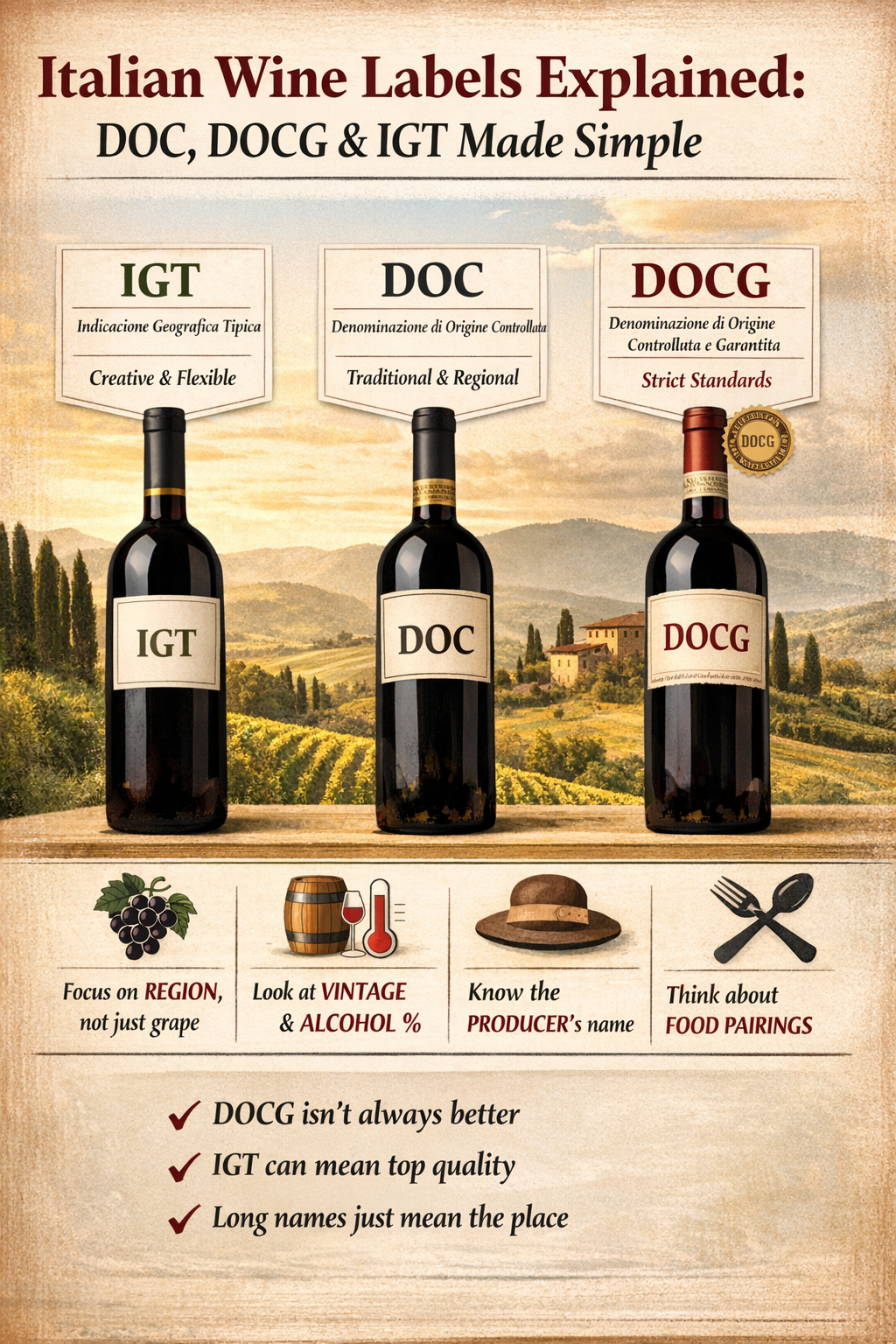
Italian wine labels have a reputation for being confusing, even intimidating. Long names, unfamiliar terms and official stamps often leave UK wine drinkers unsure whether they are choosing something special or simply overpaying for a label they do not understand. The truth is that Italian wine labels are far more logical than they first appear. Once you understand a few key terms, they become one of the most useful tools for choosing a wine that suits both your taste and your table. This guide explains Italian wine labels in plain English, focusing on what DOC, DOCG and IGT actually mean for you as a buyer in the UK.
Why Italian Wine Labels Feel So Complicated
Italian wine is deeply connected to place. Unlike countries that focus primarily on grape variety, Italy traditionally focuses on where a wine comes from and how it is made. This long history has created a system designed to protect regional identity, but it can feel overwhelming if you are unfamiliar with it. Add in the Italian language, long regional names and multiple classification levels, and it is easy to see why many people stick to familiar options. Understanding the label removes that uncertainty and opens the door to far better value and variety.
The Italian Wine Classification System Explained
Most Italian wines fall into one of three main classifications that appear on the label: IGT, DOC and DOCG. These classifications describe origin and production rules, not guaranteed quality. That distinction is important, because the letters alone do not tell you whether you will enjoy the wine.
What Does DOC Mean on an Italian Wine Label?
DOC stands for Denominazione di Origine Controllata, which roughly translates to “controlled designation of origin”. A DOC wine must come from a defined geographical area and follow specific rules about grape varieties, yields and winemaking methods. For UK drinkers, DOC usually means the wine reflects a recognised regional style rather than a single producer’s interpretation. Many excellent everyday Italian wines carry DOC status, particularly from regions such as Veneto, where DOC wines are reliable, food-friendly and good value.
What Is DOCG and Is It Always Better?
DOCG is Italy’s highest official classification. The extra G stands for Garantita, meaning guaranteed. DOCG wines are subject to stricter rules and additional quality checks before release. However, DOCG does not automatically mean better for every drinker. These wines are often more traditional, structured and designed with food in mind. Some DOCG wines can feel firm or closed when young, which may not suit casual drinking. DOCG status is common in historic regions such as Campania, where grapes like Aglianico produce powerful wines intended for the table rather than easy sipping.
What Is IGT and Why Many Great Wines Use It
IGT stands for Indicazione Geografica Tipica. This classification allows producers far more freedom in how they make wine, while still indicating a broad geographical origin. IGT wines are often misunderstood as being lower quality, but this is not the case. Many skilled Italian winemakers use IGT deliberately to experiment with blends, grapes or techniques that fall outside traditional rules. For UK drinkers, IGT often represents creativity, modern styles and excellent value.
Is DOCG Better Than DOC? Is DOC Better Than IGT?
This is one of the most common questions, and the honest answer is not always. DOCG wines follow stricter rules and often suit traditional food pairings. DOC wines offer dependable regional character and everyday drinkability. IGT wines can deliver outstanding quality with more flexible and modern styles. The best choice depends on what you want from the wine, not the classification printed on the label.
What Else on the Label Actually Matters?
Beyond classification, several other details on an Italian wine label are often more useful when choosing a wine. Alcohol percentage gives a clue to balance and body, with many Italian wines sitting at moderate levels that suit food well. The vintage matters more for structured reds and cooler regions, while many everyday wines are designed for consistency. Grape variety can be helpful when listed, particularly with lesser-known Italian grapes. Above all, the producer name is crucial, as a good producer will make excellent wine across DOC, DOCG and IGT levels.
Why Italian Labels Focus on Place Rather Than Grapes
Italian wine culture is built around food and geography. Historically, people drank local wine with local dishes, so place mattered more than grape variety. That philosophy still shapes Italian labels today. Once you begin recognising regional names rather than chasing familiar grape varieties, Italian wine becomes far easier to understand and far more rewarding to explore.
How to Use the Label to Choose Better Italian Wine
When choosing an Italian wine, start with the region rather than the classification. Use DOC and DOCG as guides to style, not guarantees of quality. Treat IGT as an opportunity rather than a downgrade. Pay attention to alcohol level, producer reputation and how the wine will be paired with food. This approach leads to better choices than assuming higher classifications always mean better wine.
Common Myths About Italian Wine Labels
A common myth is that DOCG wines are always superior, when in reality they are simply more regulated and traditional. Another myth is that IGT means poor quality, when many outstanding Italian wines use IGT by choice. Long or unfamiliar names do not mean complicated wine, they usually just describe where the wine comes from.
Final Thoughts
Italian wine labels are not designed to confuse, even if they sometimes appear that way. They exist to protect tradition and regional identity. Once you understand the basics, DOC, DOCG and IGT become useful tools rather than obstacles. For UK wine drinkers willing to look beyond the familiar, Italian labels unlock better value, greater variety and wines that are genuinely made for the table.