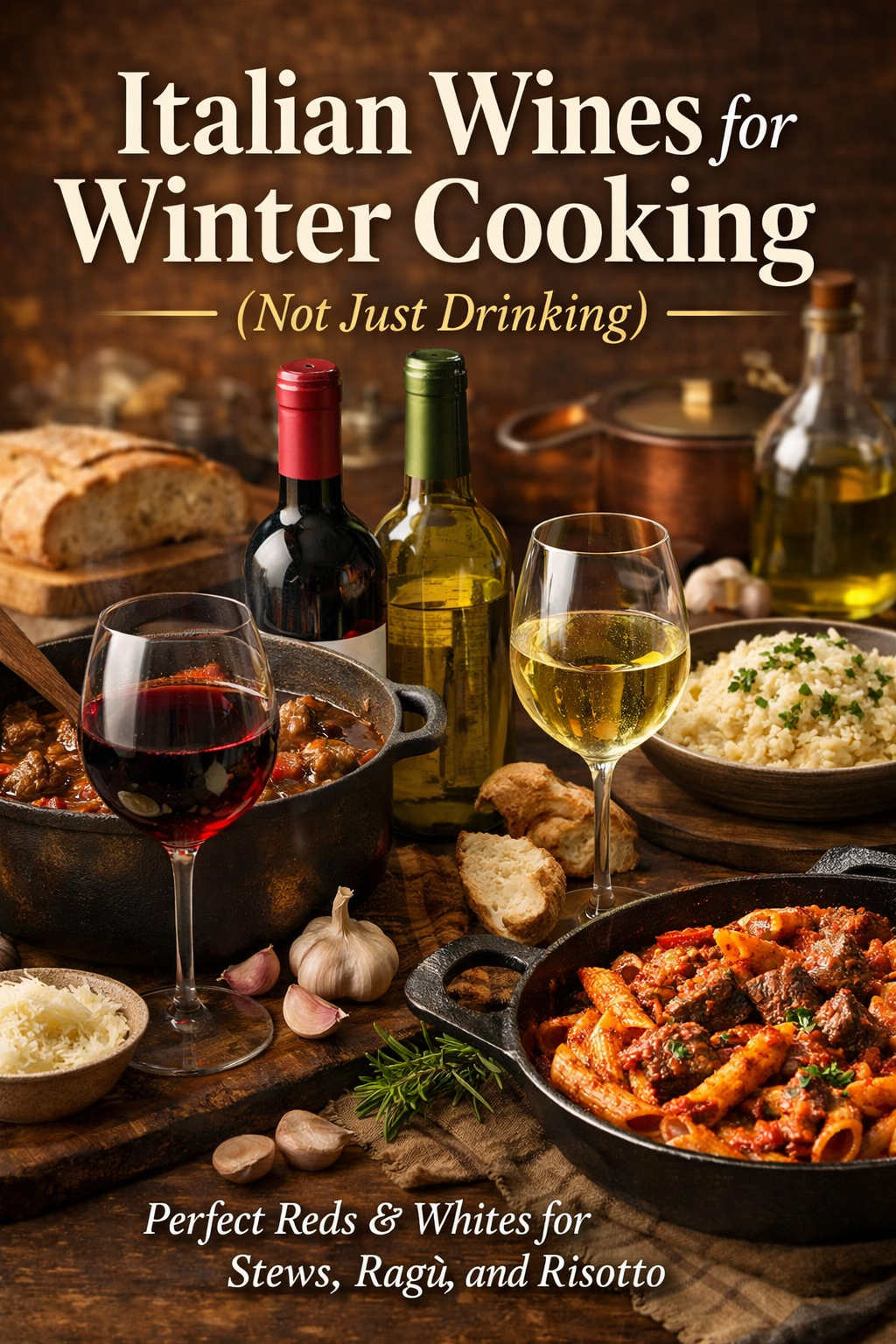
When winter arrives in the UK, the way we use wine tends to change. Fewer impromptu drinks, more time spent cooking at home, and meals that simmer rather than sizzle. Italian wine fits this season perfectly, not just in the glass but in the pan. Used properly, wine can deepen flavour, add balance, and bring a dish together without tasting “boozy” or heavy. The key is knowing which Italian wines work best for cooking, and how to use them properly.
Why Italian Wine Works So Well in Winter Cooking
Italian wines are generally made with food in mind. Acidity, balance and savoury character are often prioritised over sweetness or sheer power. In winter cooking, those traits matter. Acid lifts rich dishes, tannin adds structure to slow-cooked meats, and restrained fruit keeps sauces from becoming cloying. Unlike many inexpensive “cooking wines”, proper Italian wines retain their character when heated, which is exactly what you want when a dish spends hours on the hob or in the oven.
The Golden Rule: Cook with Wine You’d Drink
There is an old saying that you should never cook with a wine you wouldn’t drink, and it holds true. This does not mean using expensive bottles, but it does mean avoiding wines that are overly sweet, tired or flawed. Heat concentrates flavours, including bad ones. A clean, well-made Italian wine at a sensible price will always give better results than something bought purely for cooking.
Italian Red Wines for Winter Dishes
Red wine is a staple in winter kitchens, especially for stews, braises and slow roasts. The best Italian reds for cooking share three traits: good acidity, moderate alcohol and savoury depth.
Sangiovese-based wines are particularly useful. With their natural acidity and cherry-led profile, they work beautifully in tomato-based sauces, ragù and long-cooked meat dishes. They add richness without overpowering the food, making them ideal for lasagne, beef shin or pork shoulder.
For deeper, heartier dishes, Aglianico comes into its own. Often associated with southern regions such as Campania, Aglianico brings structure and savoury intensity. Used in small amounts, it is excellent for slow-braised beef, venison or lamb shanks, where it adds depth rather than sweetness.
Barbera is another winter favourite. Naturally high in acidity and low in tannin, it is forgiving in the kitchen and works well for deglazing pans or enriching sauces. It is particularly good with mushrooms, sausages and rich vegetable dishes.
Italian White Wines for Comfort Cooking
White wine is often overlooked in winter, but it plays an important role in many comforting dishes. Italian whites tend to have enough acidity to cut through cream, butter and cheese, making them ideal for colder months.
Dry Italian whites such as Pinot Grigio, Verdicchio or Trebbiano are excellent for risotto, creamy pasta sauces and chicken dishes. They add brightness and aroma without dominating the dish. A splash of white wine in a mushroom risotto or chicken casserole can lift the entire meal.
More textured whites, such as Fiano or Greco from southern Italy, are well suited to seafood stews, baked fish and vegetable-based winter dishes. Their weight and subtle complexity mean they hold up better to heat than very light whites.
Cooking with Italian Wine by Dish Type
For slow-cooked meat dishes such as beef stew, osso buco or lamb shoulder, medium-bodied Italian reds are the safest choice. Add the wine early in the cooking process and allow it to reduce fully so the alcohol cooks off, leaving behind depth and savoury flavour.
For tomato-based sauces, acidity matters more than power. Wines made from Sangiovese or similar grapes complement tomatoes rather than fighting them. Avoid heavily oaked or overly ripe wines, which can clash with acidity.
For creamy dishes, white wine should be used sparingly and reduced well. The goal is not to taste wine, but to balance richness. Italian whites excel here because they are rarely heavy or sweet.
For vegetable dishes, especially roasted or slow-cooked vegetables, lighter reds or structured whites can work surprisingly well. Wine adds complexity to dishes like braised fennel, lentils or mushroom-based recipes that might otherwise taste flat.
How Much Wine Should You Use?
One of the most common mistakes in cooking with wine is using too much. Wine should support the dish, not dominate it. As a general rule, a small glass is enough for most recipes serving four people. Always reduce the wine properly before adding other liquids, especially stock or cream, to avoid a raw alcohol taste.
Should You Match the Wine You Cook with to the Wine You Drink?
Ideally, yes, but it is not essential. Cooking with an Italian wine and drinking something similar alongside creates harmony, but the cooked dish will change the wine’s flavour profile anyway. What matters more is that the wine used in cooking shares similar characteristics to the food you are serving.
A Practical Winter Approach to Italian Wine
January and winter months are about comfort and routine. Italian wines suit this perfectly because they are versatile, food-friendly and rarely excessive. Using them in cooking allows you to enjoy their character even on nights when you are not opening a bottle at the table.
If you are exploring Italian wines for winter cooking, it makes sense to keep a few dependable styles on hand: a medium-bodied red for stews and sauces, a lighter red for tomato-based dishes, and a dry white for risotto and creamy recipes. These wines will serve you far better than anything labelled specifically for cooking.
Final Thoughts
Italian wine is not just something to pour into a glass at the end of the day. In winter, it becomes an ingredient that adds warmth, balance and depth to food. Used thoughtfully, it can transform simple home cooking into something comforting and deeply satisfying. Whether you are slow-cooking a stew on a Sunday afternoon or making a midweek pasta, Italian wine earns its place in the kitchen as much as it does on the table.