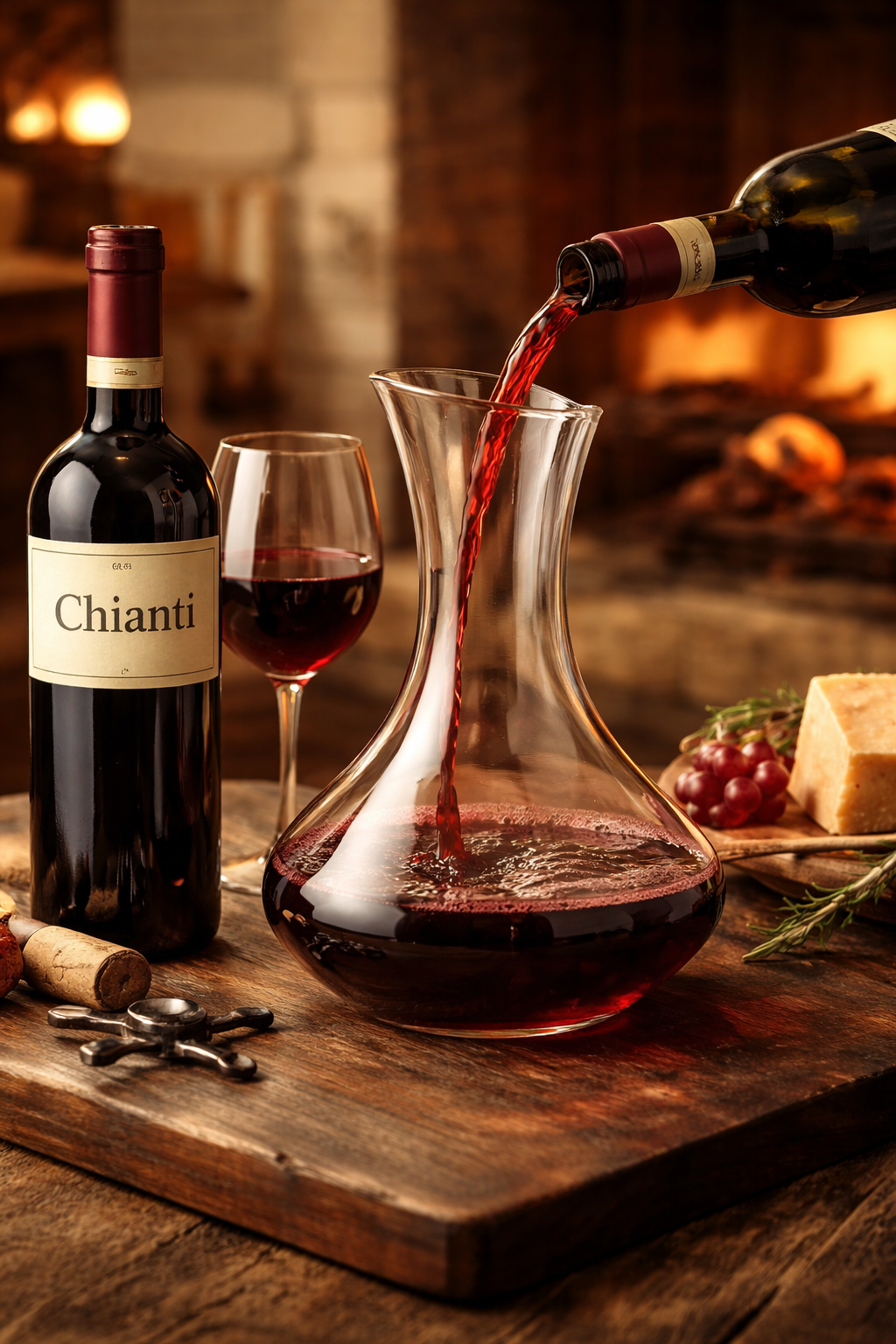
Many people assume wine should be enjoyed the moment it is opened. In reality, some Italian wines taste noticeably better after a little time with air. This does not mean you need specialist equipment or wine knowledge. It simply means understanding how oxygen interacts with wine and knowing which styles benefit from it.
This guide explains decanting and aeration in plain English, focusing on Italian wines and how UK drinkers can get the best out of a bottle at home without overthinking it.
What Does “Improving with Air” Actually Mean?
When wine is bottled, it is effectively sealed off from oxygen. Once opened, oxygen begins to interact with the wine, softening certain compounds and allowing aromas to open up. For some wines, especially structured Italian reds, this process makes the wine smoother, more expressive and more balanced.
This is often described as the wine “opening up”. It does not mean the wine was faulty when first opened, only that it needed time to show its full character.
What Is Decanting (Without the Fancy Talk)?
Decanting simply means pouring wine into another container before drinking it. Traditionally this is done using a decanter, but it does not have to be. The purpose is to increase the wine’s contact with air.
For most home drinkers, decanting can be as simple as opening the bottle and letting it breathe, or pouring it into a jug for a short time. The goal is not ceremony, but oxygen.
Which Italian Wines Benefit Most from Air?
Not all wines improve with air. Many lighter Italian wines are designed to be fresh and immediately enjoyable. However, several common Italian styles often benefit from time and oxygen.
Structured Italian Reds
Wines made from grapes such as Aglianico, Nebbiolo and some Sangiovese-based styles are naturally high in tannin and acidity. When first opened, they can feel tight or firm. After 30 minutes to an hour with air, tannins soften and flavours become more rounded.
This is particularly true for wines from regions such as Campania, where structure and savoury depth are part of the wine’s identity.
Young Italian Reds
Younger Italian reds, even at modest price points, often benefit from air. These wines may seem closed or slightly harsh at first, but improve quickly as oxygen smooths their edges.
Full-Bodied Italian Whites
Some Italian white wines with texture and weight, such as Fiano or Greco, can also benefit from brief aeration. Air can enhance aromatics and reduce any initial tightness, particularly if the wine has been chilled.
Which Italian Wines Do NOT Need Air?
Light, fresh Italian wines are usually best enjoyed soon after opening. Crisp whites, delicate reds and sparkling wines generally do not benefit from extended exposure to oxygen. In these cases, air can actually cause flavours to fade.
As a rule, if a wine is designed for freshness and easy drinking, decanting is unnecessary.
How Long Should You Let Italian Wine Breathe?
There is no single rule, but a simple guide works well for most UK homes.
- Light reds and textured whites: 15–30 minutes
- Medium to structured reds: 30–90 minutes
- Very structured or young reds: up to 2 hours
You do not need to time this precisely. Taste the wine when opened, then taste it again after some time. The difference is often obvious.
Do You Need a Decanter?
No. A decanter is helpful but not essential. Opening the bottle early, pouring the wine into a jug, or even swirling it in the glass all increase contact with air.
The simplest approach is often the best: open the bottle, pour a small glass, leave the rest of the bottle open, and return to it later.
How Is This Different from Wine “Going Off”?
This is a common concern. Wine improving with air happens over hours. Wine going off happens over days. If a wine starts to smell flat, vinegary or unpleasant, it has passed its peak. Most Italian wines that benefit from air will show improvement long before this point.
Why This Matters for UK Drinkers
UK homes are often cooler than Italian homes, and wines are frequently served straight from storage or delivery. Allowing wine time with air helps it reach its best expression more reliably.
Understanding this also helps avoid disappointment. Many people think they dislike a wine when, in reality, it simply needed time.
A Simple Rule to Remember
If an Italian wine tastes tight, firm or muted when first opened, give it air. If it tastes fresh, light and expressive immediately, enjoy it straight away.
Decanting is not about showing off. It is about letting the wine be itself.
Final Thoughts
Some Italian wines are like conversations that take time to warm up. A little air allows structure to soften, aromas to emerge and balance to improve. You do not need expensive equipment or specialist knowledge to benefit from this. A bit of patience is often enough.
For UK drinkers who want to get more enjoyment from Italian wine, understanding how air affects a bottle is one of the simplest and most rewarding lessons you can learn.